

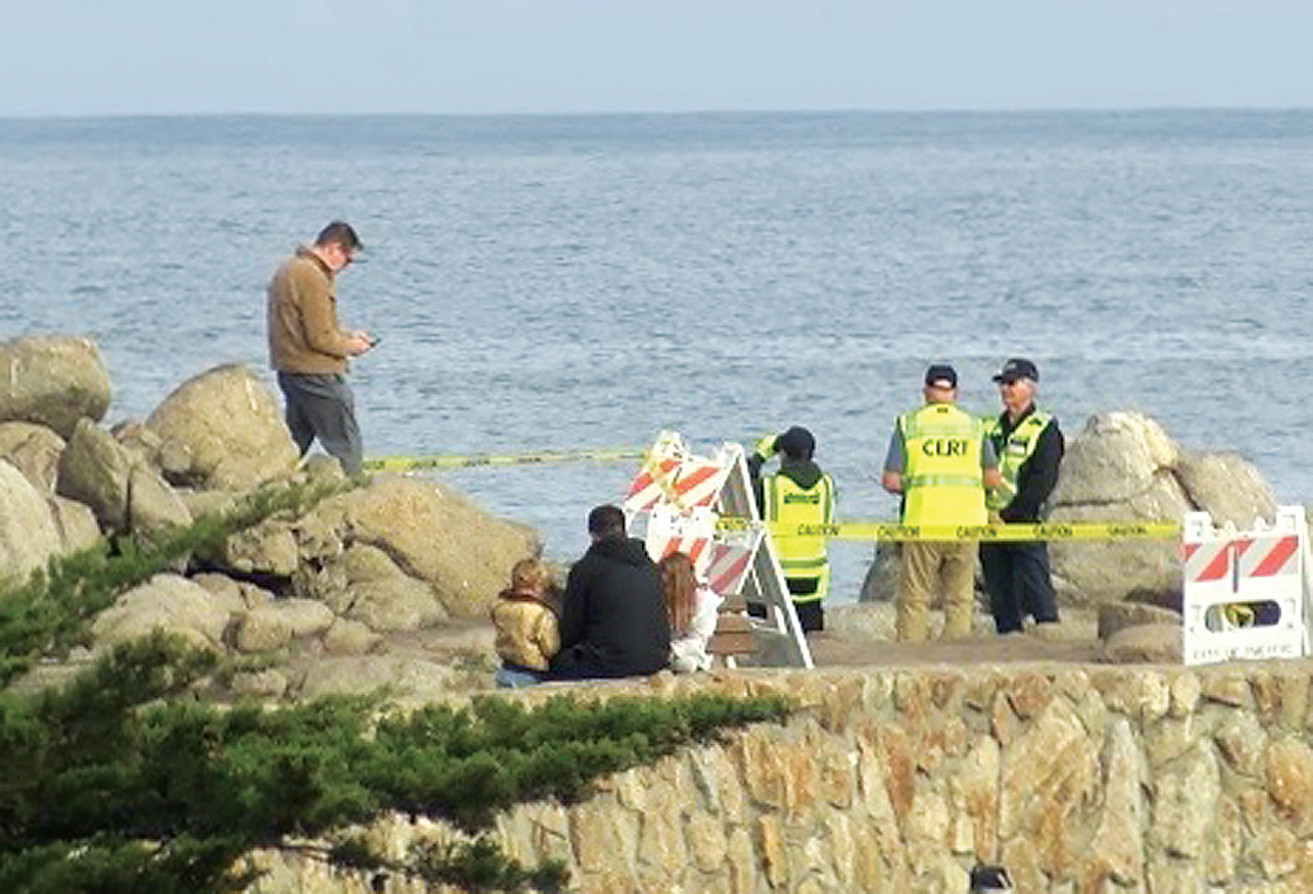
The Santa Cruz County Sheriff’s Office has identified the woman who died after reportedly being bitten by a shark as 55-year-old Erica Fox.
Sheriff’s officials said Fox’s body was found near Davenport Beach on Saturday around 2pm along the rugged coastline north of Santa Cruz. Because of the proximity to a recent shark attack in Monterey County, the Santa Cruz County Sheriff’s Office is coordinating with the Monterey County Sheriff’s Office, authorities said.
Monterey County deputies were alerted Dec. 21 to a possible shark attack involving Fox, who had been participating in a regular ocean swim with the Kelp Krawlers, a group that typically meets on Sundays at Lovers Point in Pacific Grove.
An extensive search by land, sea and air was launched following the report but was indefinitely suspended the next day, Dec. 22.
Sean Van Sommeran, founder of the Santa Cruz-based Pelagic Shark Research Foundation, said the risks associated with entering the ocean are similar to those faced by visitors to wilderness areas such as Yosemite National Park or Yellowstone National Park.
“With the marine wildlife sanctuary, we do have a lot of wildlife,” Van Sommeran said. “I tell people the ocean is the last place to go to be careless. All the basic rules apply to going out in the wilderness.”
Van Sommeran said the perception of an increase in shark encounters is more closely tied to population growth and increased ocean recreation than to changes in shark behavior.
He noted that people are more frequently injured or killed by falls from coastal cliffs or by being swept away by so-called sneaker waves.
“The sharks aren’t out here trying to eat you, and the waves aren’t sneaking up on you,” Van Sommeran said. “Typically, sharks are the last things a mariner, swimmer or surfer has to worry about.”
Still, Van Sommeran said the number of juvenile sharks — those measuring roughly 5 to 7 feet long — increased in 2014, coinciding with changes in ocean temperatures and currents and the arrival of Humboldt squid. Many sharks also follow the seasonal migration of adult elephant seals, which gather at Año Nuevo State Park north of Santa Cruz during the winter.
He emphasized that humans are not a food source for predatory sharks, which primarily feed on marine animals. Sharks often investigate unfamiliar objects by bumping or biting them, he said.
“They bite a lot of things they don’t intend to eat,” Van Sommeran said.
Experts say swimmers and surfers can reduce their risk by taking precautions. According to sharkstewards.org, people should use the buddy system and avoid swimming, snorkeling or surfing alone. Poor water visibility should be avoided, and shiny objects such as jewelry or watches should not be worn.
Areas with seals, sea turtles or large schools of fish may also be active hunting grounds for sharks. Federal law requires maintaining distance from marine mammals and sea turtles.
Bright or high-contrast colors can attract attention, experts say, and swimwear or wetsuits that blend with the surrounding environment are recommended.
“I always tell people to plan their adventure,” Van Sommeran said.
Todd Guild contributed to this report.





Sean Van Sommeran, founder of the Santa Cruz-based Pelagic Shark Research Foundation, said the risks associated with entering the ocean are similar to those faced by visitors to wilderness areas such as Yosemite National Park or Yellowstone National Park.
“With the marine wildlife sanctuary, we do have a lot of wildlife,” Van Sommeran said. “I tell people the ocean is the last place to go to be careless. All the basic rules apply to going out in the wilderness.”
This is a great piece of advice; people an kids who have lived near the ocean all their lives think that they know the ocean like the back of their hand, The great oceans are aswim with creatures big and small, with big teeth and big sizes, little with poisonous stings or small that bury in the body. Just like entering an unknown forest, unaware of the wildlife who live there and survive killing sources of food and are threatened by the appearance of strange homo sapiens, one doesn’t enter with disrespect; these areas were their private domains for centuries before human kind.