
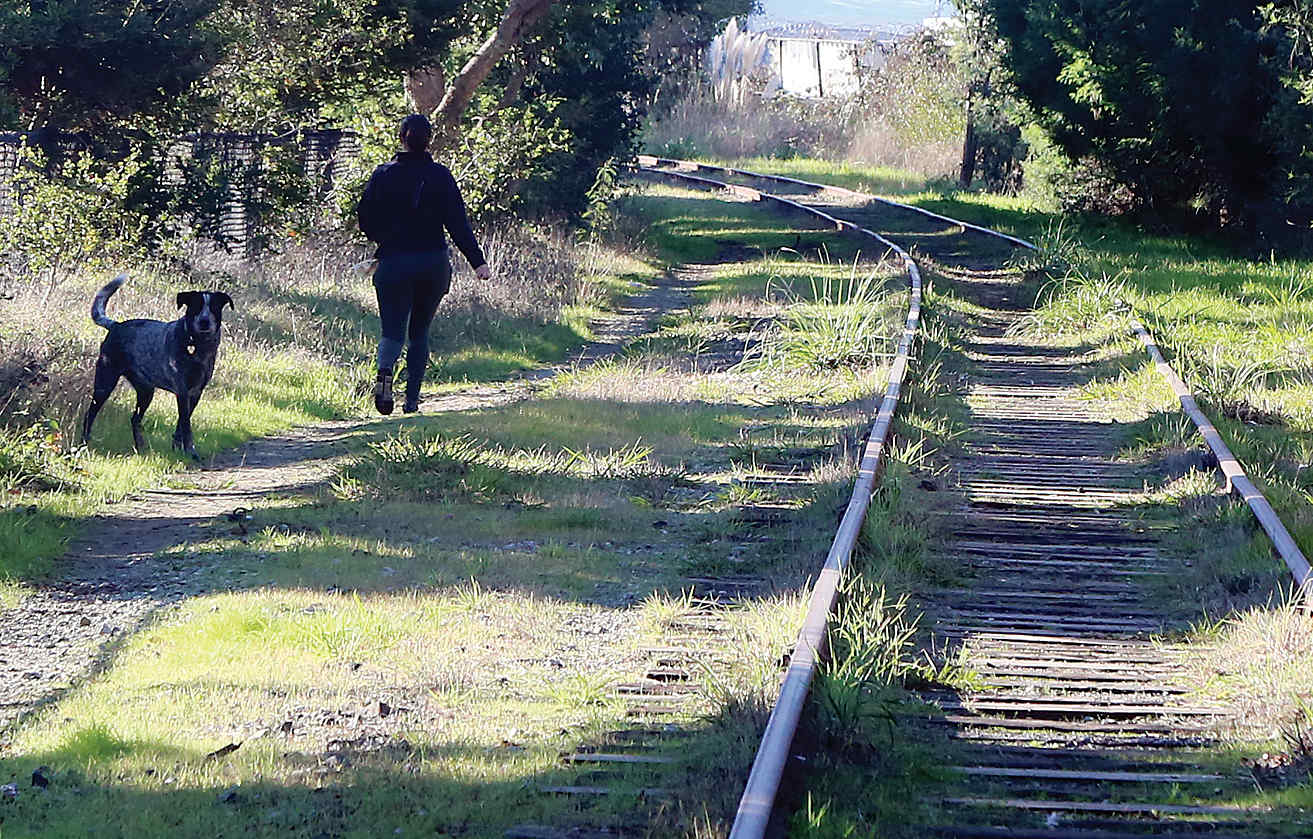
The Santa Cruz County Regional Transportation Commission (RTC) will seek funding from the state and federal government to support construction planning for a passenger rail line spanning the length of the county.
In a Thursday meeting, the commission voted unanimously to request $15 million to pay for an environmental impact report on the rail proposal.
“If we don’t ask, we won’t get,” Commissioner and Santa Cruz Mayor Fred Keely said. “And there’s no other apparent source of funding for us if we are to continue our good-faith work with each other on this.”
Since its inception, the transit project has been embroiled in controversy. Those in favor say it’s a necessary infrastructure investment that would decrease congestion on Highway 1, while those in opposition are suspicious of the practicality and the overall $4.3 billion cost.
The pricey $15 million price tag for the environmental impact report is representative of the size of the proposed rail line: 22 miles long, with nine stations.
Commissioner Manu Koenig expressed a general dissatisfaction with how planning for the project has played out, offering that the time and money may have been better spent on other transportation projects. Regardless, he agreed that seeking funding support was a strong step forward.
“I’m willing to put a best-faith effort towards this. The one thing I want to address is the possibility that we could end up with just part of the money,” he said. “You could, after years of asking for this, end up with $5 million out of $15 million—or $8 million—not enough to actually get it done.”
Environmental impact reports are generally required by both the state and federal government to build large infrastructure projects. Commissioner Andy Schiffren, who has taught classes on California environmental laws, explained.
“An environmental impact report has to look at all sorts of issues that could affect the physical environment. It’s not just trees and flowers and wildlife. It also includes noise, health impacts and air quality. There’s a full range of potentially significant impacts that have to be looked at.”
The RTC will submit applications for federal funding through Senators Padilla and Schiff as well as Representatives Zoe Lofgren and Jimmy Pannetta. A separate request for state funding will be made through the office of State Senator John Laird.
Community funding requests like these don’t come with a guaranteed return. The proposal will have to compete with other commissions, cities and local governments who also need state or federal support.
The Pajaronian spoke to State Senator John Laird, who emphasized that the state and federal processes for funding are very different and that the state isn’t able pursue a process to distribute community funding every year.
“If we do miraculously have a process, we might have something like $100 or $200 million together that 40 senators would have to split,” he said. “That’s 5 million a senator for different needs in the district. We’re not sure that we’ll be able to get there.”