

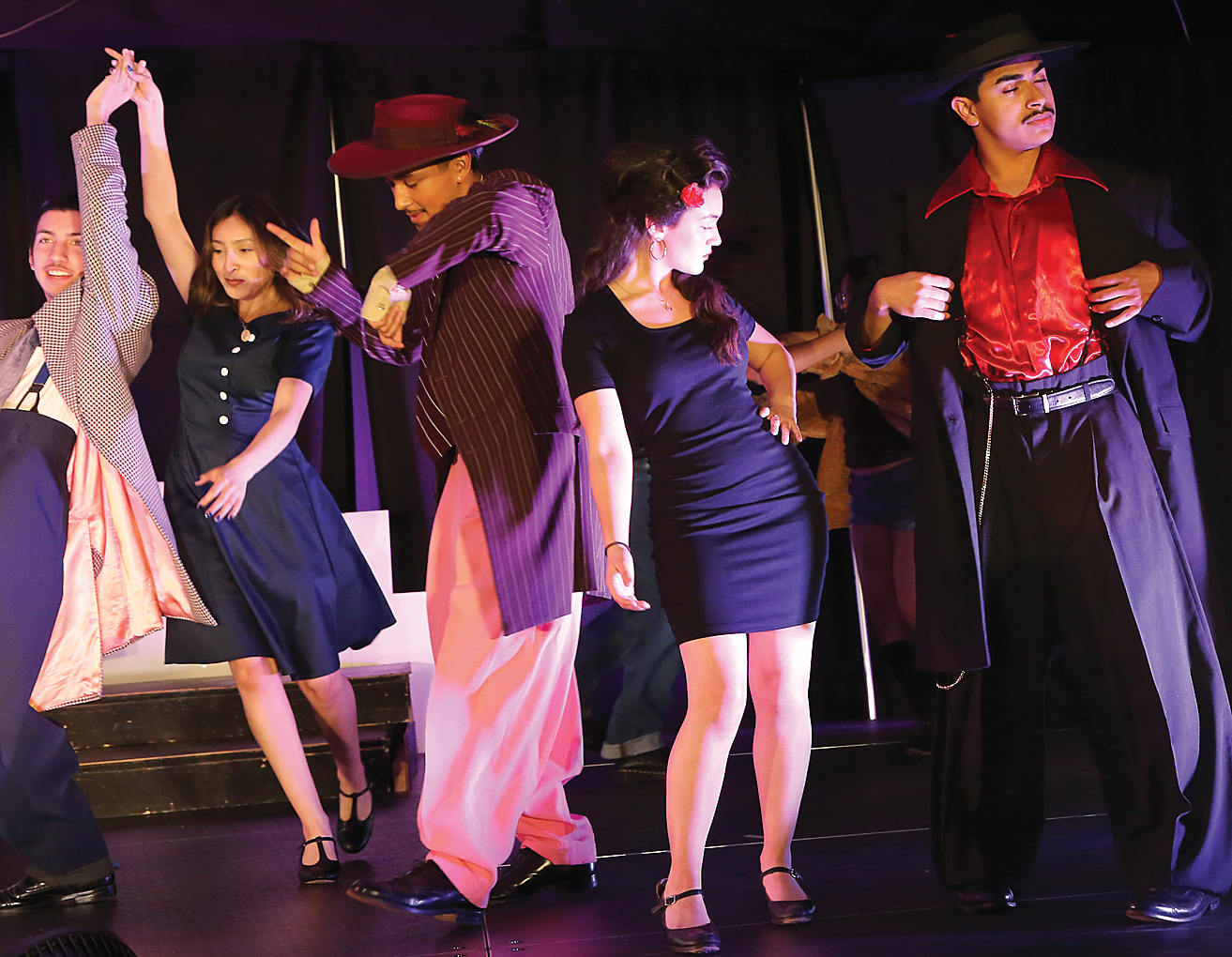
The play “Zoot Suit” made its first appearance on Aug. 17, 1978, at the Mark Taper Forum in Los Angeles.
It was a watershed moment, thrusting Chicano theater into the mainstream and highlighting both a unique art form and a culture.
It also put a national spotlight on El Teatro Campesino, which staged the play.
The dramatic group was founded by American playwright, actor, and director Luis Valdez in 1965, with its first productions held in the backs of pickup trucks in the Delano grape fields, lit only by the headlights of other cars.
That pull-yourself-up-by-your-bootstraps genesis for the group—which still performs in San Juan Bautista—comes from the concept of rascuache, a term that in Spanish can mean “low-class,” but within the Chicano community has come to symbolize the ability to make something beautiful despite a lack of resources.
“That’s what I always teach the kids,” said drama teacher Gabriel Robledo, who graduated from Pajaro Valley High School in 2010 after performing in “Zoot Suit” a year earlier. “We can do a lot with a little.”
The concept is also perhaps the perfect metaphor for the School’s performance of the play, which runs March 27–29 in the school’s new Black Box Theater.
The new theater was cobbled together earlier this year from three adjacent classrooms, a $20,000 grant and the knowledge that the new performing arts center funded by 2024’s Measure M is still years in the making.
The intimate space has room for several dozen chairs, a small stage, and a handful of lighting and sound equipment. But it’s a step up from the sweltering wrestling room, where mats had to be rolled up to make room for performances.
“It may not look like much right now, but when you turn the lights off and those lights go on, it is insane how much it transforms,” Robledo said. “We’re making everything work however we can.”
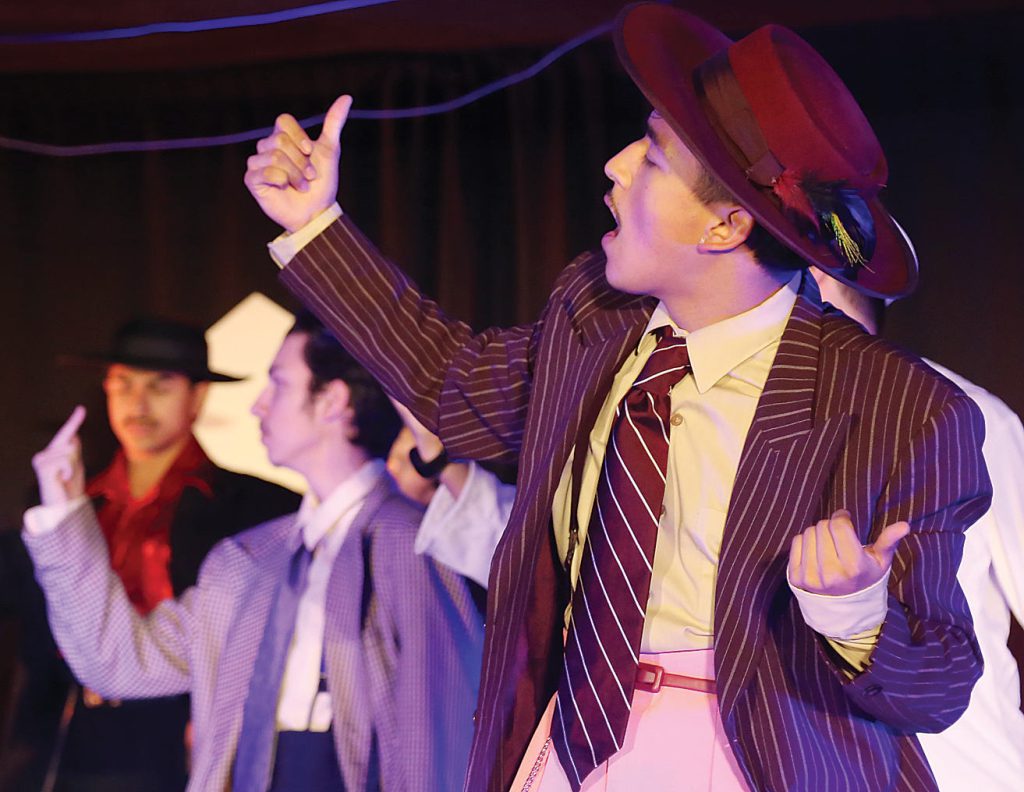
“Zoot Suit” was inspired by the events surrounding the Zoot Suit Riots of 1943, which were sparked when a U.S. Navy serviceman was stabbed during a clash with a group of young Latinos in Los Angeles. While police refused to intervene, thousands of Marines and sailors attacked Mexican American youth, particularly those who wore zoot suits and called themselves “pachucos,” a term that preceded “Chicano.” The riots eventually wound down after servicemen were confined to their barracks.
In the wake of the riots, the Los Angeles City Council banned zoot suits, and hundreds of Latino people were arrested. It was later determined that racism, poor law enforcement policy and media bias contributed to the violence.
Robledo said he grew up in El Teatro Campesino, with both of his parents serving in various roles with the company.
In fact, his mother is serving as choreographer for the play.
“It’s been really special, and I think it’s the perfect way to christen this space,” Robledo said. “This is American history.”
Senior Noemi Romero, who is serving as stage manager for the production, said her cast and crew of 37 students are ready for opening day.
Romero said the play takes on special significance because the events it depicts in many ways mirror current headlines.
“A lot of us have connected with the play because of the political times,” she said.
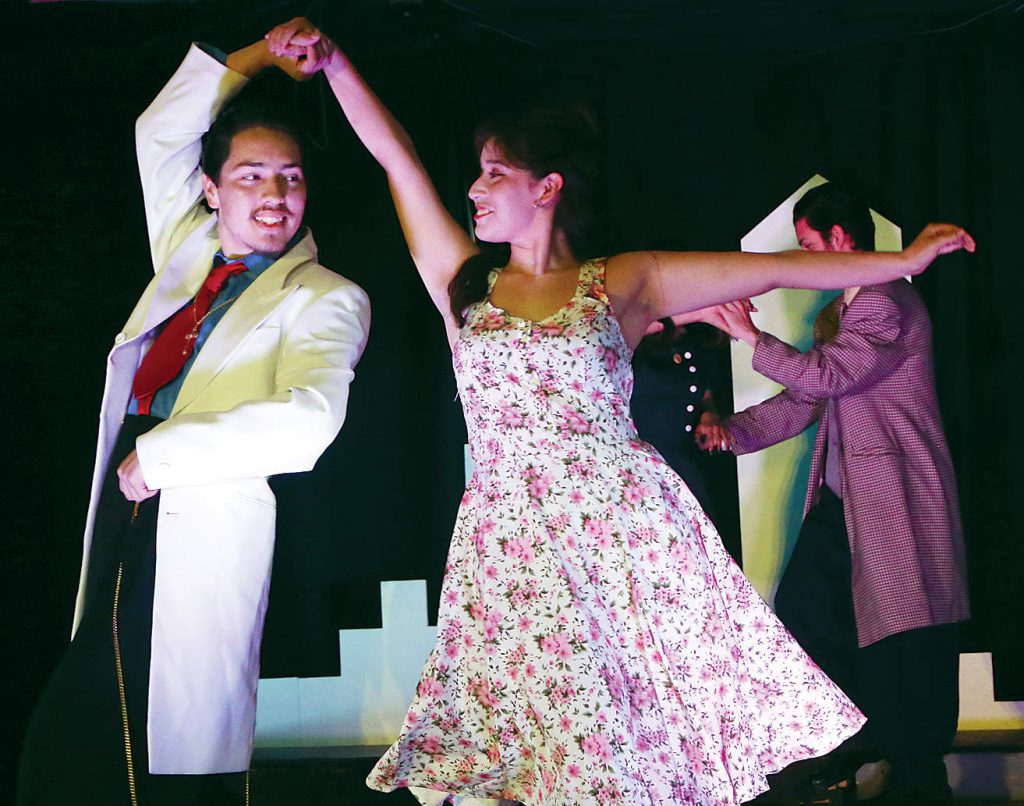
Senior Julio Gonzalez, who plays the lead role of Henry Reyna, said he is in “total awe” that he landed the part.
“Ever since I was a sophomore, I have been wanting to do this play, and I never thought we would because we didn’t have a theater,” he said.
In fact, Gonzalez said he built his personal style from that of the pachucos he saw in the play.
Gonzalez said he has loved theater since performing in “Novio Boy” at the school and is weighing whether to pursue a teaching credential in college or acting.
“Having this theater means so much to us,” he said.
Junior Mariana Alvarez, who plays the lead female role of Della Barrios, said the play has brought the cast and crew together more than other performances she has been part of.
“With this one, we all like to be here, and we like to play it together,” she said.
•••
If you go
“Zoot Suit” will run March 27 and 28 at 7 p.m. and March 29 at 3 p.m. in the Pajaro Valley High School Black Box Theater, 500 Harkins Slough Road, Watsonville. For tickets, visit gofan.co/app/school/CA68730.