

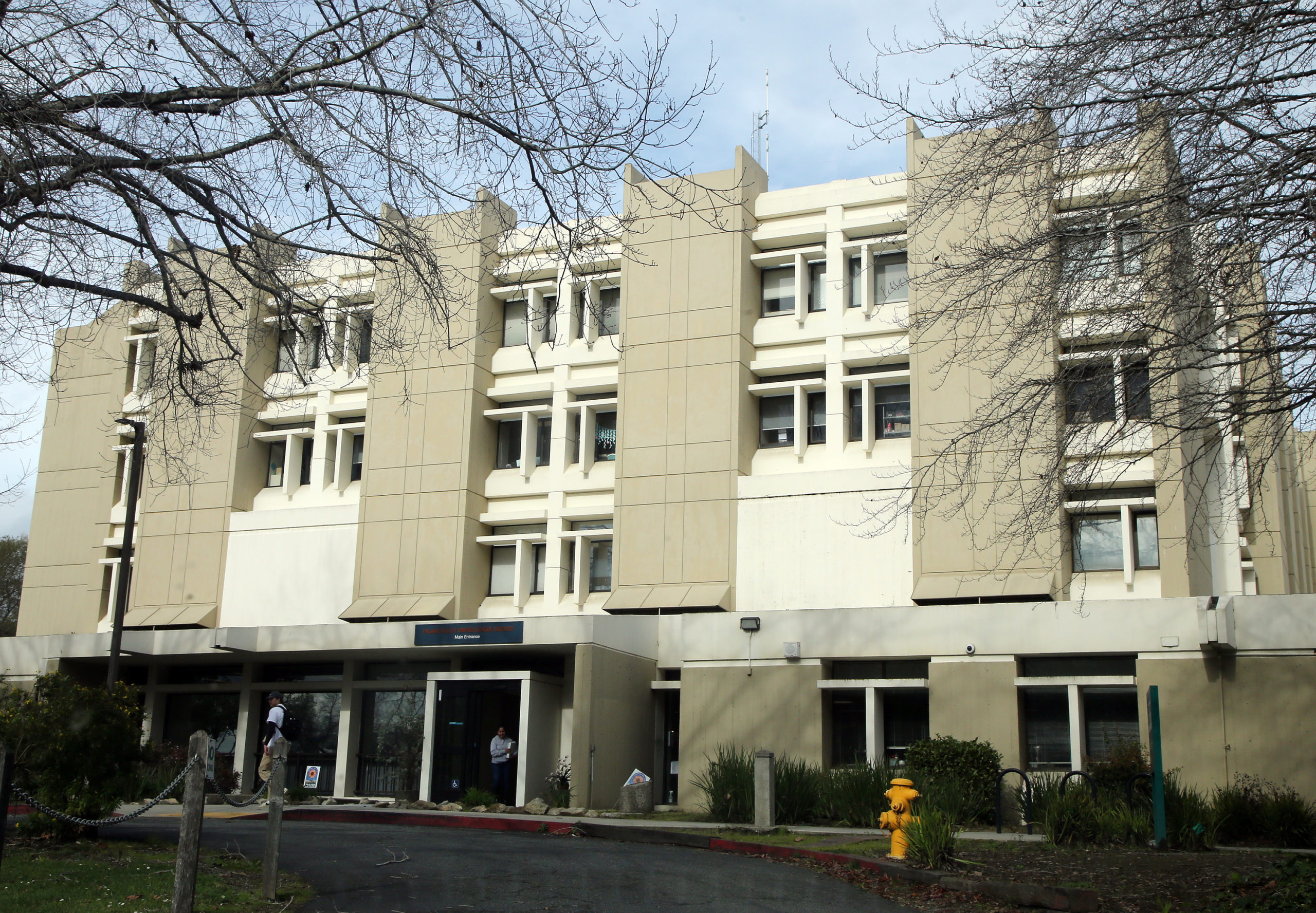
Pajaro Valley Unified School District on Tuesday announced the formation of the Sustainable Schools Advisory, a group of 23 parents, staff and community members described in a press release as “a community-informed effort focused on the long-term strength of our schools.”
District officials have not officially stated that the group will consider closing schools, but that has been a central topic of conversation at board meetings for more than a year, as projected declining enrollment over the next decade threatens to take a multimillion-dollar bite out of the district’s finances.
Officials have, however, noted that many schools are far below capacity, with several classrooms sitting empty.
Santa Cruz County Superior Court Judge John Salazar will serve as the advisory’s independent facilitator.
The Board of Trustees will announce the formation of the group during its meeting Wednesday. It is not an action item, however, and no action will be taken.
The Sustainable Schools Advisory was set to hold its first meeting Tuesday, during which members were expected to discuss the group’s charter and lay out meeting rules. It is scheduled to meet every two weeks thereafter. The group will bring its findings to the board later this year.
In other PVUSD news, the district has proposed a cap on teacher benefits during ongoing negotiations, an item not on the meeting agenda but likely to draw a sizable crowd to speak against the proposal.
Both the district and the Pajaro Valley Federation of Teachers posted announcements on their Facebook accounts Tuesday.
The district is proposing a 7.77% salary increase over three years, coupled with a $36,000 annual contribution toward family health benefits.
District spokesman Alejandro Chavez said the proposal is the “start of negotiations” and that there was no further information.
Cesar Chavez Middle School teacher Emily Halbig, who serves as the PVFT Vice President of Communications, said the salary increase — about $177 per month in the first year — would not cover the additional costs teachers would pay for their health plans.
Under the proposal, Halbig said teachers would either need to switch to a lower-cost HMO plan or pay the difference to keep their current PPO coverage.
Using district-provided projections, she said a family PPO plan is expected to cost about $47,900 next year. With the district contribution capped at $36,000, that would leave employees paying roughly $12,000 out of pocket — about $1,000 per month.
As part of the proposal, Halbig said the district is offering cost-of-living adjustments of about 2% in each of the first two years and 3% in the third year, totaling roughly 7%.
“That’s in no way close to breaking even for those teachers who have family plans,” she said.
Halbig said the union is preparing to oppose the proposal and expects strong resistance from its members.
“We know our membership is going to be opposed,” she said, noting that even the idea of a benefits cap has drawn pushback at school board meetings.
She added that, while the proposal is concerning, having it formally presented provides some clarity.
“Now we can plan moving forward,” she said.
Halbig questioned the district’s financial outlook, pointing to past projections that resulted in surpluses.
“We’re not convinced that the district is in as bad of a shape as it seems,” she said, adding that the union is seeking updated financial data, particularly after recent staffing changes and incentives.
She also argued that other cost-cutting measures should reduce the need for changes to benefits.
“If they’re making all these other cuts, then they shouldn’t also need to come after benefits,” she said.
Halbig noted that several school districts across California have faced labor actions over similar issues, particularly where benefit caps were previously adopted.
“In many cases, those caps have turned into annual pay cuts, with employees paying more each year,” she said.
Based on that, she said the union is unwilling to accept a similar structure.
“We’re not going to give away what other districts are fighting to win back,” she said.
Halbig said the proposal is likely to be rejected by members and could lead to an impasse in negotiations, potentially triggering state mediation.
“This is the one thing people have told me they would strike over,” she said.
She emphasized that any agreement would have to be negotiated, not imposed.
“They can’t force it on us,” she said. “But if people don’t want it to happen, they’re going to have to show up and fight for it.”
Sustainable Schools Advisory Members
Planning/Facilities/Land Use Expertise
John U. Fry — Trustee Area 7
Businesses located within PVUSD
Raymon Cancino — Trustee Area 3
Caitlin Elfving — Trustee Area 6
Special education
Megan Albaugh — Trustee Area 2
Mads Realmuto — Trustee Area 7
Administrator — Elementary: Heather Bailey
Administrator — Secondary
Selene Munoz
Classified employees
Ashley Yoro — CSEA president
Maciel Chavez — Trustee Area 2
Imelda Hernandez
Landowners/renters/neighborhood associations
Joanne de los Reyes-Hilario — Trustee Area 3
Metodi Dinolov — Trustee Area 1
Steve Landau — Trustee Area 1
Elementary school teacher
Kat Chien
Middle school teacher
Brandon Diniz — PVFT president
High school teacher
Jorge Bermudez — Trustee Area 5
Charter school teacher
Lucia Zarate — Trustee Area 3
Parent/guardian of an elementary student
Jessica Magana — Trustee Area 3
Parent/guardian of a middle school student
Paul De Worken — Trustee Area 5
Parent/guardian of a high school student
Delilah Macedo — Trustee Area 2
Community members
Artemisa Cortez — Trustee Area 4
Kaycee Brittian — Trustee Area 6
Anya Bates — Trustee Area 4
•••
The Pajaro Valley Unified School District Board of Trustees is scheduled to meet at 6pm Wednesday at the district office boardroom at 294 Green Valley Road in Watsonville.










So they are going to go through a charade process, then shut down Valencia? Why not just say it up front?