
With forecasts pointing toward a potentially wetter-than-average winter, local flood officials are moving ahead with nearly $740,000 in contracts and additional spending to clear vegetation, remove sediment and strengthen portions of the Pajaro River levee system.
The Pajaro Regional Flood Management Agency board unanimously approved the preparations Wednesday as officials cautioned that an emerging El Niño could bring significant rainfall this winter.
While the weather pattern does not guarantee heavy rains on the Central Coast, Executive Director Mark Strudley said forecasts have become reliable enough that the agency should spend money now to reduce flood risks before storms arrive.
“We’re going to hope for the best, but we need to be prepared for the worst,” Strudley said.
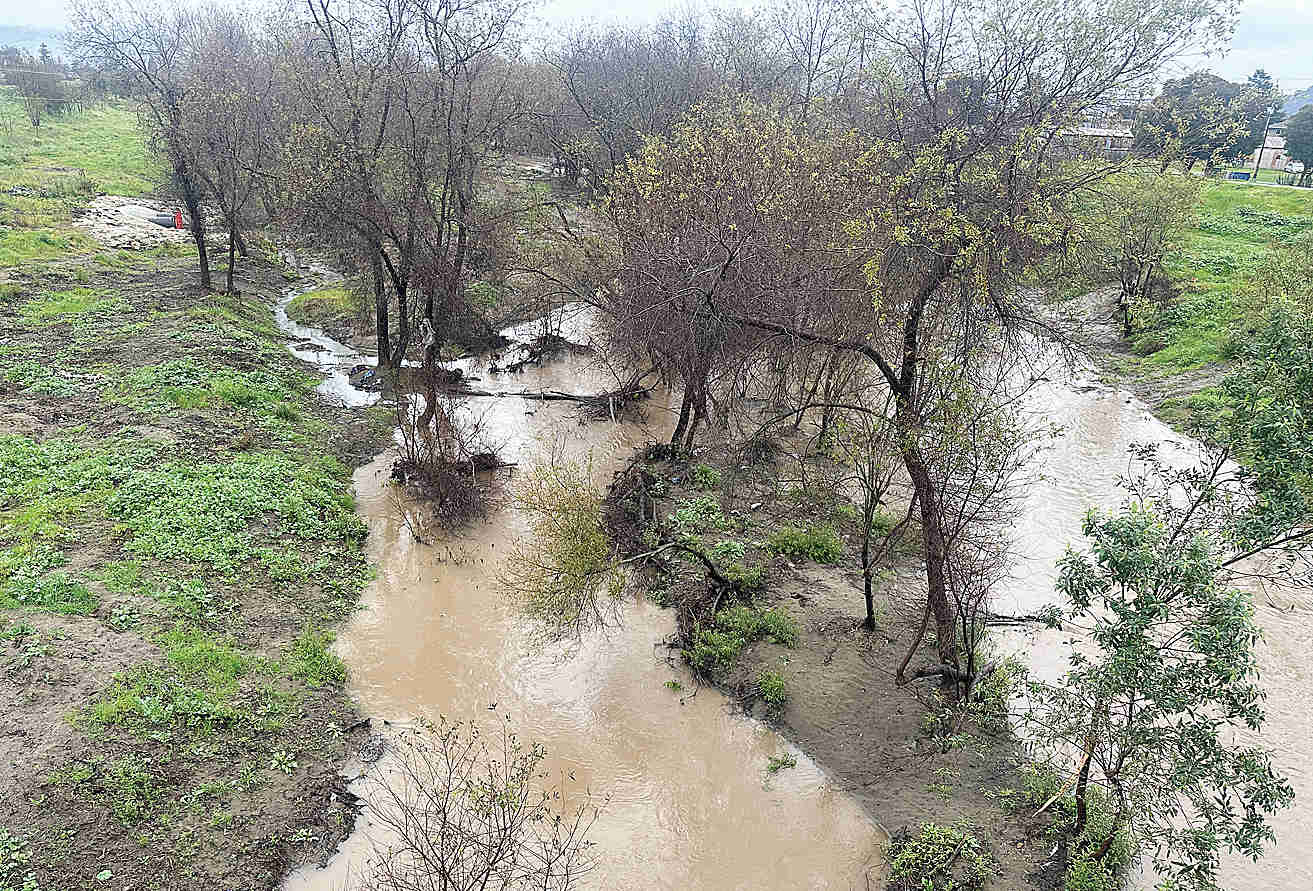
The work includes additional vegetation removal along several miles of the Pajaro River, sediment removal from Salsipuedes Creek and engineering for new seepage blankets and berms along vulnerable portions of the Monterey County side of the levee system.
The largest expenditure is a $586,393 increase to the agency’s ongoing contract with Atlas Tree Service. Of that, $335,059 is for baseline vegetation work, while another $251,294 is optional. The amendment brings the total value of the existing contract to no more than $915,593.
Strudley said crews plan a “pretty comprehensive clearing out of material,” particularly younger, dense vegetation that can impede floodwaters. Work generally avoids the low-flow channel and large heritage trees, he said.
“It’s really going to be limited by money more than anything else,” Strudley said.
The agency is also moving toward removing sediment that has accumulated in Salsipuedes Creek near Highway 152. Vegetation has grown atop deposits in the channel, and Strudley said the area periodically needs to be cleared.
PRFMA has authorized a contract of up to $63,000 with Environmental Science Associates, roughly half of which will pay for emergency permitting for that work. The remainder will be held in reserve in case additional emergency permitting is necessary during the winter.
The board also accepted an $88,650 contract with Sacramento-based engineering company Wood Rodgers to analyze where additional fortification should be constructed along the Pajaro River levee.
That could include seepage blankets, which place additional material along the outside of the levee, and seepage berms, which add weight to help stabilize it while allowing water to seep through without carrying away soil that could weaken the structure.
PRFMA completed similar work in 2024, spending about $1.6 million to rebuild slopes and restore the original design height along roughly 3,000 feet of levee on the Monterey County side, including near the site of the March 2023 breach. The agency now wants to continue that work downstream.
Strudley said Wood Rodgers’ analysis will help determine where seepage berms should go. Previous breach locations appear to correlate with places where the historic river channel crossed the levee, he said, making those areas possible candidates for additional fortification.
The preparations come amid growing attention to El Niño conditions in the Pacific Ocean.
Strudley cautioned that El Niño is a measure of unusually warm surface water in the equatorial Pacific, not a prediction of rainfall itself. The Central Coast also sits between areas where El Niño’s effects are more statistically predictable, making local forecasts particularly uncertain.
That uncertainty was evident during the winter of 2022-23, when a series of atmospheric rivers battered the region and the Pajaro River levee breached despite La Niña conditions at the time.
Still, Strudley said modeling is trending toward a strong El Niño and a wetter-than-average winter, potentially including the Central Coast.
Board member Luis Alejo said the possibility warrants aggressive preparation. He also called for PRFMA and its member agencies to ask Gov. Gavin Newsom for an emergency declaration and executive order that could ease some state environmental restrictions on work in rivers and streams.
Alejo said similar action following the 2023 floods helped agencies perform vegetation removal while complying with protections for sensitive habitat and species. He also urged the state to provide financial assistance to communities preparing for possible flooding.
Strudley said PRFMA would coordinate on such a letter, while noting that federal permitting requirements would remain.
The agency currently has about $4.5 million in capital reserves. Strudley said some of that money could pay for additional levee fortification and the optional vegetation work, but cautioned against spending too much before winter.
“We do want to have a reserve available” for emergency flood fighting, Strudley said, adding that he is uncertain how much assistance could be available from FEMA or the U.S. Army Corps of Engineers.