

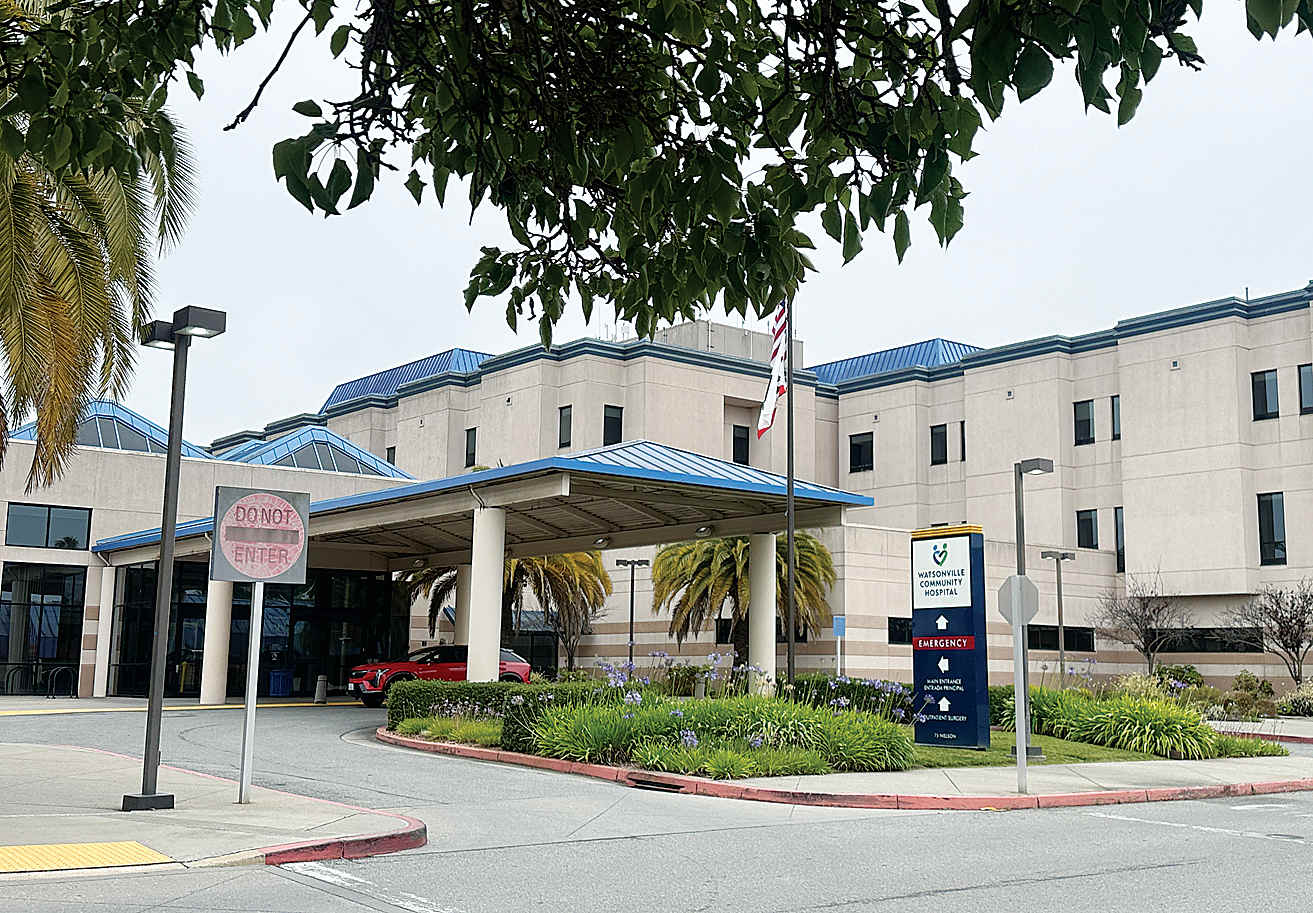
Watsonville Community Hospital may close in the next six to 12 months if it does not improve its financial situation.
That was the message from hospital CEO Tim Moran at Tuesday’s Pajaro Valley Health Care District special meeting.
According to CFO Julie Peterson, the hospital lost $22.4 million in 2025. As the hospital faces a cash shortfall of $85,000 per day, closing service lines was proposed as a partial solution, which included the neonatal intensive care unit, Women’s and Children’s Services and a return to ICU tele-intensivists.
The conference room was packed with nurses and community members voicing their concerns over the potentially permanent NICU closure at Watsonville Community Hospital, which began on July 10.
Hospital administrators originally cited staffing shortages as the reason for temporarily shuttering the NICU. But as the hospital faces a large daily cash shortfall, closing service lines was proposed as a more permanent solution.
“I think we really haven’t done what’s needed to get done,” said Board member Joe Gallagher, a retired physician, regarding potential service line closures.
H.R. 1, also known as the Big Beautiful Bill, was also a cause for discussion. Taking effect in January, H.R. 1 is also projected to hit hard, as a loss of insurance (in this case, Medi-Cal) often results in emergency room visits after patients prolong treatment for lack of affordability. This bill is expected to cost the hospital $4 to $6 million over the next year and close to $100 million over the next 10 years, according to Peterson.
The Board also heard potential growth strategies and operational improvements to increase profits, which included growing interventional gastroenterology, general surgery and orthopedic offerings.
“We cannot grow our way out of this,” Peterson said regarding the increased possibility of closing service lines.
Around 100 people attended the meeting, many dressed in red scrubs representing the National Nurses United union that represents Watsonville Community Hospital nurses. Nurses pointed out concerns with the potential closures, citing patterns that the closure of other women’s services often follow suit.
Roseann Farris, an intensive care unit nurse who has worked at WCH for 30 years, said the closure of the NICU can accelerate the closure of the OB department through severe clinical risks, loss of revenue and attrition of skilled doctors and nurses.
“Our hospital’s values need to be reflected in your decisions to put people first, to provide the highest quality of care and earn their trust,” Farris said. “These decisions about service lines and access to healthcare will affect our entire county for decades to come.”
Others urged the Board to consider the long-term impacts closure would have on community members and staff.
Carmin Powell, a pediatric doctor at the hospital, reminded the Board that labor patients will still come to the hospital seeking care. Celeste, an ER nurse, described what a birth in the emergency department, where these patients would likely end up, looks like.
“My first call is always ‘L&D, I need you,’” she said. “We are not set up in the ER to deliver babies daily.
Another nurse echoed her concerns.
“As an ER nurse thinking about the downstream effects, I’m pretty terrified,” said one of the speakers.
LouAnn Martin, who has been working as a labor and delivery nurse at WCH for 26 years, said the local hospitals are not prepared to take on our level of patients.
A nurse from Natividad Medical Center in Salinas, one of three hospitals set to absorb pregnant patients should the closure accelerate, agreed and said their own hospital is understaffed and “absolutely not at a place for extra patients.”
Jessica Cruz, a labor and delivery nurse, pointed out the difficulty transferring patients in or near active labor, saying some emergency medical services won’t do it due to risks.
Financially, neonatal transfers add up, with the added cost of transferring the 80 babies the NICU serves on average per year is between $800,000 and $4.4 million.
“I’m concerned we’re making decisions based on numbers without thinking about the nitty gritty,” Cruz said.
Tuesday’s meeting was a special board meeting, during which the Board received a presentation and heard discussions, but made no decisions. Board Chair Tony Nuñez said future meetings will be held in a bigger room to account for increased attendance.
Gallagher said the Board is not ready to make a recommendation.
“You, as board members, have to decide that women and children are worth fighting for,” said Myrna Mungal, a pediatric hospitalist at the hospital. “Do not allow only the privileged to survive childbirth.”
Syd Fluker is a California Local News Fellow. Visit fellowships.journalism.berkeley.edu/cafellows.