
Around 5,500 residents of Santa Cruz County are at risk of losing some or all of their CalFresh benefits as additional and stricter eligibility requirements slowly take effect.
These changes come after H.R. 1 implemented the most severe cuts in program history.
H.R. 1, commonly known as President Trump’s One Big Beautiful Bill, is a federal law that changes federal spending for healthcare and welfare programs like the Supplemental Nutrition Assistance Program (SNAP), known as CalFresh in California.
Santa Cruz County faces an estimated $11 million annual loss of federal dollars for CalFresh funding, according to Jim Dale, the assistant director for the employment and benefits services division of the county’s Human Services Department (HSD).
Around one in three county residents receive public assistance from welfare programs. According to HSD’s Social Services Program Maps, 42,278 residents received CalFresh from 2025-2026.
“While we’re a small county, the level of need is deep,” said Erica Padilla-Chavez, CEO of Second Harvest Food Bank Santa Cruz County.
In the Pajaro Valley Health Care District, which extends from Aptos to Pajaro, 17,641 residents receive food assistance—18% of the total district population. This amounts to $30.1 million in federal dollars being distributed in the South County economy annually.
CalFresh enrollment is down 6% in the county overall, faring slightly better than the state average of 6.5% as of July, the last month data was available.
But the average is much higher nationwide, with 5.5 million people having lost benefits across the U.S. so far—13% of enrollees, according to the Center on Budget and Policy Priorities SNAP Tracker.
National enrollment is at its lowest in 17 years at 36.1 million, a greater loss than the Congressional Budget Office’s prediction of 39.3 million from February.
The center said it is very unlikely that reduced need is causing the drop in enrollment, especially as grocery prices increased 1.8% over the past year and continue to rise, according to the Bureau of Labor Statistics Consumer Price Index.
The waves of eligibility changes affected administrators and applicants alike. Dale said he has weekly communication with public-facing staff to keep everyone up to date.
The county is adapting to rule changes and handling an average of 800-1300 CalFresh benefit renewals per month—with less federal funding for administrative costs.
Prior to H.R. 1, the federal government covered 50% of a county’s administrative costs for benefit services, the county paid 12.5% and the state covered the rest. Now, the state and county will have to significantly increase their amounts.
States cover 52.5% and counties 22.5% under the new format, which is estimated to cost the county at least $2 million annually, Dale said.
The law also expanded and tightened the ABAWD (able-bodied adults without dependents) work requirements and time limits, which took effect June 1.
To qualify for CalFresh, adults without a minor in their care need to be working, volunteering or in school for 20 hours a week with some exceptions. The definition of minor was changed from 18 to 14, meaning parents whose youngest is older than 14 are no longer eligible. It also expands the law to ages 55-64, veterans and people experiencing homelessness.
Adults who do not complete the work requirements are eligible for three months of support every three years.
In theory, the ABAWD requirements have been around for years. But for Dale, who’s been in the industry for 13 years, the requirements were never required based on California being on a federal waiver.
In Santa Cruz County, Dale expects that as many as 5,500 people could be impacted by the change. The requirement doesn’t take effect until the person renews their benefits, which happens every 12 months, meaning the impact won’t be felt in full until early next summer.
But H.R. 1 expanded benefits in some areas as well. As of June 1, it’s easier for undergraduate students to qualify for CalFresh.
Students enrolled at least part-time at California community colleges, state universities or University of California campuses will no longer need to meet additional student work requirements to qualify for benefits. The change also recategorized grants, scholarships, loans and fellowships for higher education as separate from income, expanding which students can access CalFresh.
The changes in eligibility make it difficult to track how many residents have lost CalFresh. Over the last two months, HSD received around 2,100 applications each month, compared to steady numbers around a thousand in the previous five months.
“We need to be attentive to the number of people that have, in fact, lost CalFresh because if you just look at the numbers and the data, and you don’t understand that this is the first year the students were allowed in, it could make it appear like the county’s fine,” Padilla-Chavez said.
The law also introduced error rate penalties, which requires states to cover a portion of benefits in relation to the state’s rate of error in delivering benefit services.
The U.S. Department of Agriculture reported more than $10 billion in SNAP benefits were paid incorrectly in 2025, putting the national payment error rate at 10.62%. California’s rate was higher, at 10.93%, and is expected to cost the state almost $2 billion in SNAP funding.
The error rates aren’t finalized and are calculated via random sampling of counties across the state depending on population size. But this means staff members are having to balance supporting community members in need with getting the required documentation perfect in case of sampling, Dale said.
For those workers, it’s a “damned if you do, damned if you don’t” situation, he said.
“Anytime you ask for more documentation, more verification, you’re pushing the burden onto [people] and you’re making them less inclined to access the system,” Dale said.
Typically, federal dollars fund 100% of CalFresh benefits. As the error rate trickles down to counties, Santa Cruz County is faced with being required to pay upward of $11 million of its $75 million annual federal funding, or about $850,0000 per month.
That loss runs deeper than the people who no longer qualify for benefits—it will be felt on an economic level.
“$75 million, through CalFresh alone, is being infused into our community,” Dale said. “…This isn’t just a giveaway to individuals and families, right? This is about strengthening the system as a whole.”
Going to a food bank doesn’t provide the same economic circulation that shopping at a store would, Padilla-Chavez said. CalFresh dollars support the individuals and families that rely on them, but they also contribute to the local food system that employs workers and food producers in the community.
“CalFresh is such an important program and one that’s proven to be very successful in multiple ways of nourishing our community, yes, but also contributing to our local economy and ensuring that our food systems are healthy,” Padilla-Chavez said.
Padilla-Chavez said SNAP is the first line of defense against food insecurity, followed by food banks—but that pattern is changing nationwide, and food banks are quickly finding themselves on the front lines.
Feeding America’s latest food bank survey showed about half of responding food banks reported seeing an average 15% year-over-year increase in people served. That percentage is expected to rise this year as the last of the H.R. 1 changes toward food assistance took effect Oct. 1.
“No food bank is designed to be the replacement of a federal safety-net program” Padilla-Chavez said.
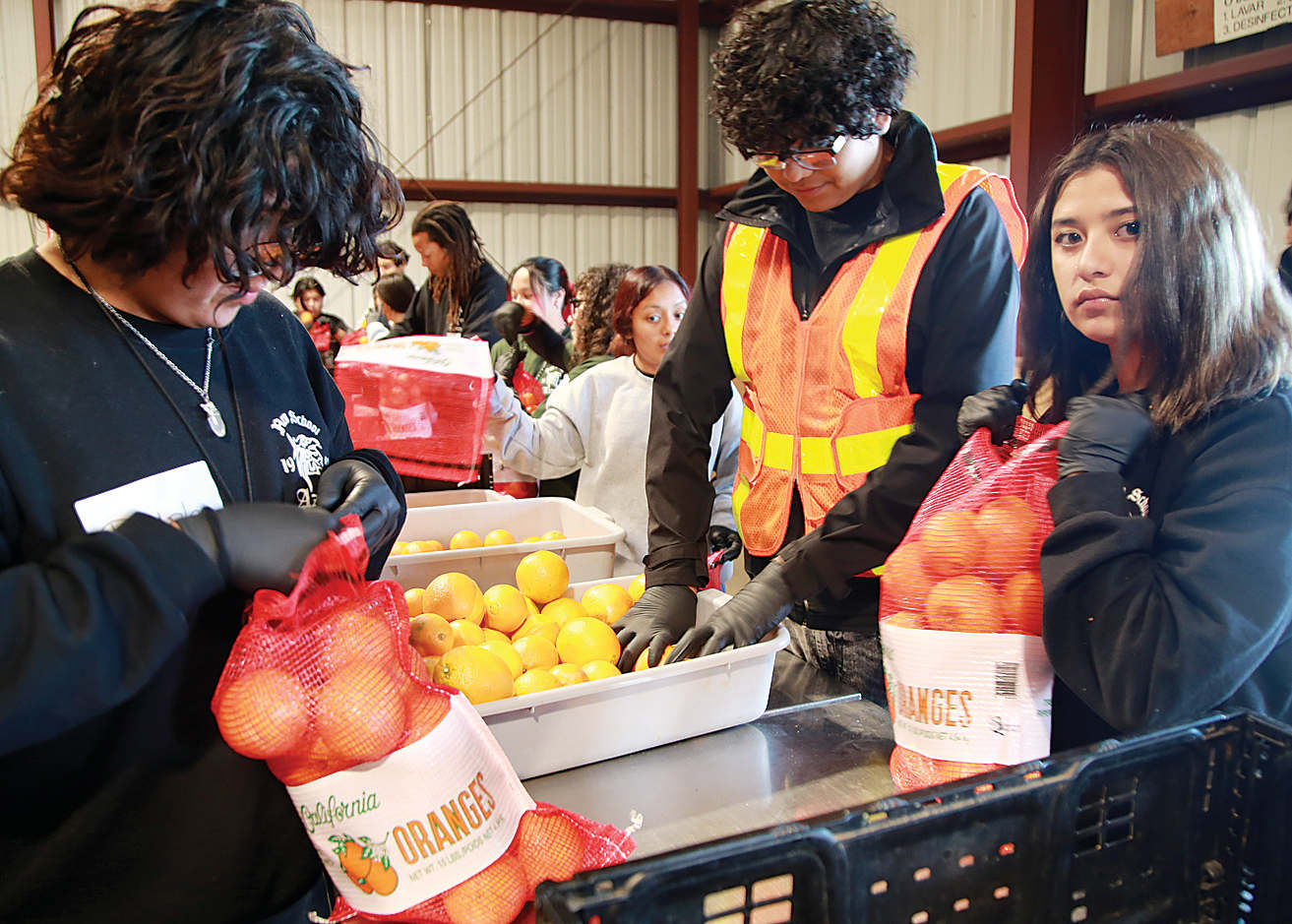
In Santa Cruz County, Second Harvest serves around 82,000 residents a month—over 30,000 more than the pre-pandemic average. Padilla-Chavez pays attention to national and local trends to predict levels of need, and is expecting these numbers to rise.
Second Harvest has been focusing on informing and educating community members about how the federal changes affect their coverage, which Padilla-Chavez said is a community effort with organizations throughout the county.
Confusion around rule changes led some people to believe the program was gone entirely, Padilla-Chavez said. Her team is focused on outreach and supporting the community to make informed decisions, acting as a broker between the county benefits office and residents in need.
“All of those people that used to benefit from this program that have been rooted out or have chosen to drop it because of their anxiety don’t have that support,” Padilla-Chavez said. “This is real, and it’s impacting people.”
•••
Syd Fluker is a California Local News Fellow. Visit fellowships.journalism.berkeley.edu/cafellows.