
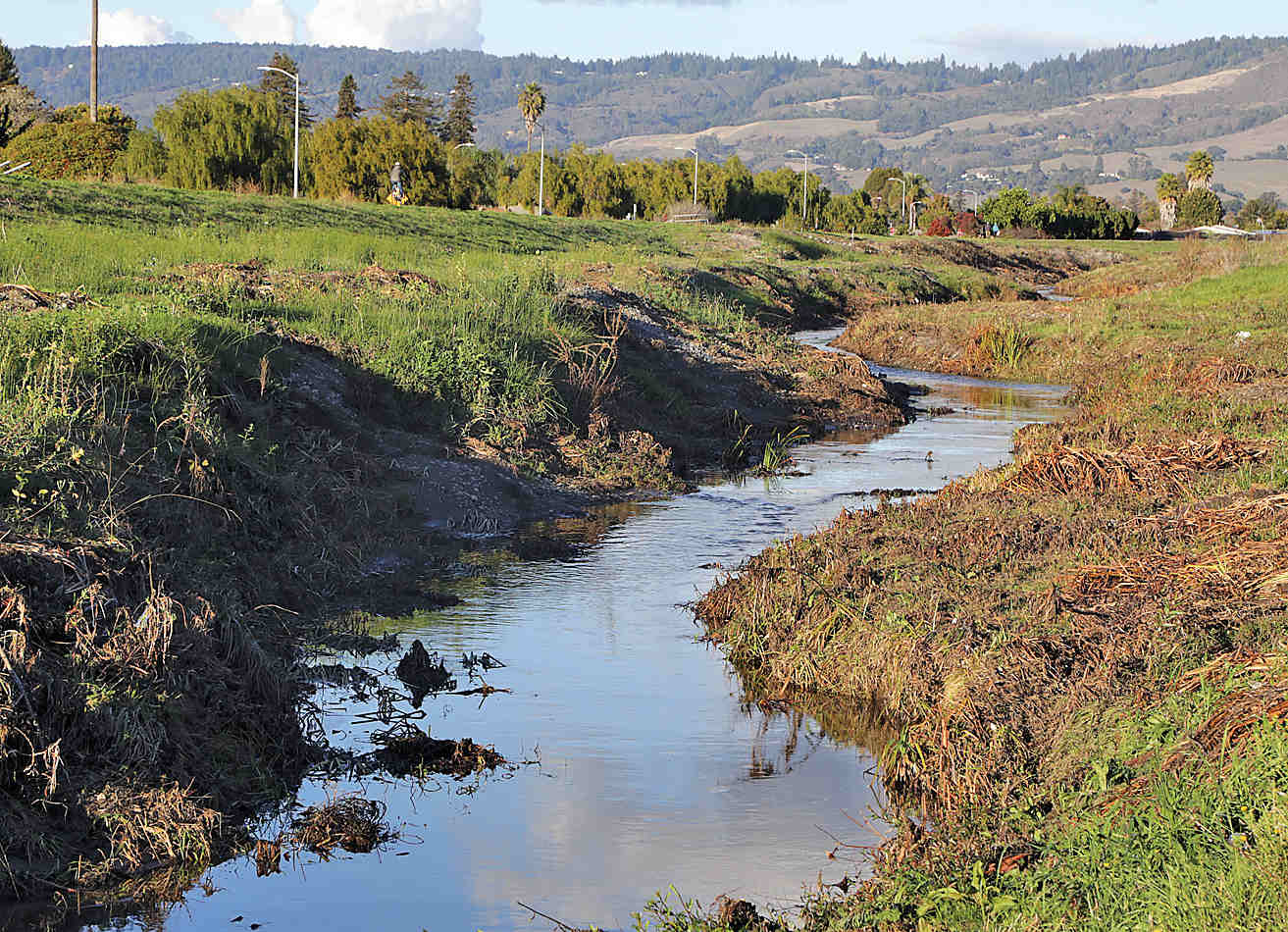
Despite a series of storms that have soaked the Pajaro Valley, the Pajaro River and its tributaries have remained well below levels that would threaten surrounding communities, according to Pajaro Regional Flood Management Agency Director Mark Strudley.
The heaviest flows occurred in Salsipuedes and Corralitos creeks, where water rose to about 5.5 feet during the most recent storm.
The rising water moved some sediment in recently dredged sections of the channel, but caused no significant problems, Strudley said.
“We did get some sediment movement in there and some rearrangement, but nothing of concern,” he said.
The Pajaro River itself saw little change in water levels.
Before the storms, much of the riverbed was dry, with isolated pools of water. The recent rainfall has created a continuous flow, but the river has not risen substantially.
Strudley said that is partly because the rainy season is just beginning and the surrounding watersheds are still absorbing moisture.
“It takes a lot more than this a little bit later in the season typically to get the Pajaro River itself to come up appreciably,” he said.
That means recent flood prevention work, including vegetation removal and channel maintenance, has not yet faced a significant test.
PRFMA crews are continuing to remove vegetation along the river, working downstream from its upper reaches toward sections through Watsonville and Pajaro that were cleared in late 2025.
Additional dredging is also planned along a branch of Salsipuedes Creek extending toward the College Road culvert near College Lake.
The work is part of ongoing efforts to reduce flood risks in communities that have experienced repeated flooding, most recently during the devastating March 2023 levee breach that inundated Pajaro and displaced thousands of residents.
The larger Pajaro River Flood Risk Management Project is intended to improve flood protection along the river and its tributaries.
Construction on Reach 6 along Corralitos Creek is currently paused because of rain. Strudley said work could remain suspended through winter if wet conditions continue, with construction resuming in spring.
Meanwhile, PRFMA is seeking additional state and federal funding to build seepage blankets and berms, structures designed to help stabilize levees and reduce the risk of water seeping through or beneath them.
Strudley said the agency does not currently have enough money to complete all the planned improvements.
“We’re going to be spending all of our resources towards building those things, but we don’t have enough to accomplish all of it,” he said.
With more rain forecast, Strudley emphasized that preparedness remains the priority.
He encouraged residents to monitor weather forecasts and emergency information from Santa Cruz and Monterey counties and the City of Watsonville rather than waiting for warnings to reach them.