

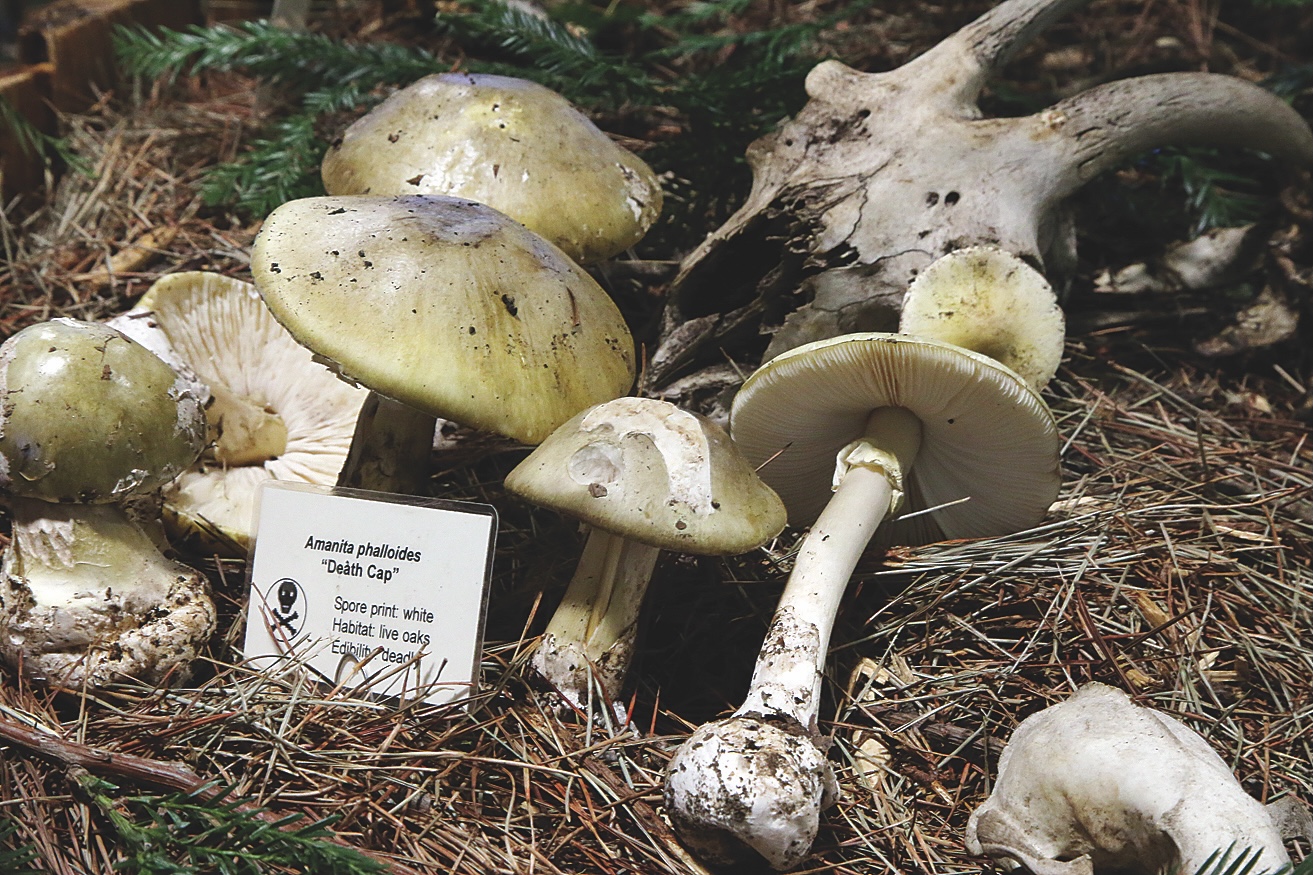
Poisonous death cap mushrooms have sickened people in Santa Cruz and Monterey counties, according to a statewide list of areas reporting severe illnesses.
A group of California doctors warned Wednesday that foraging for wild mushrooms can be deadly, after an unusually high number of people have been sickened by the deadly fungus.
Poisoning from death caps, whose scientific name is amanita phalloides, is marked by delayed gastrointestinal symptoms, including nausea, vomiting, diarrhea and abdominal pain, according to Dr. Craig Smollin, a professor of emergency medicine at UC San Francisco Medical Center.
Those symptoms can be followed by progressive liver injury that in some cases advances to liver failure and death, he said.
Smollin said a typical year might bring as many as five death cap poisonings, but 35 cases have been reported statewide since Nov. 18. The most recent was reported Jan. 4. Patients have ranged in age from 19 months to 67 years old.
Medical treatment has been provided in Alameda, Contra Costa, Monterey, San Francisco, San Luis Obispo, San Mateo, Santa Clara, Santa Cruz and Sonoma counties, Smollin said.
Mushrooms linked to the cases were foraged from multiple locations, including Castroville, Millbrae, Novato, the Oakland Hills, Pinnacles National Park, Santa Cruz, Santa Rosa, the Salinas area and the Stinson Beach area, he said.
All of the patients either gathered the mushrooms themselves or ate mushrooms foraged by family members or others in their group, Smollin said. None of the cases were linked to mushrooms purchased from stores, restaurants, farmers markets or other vendors.
During the outbreak, three adults have died and three patients have received liver transplants, Smollin said. As of Wednesday, one patient remained hospitalized.
“There is no amount of Amanita phalloides that would be considered safe,” Smollin said, adding that even a single bite can cause significant toxicity. He warned there is no way to neutralize the toxin through cooking or freezing.
Smollin said California’s last major outbreak occurred in 2016, when 14 cases were reported — fewer than half the current total. He said mycologists have reported a large number of death caps fruiting in the region, making them easier to find and increasing the risk for accidental poisoning.
Dr. Rita Nguyen, assistant state public health officer at the California Department of Public Health, said the cases have involved people who speak a range of languages, including Spanish, Chinese, Mandarin, English and Mixteco, highlighting the need for broad public outreach.
While the Bay Area is an ideal environment for death caps, Nguyen said they have also been found as far south as Los Angeles and possibly into the San Diego area, as well as north into Oregon, Washington and Canada.
Health officials urged people to avoid eating wild mushrooms unless they have been identified by an expert, and said death caps are expected to continue fruiting.
Health officials urged people to avoid eating wild mushrooms unless they have been identified by an expert, and said death caps are expected to continue fruiting.Anyone who believes they may have ingested death caps should call the California Poison Control System at 800-222-1222. More information is available at bit.ly/3YBh2s9.