
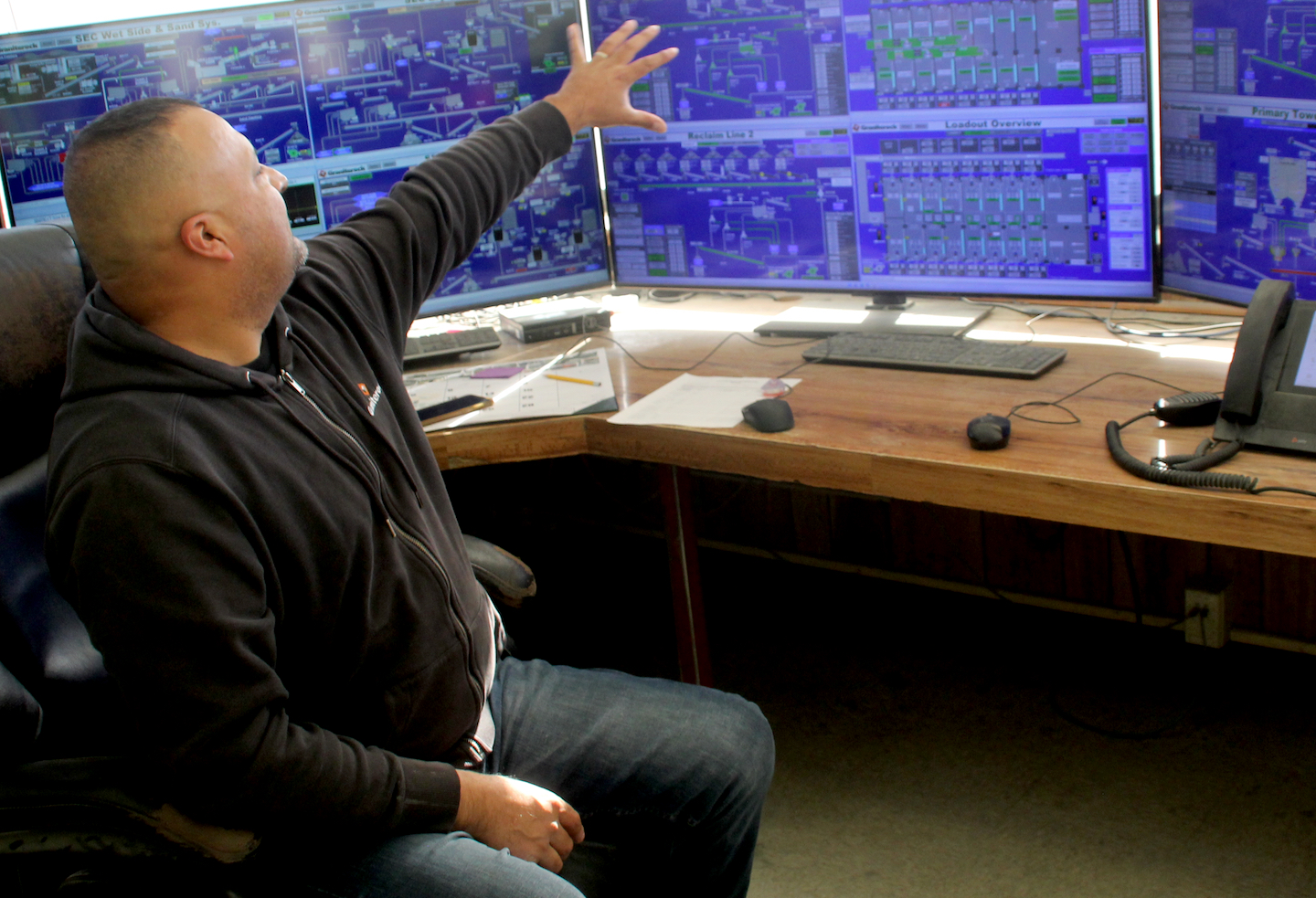
In a tower at the center of Graniterock’s 1,000-acre Wilson Quarry in Aromas, Plant Operator Cesar Barajas sits in front of an array of 22 computer screens, each of them showing various aspects of the company’s vast and complex operation, which is manned by as many as 100 employees.
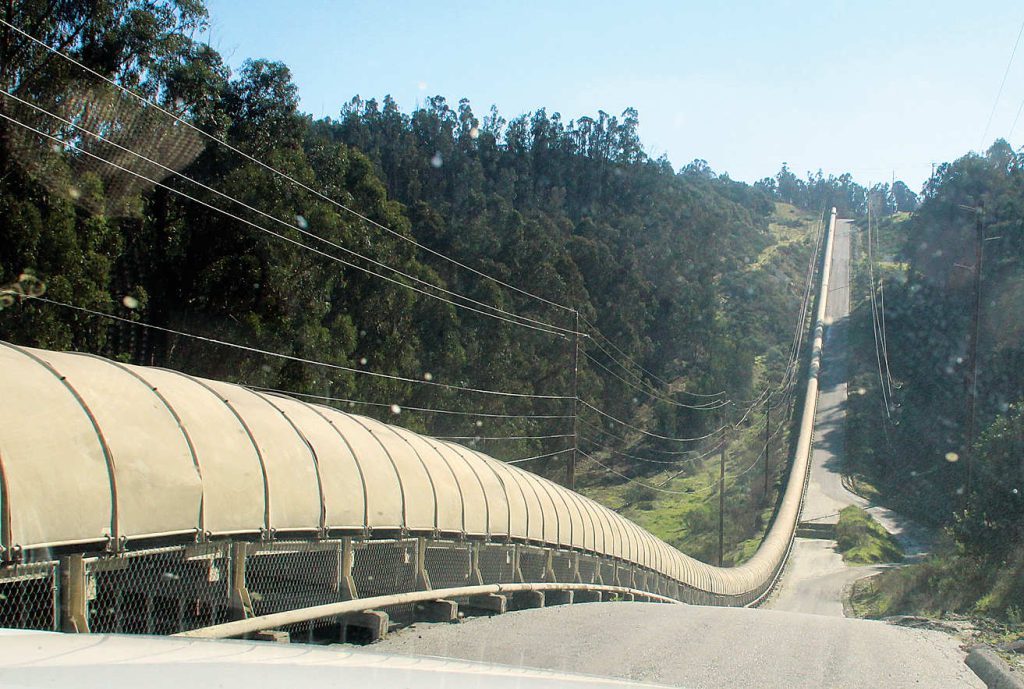
This starts in the 300-foot-deep pit where Volkswagen-sized chunks of granite are taken from the earth and placed on an array of conveyor belts that transport them to gargantuan crushing plants, where they are transformed into rocks of various sizes.
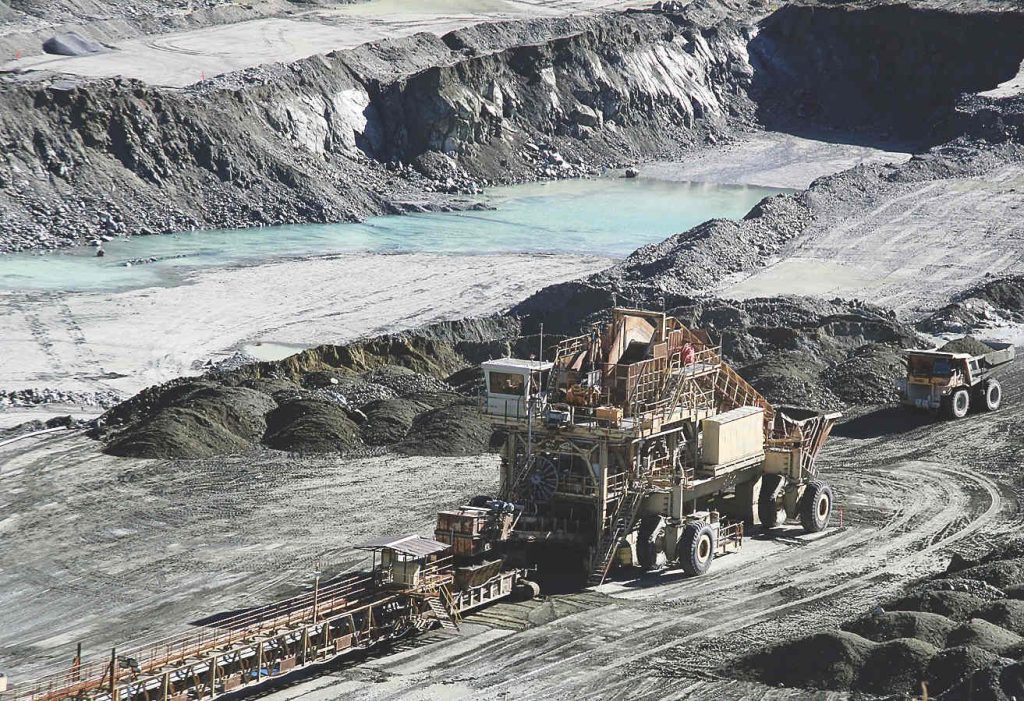
From his commander’s chair, Baraja also sees the machines that load the final products—including rock, cement and asphalt—into trucks and railcars, where they go to myriad regional construction projects from roads to buildings, and to numerous local airports.
“I have control of the primary operation from here,” he says. “I have control of everything in the quarry that’s automated.”
Baraja has been with the company for 19 years, a relatively low number for a company where it is not unusual to find employees who have stayed for several decades.
CEO Peter Lemon, who took the reins in 2022, attributes that longevity to the company’s deep-rooted culture.
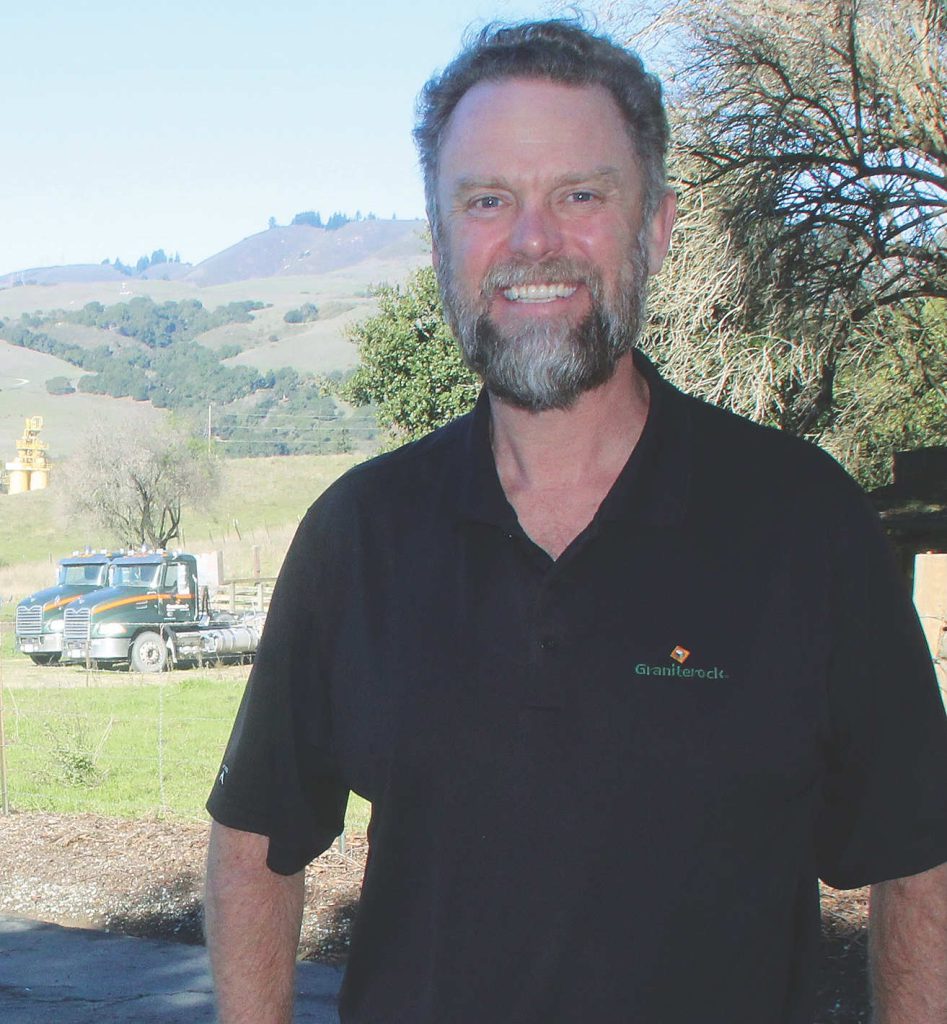
“Having a company that is family-owned that cares about its people, cares about the community in which they live, is just part of who Graniterock is,” he says. “We value being here. We value the people we employ being here. We want to be here. We like being here.”
In addition, the company gives its employees the chance to try multiple career paths and opportunities, Lemon says.
“You don’t have to leave,” he says. “You can find your next career right here with us.”
The company this year is celebrating its 125th anniversary. That history dates back to 1899, when A.R. Wilson, who was an MIT graduate and an engineer for the city of Oakland, came to the area and purchased the land with a group of investors for a rumored $10,000 in gold coins.
Wilson, it would seem, prognosticated the coming push to pave the region’s roads, a movement that later came to be known as the State Highways Act of 1915.
And that—in addition to the infrastructure required to make it happen—would take massive amounts of granite and its aggregate products.
“We started making railroad ballast for the same rail line that is still active out here,” says company Marketing Services Manager Keith Severson, who is retiring this year after 29 years with the company.
Soon, Graniterock would boast one of California’s first ready-mix concrete plants, and the first asphalt plants, Severson says.
In the intervening years, the company has grown exponentially, with an estimated 15,000 local projects that include materials, construction and other services.
“If you want to talk about all the places Graniterock has touched in our community, it would be easier to count the things we haven’t,” Lemon says. “It would be hard to find a couple of handfuls of regional infrastructure that don’t have Graniterock as a part of it. We’re the foundation on which the tricounty region is built.”
The company prides itself on its environmentally-friendly practices, such as making “green concrete” by using industrial by-products like slag and fly ash in its cement, along with more energy-intensive heated limestone.
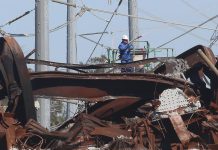
In a recent tour of the quarry, Severson pointed to a giant pile of rubble taken from demolished roadways and buildings—most of which can be crushed and reused—instead of taking up valuable room in landfills.
Perhaps the crown jewel of these green practices is the reclamation area, a serene 22-acre field of native plants and oak woodland sitting atop a mix of fine materials and soils that the company couldn’t use.
The field is edged by a 5-megawatt solar array that provides 65% of the power for the quarry.
Severson says this is the final stage of the quarry process, after the granite supply has been tapped and the company restores it to a natural area.
The success of such practices is evidenced by the company’s now shuttered sand plant near Wilder Ranch in Santa Cruz, where endangered red-legged frogs now thrive in ponds.
“This is what can happen to a mining area, when we’re finished,” he says. “We live and work in the same communities that you do, so we want to take care of it, and to be really good at it, it sort of sets the bar for the industry.”
In addition, having a local source of construction materials not only keeps carbon emissions low but is a boon to the company in a state where trucking costs $180 per hour.
“So to have a local material like this right here in the tricounty area is incredibly advantageous,” Severson says. “In the green building and sustainability world, it’s a very important resource.”
Lemon started his career as an intern with Graniterock 25 years ago, soon after he left U.C. Davis with a civil engineering degree.
In the intervening years, he worked with logistics, construction and as quarry manager before becoming CEO. He reckons that the quarry has more than another century of life left.
This includes the upcoming rebuild of the Pajaro River Levee. The company responded when the levee breached in 2023, and when storms that year damaged Westcliff Drive and the cliffs at Big Sur.
“It’s a core value of being a part of Graniterock,” he says. “Somebody who works here can look out at their community and say, ‘We were a part of that. We were a part of the overpass that you’re driving on. We were a part of the school that your kids go to. We’re a part of the home that you live in and the concrete you’re standing on. It is very gratifying that the work we do is real and it lasts, and the people of our community can continue to enjoy it for a long time.”