
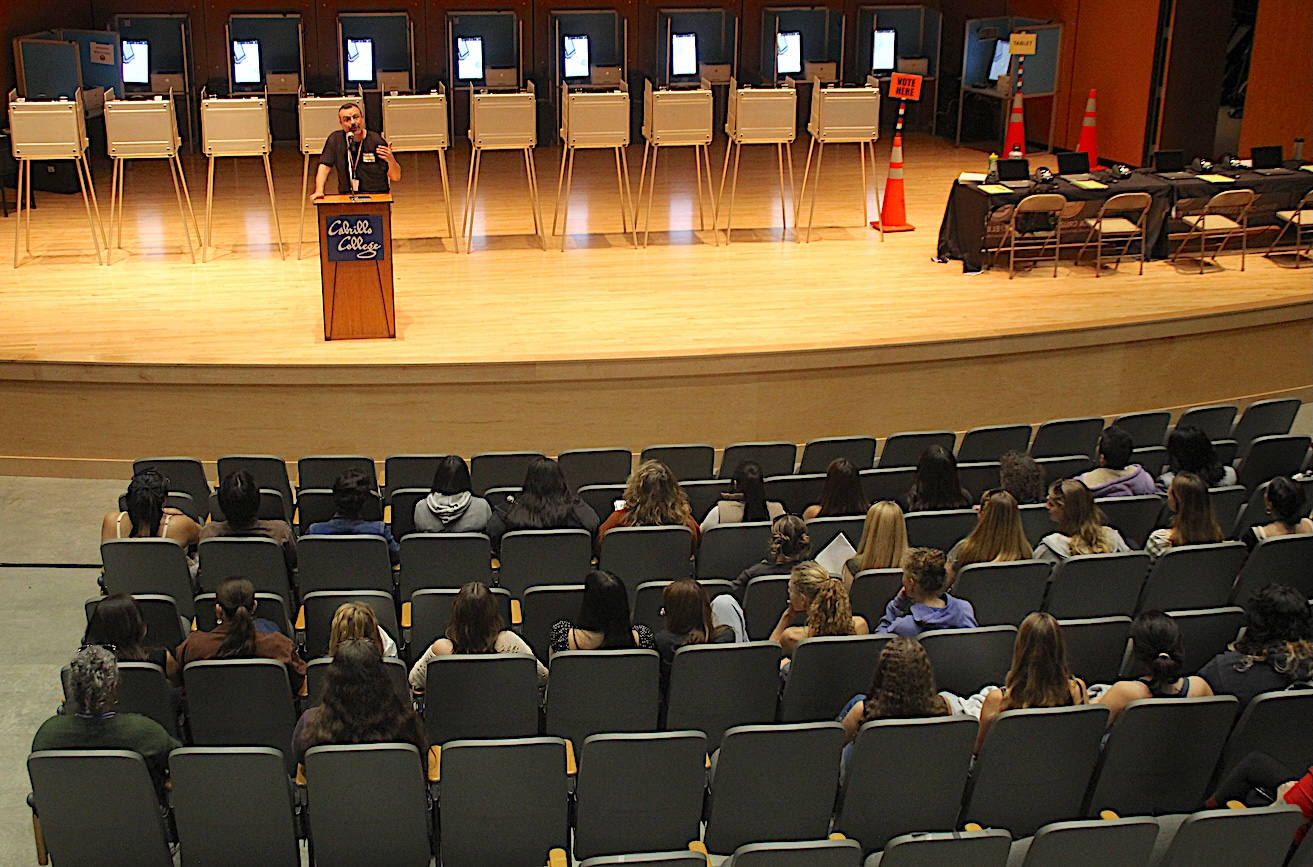
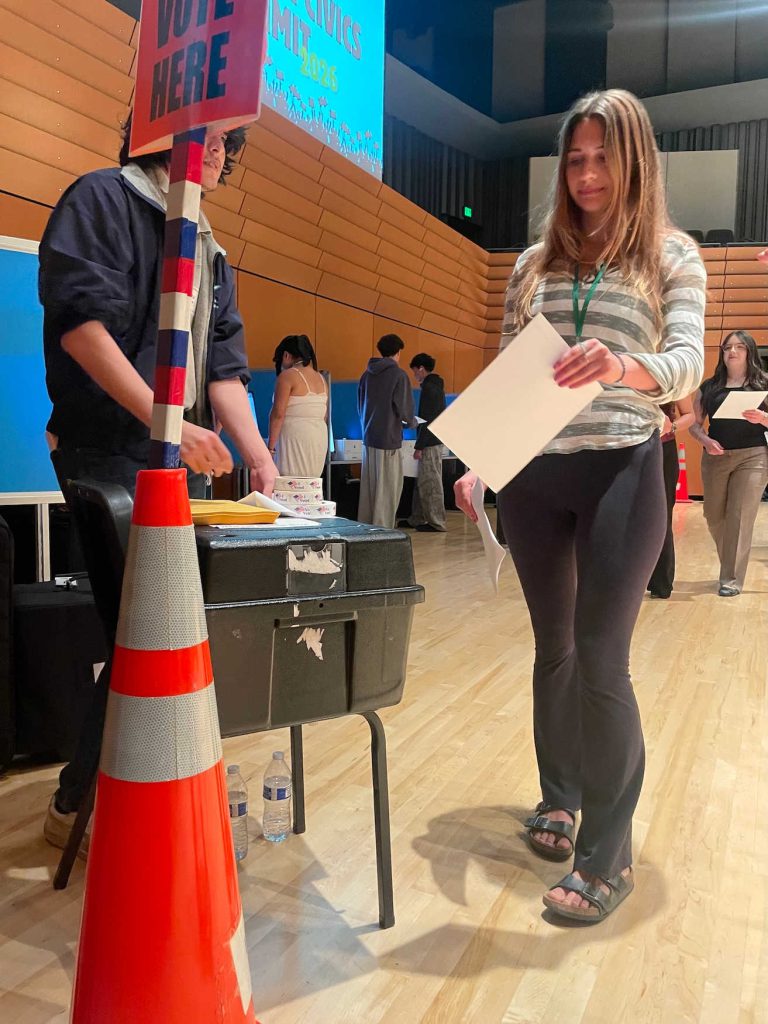
On Friday, about 150 high school juniors from across Santa Cruz County cast their first ballots on three issues that, if passed, would dramatically affect their lives.
Measure A would lower the statewide voting age to 16. Measure B would prohibit the redrawing of state congressional and legislative districts more than once every 10 years. Measure C would require school districts to implement policies restricting cell phone use during school hours.
After the votes were counted, 53% of students supported lowering the voting age. The redistricting measure failed, with 61% opposed. The measure to restrict cell phone use was defeated in a landslide, with 71% voting no.
But the results will not lead to any policy changes.
The mock election—part of the 2026 Santa Cruz County Youth Civics Summit at Cabrillo College in Aptos—was a chance for local officials to demonstrate how voting works, and to encourage civic engagement among young people.
Students also had an opportunity to pre-register to vote, so they will automatically be added to voter rolls when they turn 18.
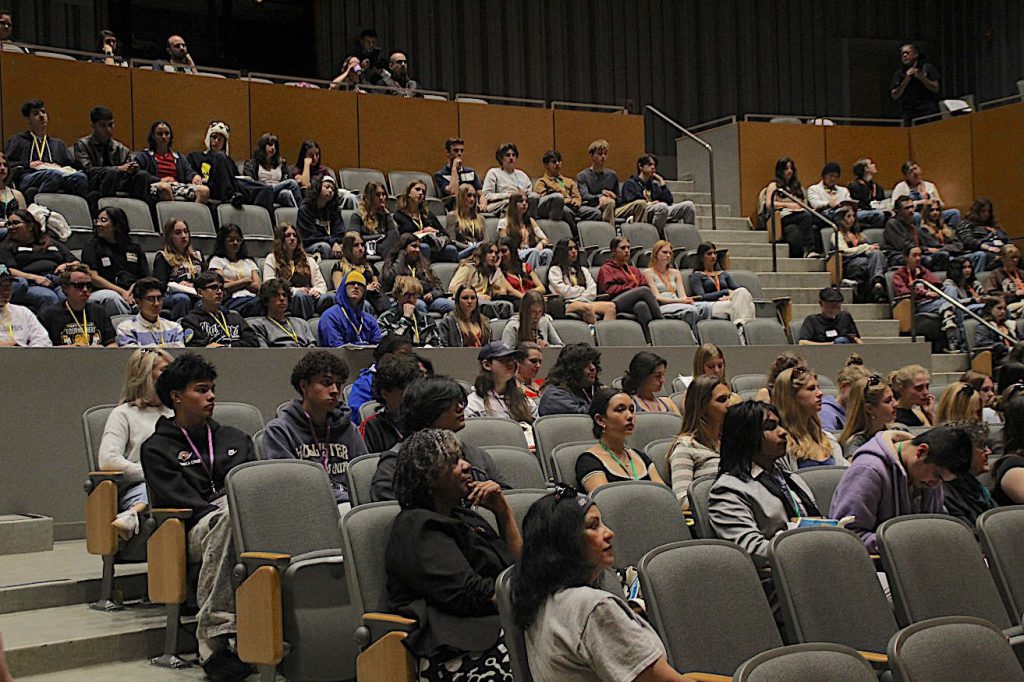
The event was sponsored by the Santa Cruz County Clerk’s Office, Cabrillo College, United Way of Santa Cruz County and the Santa Cruz County Office of Education.
Created in 2017 by then County Clerk Gail Pellerin, it was back from a five year hiatus after being cancelled due to the Covid pandemic.
“The idea is for them to think about their role in participating as active members of our democracy—thinking about being voters, thinking about how they can be media literate so they can use information in a way that helps them define their values and understand their world,” said Santa Cruz County Superintendent of Schools Faris Sabbah.
The event was not intended to promote political ideology or tell students how to vote, Sabbah said.
“What we are standing up for is student voice,” he said. “Whatever they believe, we want them to be thoughtful about it, and we want them to take action in a positive way. So if there are injustices they’re seeing, or if they see ways they think their communities and country can be improved, then we want to support them in that process.”
County Clerk Tricia Webber said the event is designed to help young people understand their place in the democratic process.
“Because all of us fit in the process of democracy, and all of us are part of our community from the day we’re born to the day we leave it,” Webber said. “So it’s important to understand what you can do and how you can be a part of it.”
Pajaro Valley High School junior Maximiliano Barraza said the event carried particular importance at a time when political corruption is widespread, and misinformation and AI-generated content are pervasive.
“I was thinking now would be the best time to refine those skills, to figure out how to check my sources and figure out how to be more politically involved,” he said. “I want to learn more about what I can do as a citizen trying to be more socially engaged.”
Pacific Coast Collegiate School history teacher Tim Ruckle, who brought his AP Government class, said the event aligns with his curriculum.
“I think it’s really important to understand the nuts and bolts of how local and state law works,” Ruckle said.
In his opening remarks, Sabbah stressed the importance of engagement.
“The most dangerous thing in a time like this is to be passive,” he said.
“Your voice is needed now more than ever,” he said. “One of the most hopeful things I see in Santa Cruz County — what gives me inspiration in these difficult times — is the engagement of students like yourselves.”
Webber said she dislikes the phrase “future leaders” when describing young people.
“You are part of the community now,” she said. “You have contributions to make now. You make a difference now.
“That’s what I want most from you today,” Webber said. “I want to empower you to be a voice of democracy, one that speaks calmly and intelligently about the process, and that understands your vote really does count. Today, we’re giving you the keys to the engine.”








How does the Civics Summit help students understand the real impact of voting in a democratic society?