
Standing at the new Felton pump track a few weeks ago, Santa Cruz County Board of Supervisors Chair Monica Martinez watched children race around a facility that she said had taken years of planning, public meetings and collaboration to build.
The children, she said, knew nothing about the budgets, permits, contracts and government processes behind it.
“They just knew that somebody had built a place for them,” Martinez said. “Standing there, I thought, this is really what the government is supposed to do.”
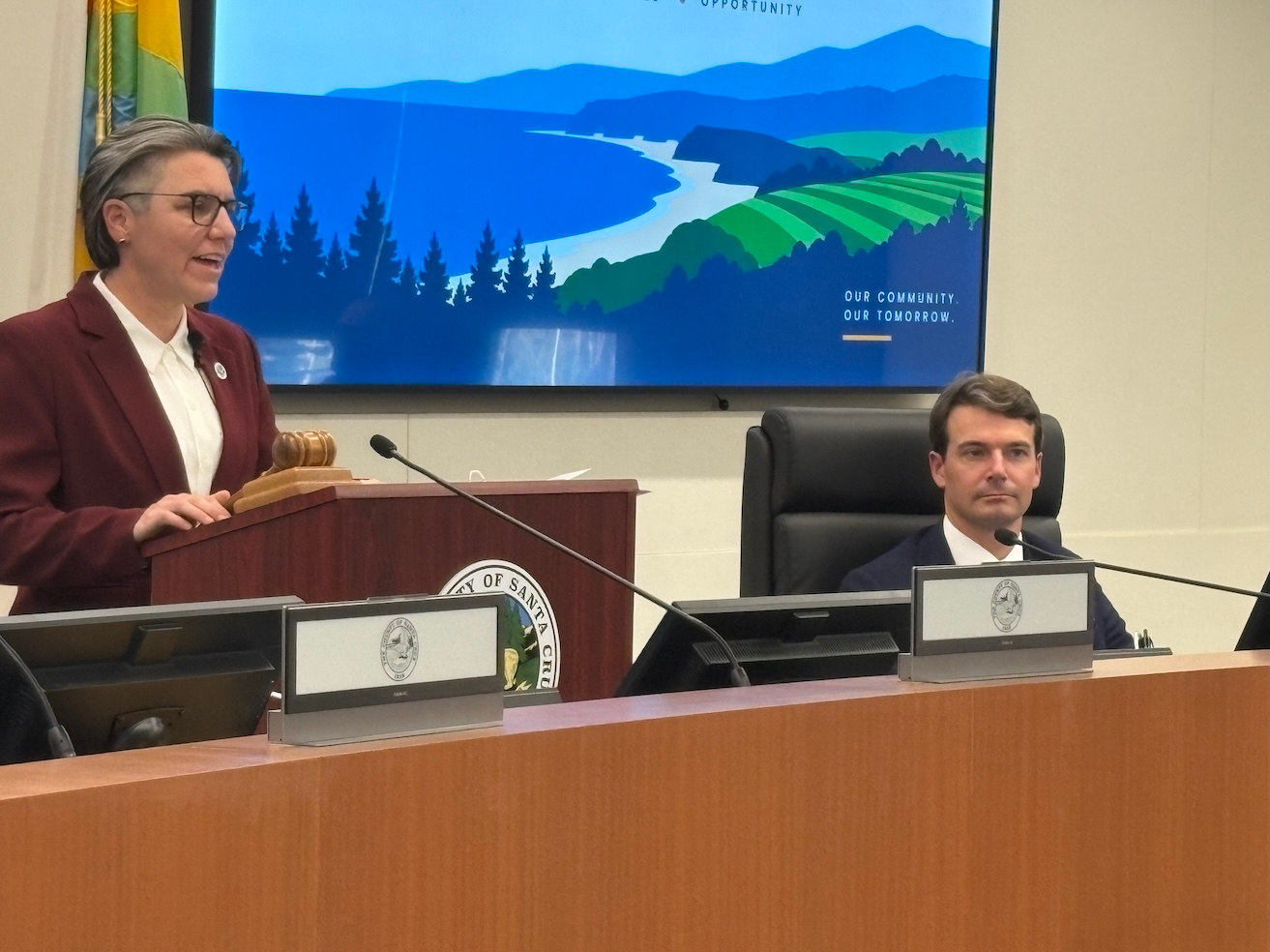
That message served as the foundation Tuesday night for Santa Cruz County’s first State of the County address, delivered by Martinez and County Executive Officer Nicole Coburn.
“We spend an awful lot of time in meetings talking about budgets and permits and contracts,” Martinez said. “But ultimately, the point of all of this is pretty simple. We are supposed to make people’s lives better.”
The address highlighted recent county accomplishments while laying out significant financial challenges officials say threaten services in the coming years.
Among the accomplishments Martinez highlighted was Hope Forward, the new children’s behavioral health facility in Live Oak. Its Crisis Stabilization Unit has served 145 people younger than 20 during its first five months, she said.
Martinez also pointed to Bridge House, which provides 32 beds of transitional housing and behavioral health services, and Hope Village in the Pajaro Valley, which provides 34 beds and connects people experiencing homelessness with services.
But both Martinez and Coburn warned that the county is entering a difficult financial period.
Coburn said the county’s fiscal year 2026-27 budget totals approximately $1.4 billion, including an $861 million general fund. While the budget is balanced, doing so required more than $44 million in one-time funding, including about $30.5 million from general fund reserves.
The county eliminated nearly 62 vacant positions but avoided layoffs, Coburn said.
The county now projects a general fund shortfall of approximately $30 million next year and cumulative shortfalls of roughly $285 million during the next six years if corrective action is not taken.
Coburn said expenses are projected to grow about 6.1% annually, compared with revenue growth of about 5%.
Federal policy changes pose another challenge, she said.
This includes the impacts of H.R. 1, also known as The Big Beautiful Bill.
The county estimates those changes could directly cost its health and human services programs about $25 million annually, while the effect on health care providers and community organizations throughout the county could exceed $200 million annually.
Coburn said roughly one-third of county residents rely on Medi-Cal and about one in five receive CalFresh benefits.
The drop in Medi-Cal enrollment caused by the federal changes could grow to 32%, she said.
“That is 25,000 people in Santa Cruz County,” Coburn said.
She also pointed to Watsonville Community Hospital, which officials said last week had approximately eight days of cash on hand and was losing nearly $86,000 per day. Without immediate action, she said, the hospital could face closure within six to 12 months.
In addition, Coburn touted Measure E, the temporary half-cent sales tax on the November ballot. The county estimates it would produce about $27 million annually for five years, but Coburn said the revenue is not being counted as the solution to the structural deficit. County officials describe it instead as a temporary bridge during the federal funding changes.
The county has begun restricting hiring and travel, and is examining ways to redesign or consolidate services, Coburn said. Officials are also looking at economic development and other ways to increase revenue.
Martinez said those financial realities will require county leaders to make difficult choices while keeping their focus on the effect the government has on residents.
“Our systems are complicated. Budgets are complicated. Health care and housing are complicated,” she said. “But the reason we do this work isn’t complicated. People want to live good lives in a community that they love.”