

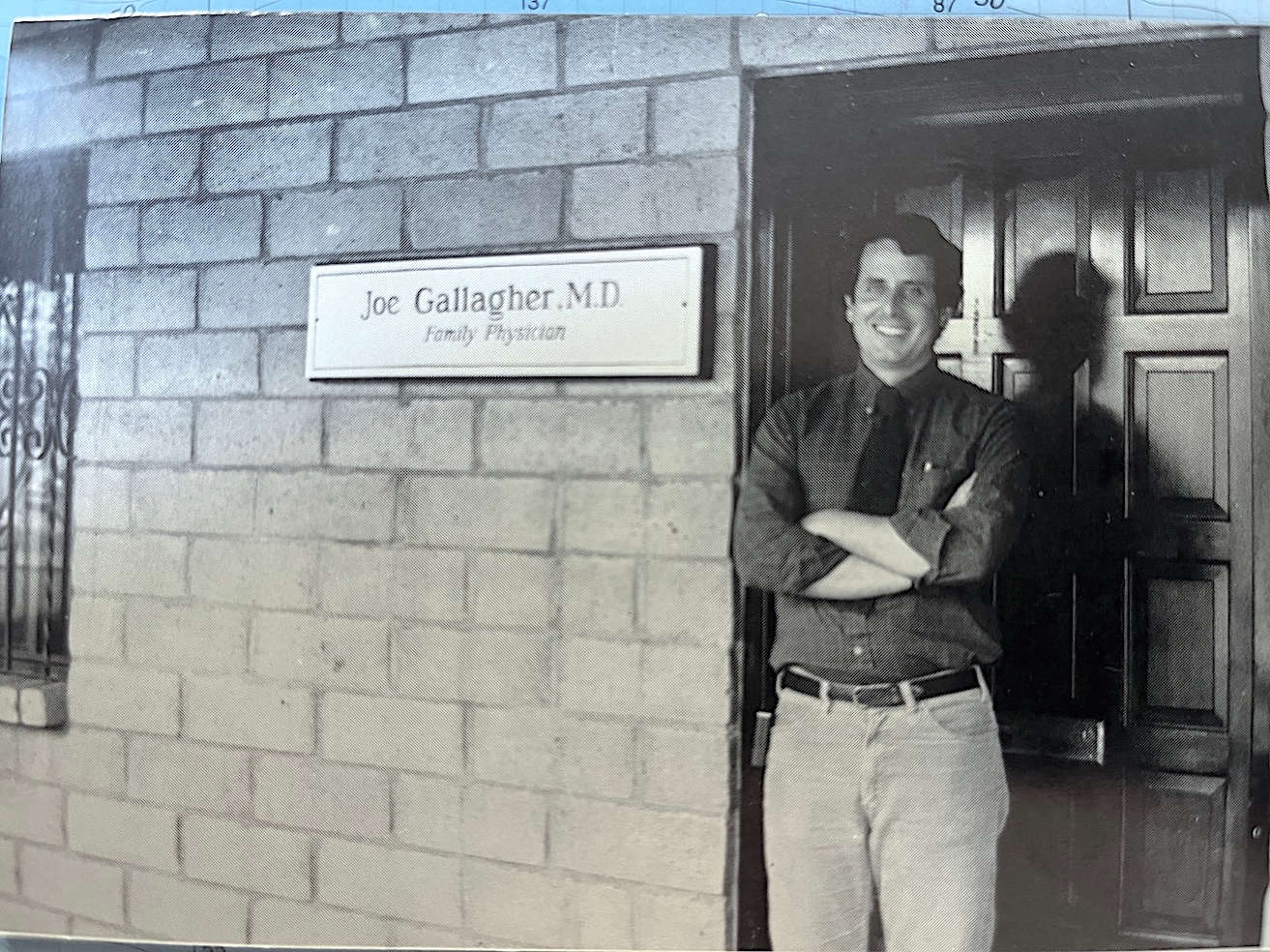
The Pajaronian recently published articles about potential closures of some services at Watsonville Community Hospital. I have a different view of our hospital’s situation that I would like to share.
When WCH was purchased out of bankruptcy, it had less than 10 days’ cash. Most hospitals have about 150 days’ cash. This lack of cash impeded everything we tried to do. In late 2023 we were attacked by cybercriminals. The financial impact of that attack rippled throughout 2024. Shortly after Donald Trump came into office, fear of ICE and CBP led many people to stay home in order to avoid arrest, detention and deportation. People also avoided the hospital and the average number of patients in our hospital dropped from 30 to 25 a day. We lost $2-2.5 million a month and ended 2025 with a $24 million loss. The picture is different for 2026.
Measure N, which this community voted for, gave us the money to purchase the hospital building which freed us from $3 million in annual rent. Unfortunately, the use of Measure N funds is restricted to infrastructure projects. We have been able to make roof repairs, replace air handlers, purchase a new MRI and an additional CT scanner. It is also letting us upgrade two of our four operating rooms. But we can’t use Measure N money for a new electronic medical record system or phone system which are both sorely needed.
Until last year, we had problems with surgeries being cancelled due to lack of anesthesia coverage. And due to a lack of specialists, many patients who came to the ER had to be transferred to other hospitals. Both of these problems confirmed the negative reputation that WCH acquired when we were owned by Community Health Systems (CHS). Consequently, most local people still go elsewhere for their hospital care.
We are on the cusp of having a fully functional hospital with two additional operating rooms, stable anesthesia coverage, reliable CT and MRI, additional gastroenterologists, a pain specialist, a new group of radiologists and an inquiry from interventional radiologists who want to practice at WCH.
In recent months, I have been part of a committee looking at the finances of various service lines. In one of those analyses, eight of 11 service lines lost money. The losses were very widespread and could not be offset by closing the neonatal ICU (NICU) or labor & delivery (L&D). This information made it clear that there is no way to make a 106-bed hospital financially sustainable with an average patient census of 30.
For years, I have tracked the patient census as an indicator of our financial performance. At 25 patients a day we lose $2 million a month, at 32 patients a day we break even and at 35 we make roughly $1 million a month. In the past, CHS made $5 million a year with an average patient census of 45. The cure for our financial problem is more patient volume, not service line cuts.
The way the hospital’s finances were presented at the recent special board meeting led some people to conclude that we lose $85,000 a day. Without the additional payments we get from the state and federal government, that is true. Along with many other California hospitals, we do get additional payments, grants and loans. Recently, we got a $10.6 million grant from a program that Senator John Laird championed. When these state and federal dollars are included, our daily loss drops to $30,000. That comes out to $900,000 a month or $11 million a year, which is still significant. While we did lose $24 million last year, we are close to breaking even so far in 2026. In fact we made slightly more than $400,000 in August.
NICU and L&D are interdependent with each other, but they are the service lines that are least connected to the rest of the hospital. However, there are still vital connections between these services and the emergency department, surgery, lab and radiology. Nurses from L&D evaluate pregnant women who come to the ER to be sure the fetus is OK. Sick children in the ER are frequently evaluated by the pediatric hospitalists who staff the NICU. Obstetricians also evaluate women in the ER for a variety of conditions and perform surgeries on patients in the operating room. All of this generates the need for lab and radiologic studies. All of these patient services will be lost if the NICU and L&D are closed.
The removal of some services undermines the capability of the remaining ones and starts a downward spiral that leads to further cuts. Throughout the industry it is believed to be five times more difficult to restart a service line than to maintain it, so service line cuts are almost never temporary. WCH discontinued admitting most patients between a month old and 18 years old about two years ago and there is no hint of it returning.
To some, it feels like we have “tried everything” but failed to lift WCH’s financial position. This is not accurate. We have solved many of the problems that contribute to WCH’s financial losses, but there is still much more that we can do. I fear that the push to close NICU and L&D is rooted in exhaustion and frustration rather than accurate financial analysis or a realistic assessment of our growth potential.
WCH doctors, nurses and other hospital employees have lots of ideas about how to improve the quality of what we do, how to save money, how to generate more and how to reach out to the community. The goal of engaging the community is to assure local people that they can safely get their hospital care at WCH. The quality of the care WCH provides is better than the California average on every measure.
At this moment I am reminded of a quote from Nelson Mandela, “It always seems impossible until it is done.”
Donald Trump’s “Big Beautiful Bill” (H.R. 1) goes into effect on Jan. 1. With the MediCal cuts and eligibility changes, thousands of people will lose MediCal. As a result, WCH faces a huge challenge. It makes the future seem impossible.
As a 75-year-old, I have seen lots of disasters that weren’t as bad as predicted. I’ve also been through horrible disasters where people pulled together and figured out how to prevail. In our case, ballot measures offer one path forward. Measure E, the temporary 0.5% sales tax, is expected to generate $27 million a year for health care. Proposition 40—the one-time 5% tax on people with assets over $1.5 billion—is projected to generate $100 billion for health care. Please vote for them.
We live in the richest state in the richest country. We are the lifeboat for our community. Nearby hospitals do not have the capacity to replace WCH. There are solutions to our problems. We need to find or make them. There is never a time when the solution is to renege on our commitment to pregnant women and newborn babies in the Pajaro Valley.






Dr Joe
With all due respect WCH is a dinosaur it’s old and outdated in every way. What Watsonville needs is more walk in clinics with small staff and low prices. The average ER visit is for a cold, upset stomach, ear ache or minor problem. Leave the heavy lifts to trauma centers in the area. AMR can take these cases anywhere they need to go for appropriate treatment. Right now you have people on stretchers in the hallways for days with no real. Are to speak of.
WCH served the community in different times. That ship has sailed and so t return. Anyone with means goes to Stamford or SF I was on life support after an accident. They took me to
Natividad where I recovered. Let it go we need smaller cheaper healthcare.
James Santori
Watsonville
What is the breakdown of private insurance, Medicare, medi cal and uninsured patients served yearly?
It is absurd to think one hospital can handle all the health care needs of our county. We have to find a way to keep WCH open! Transports take time and risk lives. Excellent and informative article by Joe Gallagher.