
UC Santa Cruz researchers found a new technique that forecasts harmful algal blooms (HABs) up to seven weeks in advance.
This new method uses copepods, zooplankton that eat toxic algae, as a part of the measuring system.
Copepods produce a chemical called copepodamide, which the algae respond to by producing more toxins—in this case, a neurotoxin called domoic acid, which is a consequence of HABs in the region.
Copepodamides show up about 6-7 weeks before the toxic algae and domoic acid, giving researchers time to examine whether the algae will become more toxic and alert the California Department of Public Health if necessary.
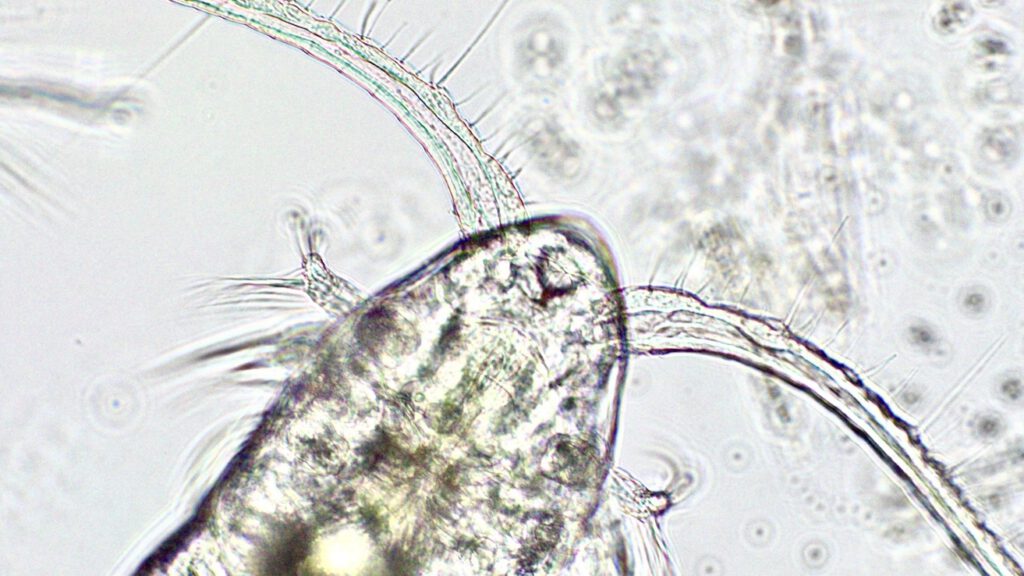
magnification, taken at the Salish Sea Research
Center. (Courtesy of Aubrey Trapp)
“Having a month warning or even longer warning is very, very helpful for keeping humans safe, for knowing what’s going on in the ocean and for being able to respond to those conditions,” said Raphael Kudela, distinguished ocean studies professor at UCSC.
Co-author Aubrey Trapp came up with the idea of using copepodamides while earning her master’s degree at the University of Gothenburg in Sweden, where she worked with the Swedish Food Safety Agency to measure the copepod chemicals as part of their regular toxin monitoring system.
When it came time to pursue a PhD, Trapp sought out Kudela’s lab to test the copepod approach in Monterey Bay.
Three years later, statistics showed a promising result.
“We didn’t develop a new technology,” Trapp said. “We’re just taking a new approach and including a new technique in the monitoring that already exists. This work definitely won’t replace [current regulatory methods], but it’s just making a case for including the copepods and the copepodamides in monitoring.”
To pick up on algal toxins, researchers used solid phase adsorption toxic tracking (SPATT), which is essentially a small tea bag with resin beads that pick up chemicals from the environment.
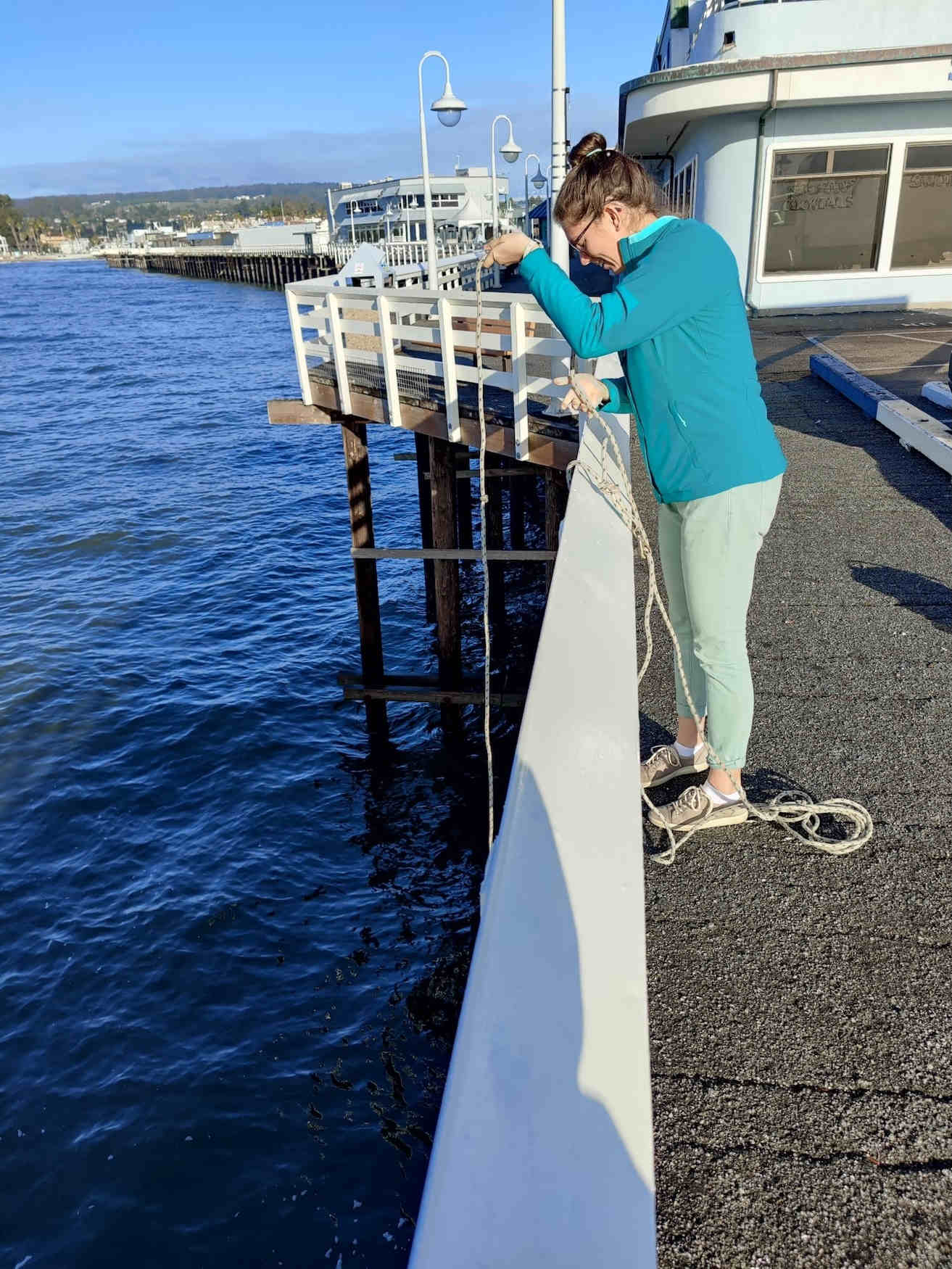
According to Kudela, the advantage of SPATT is that instead of collecting a sample once a week, the SPATT floats around for a more extended period, picking up copepodamides and whatever else the resins attract. Once a week for 28 months, Trapp collected the SPATT at the Santa Cruz Municipal Wharf and saved that data until there was enough to tell a story.
“[With SPATT] we get a more integrated view of whether there’s toxin around or not,” Kudela said.
Domoic acid isn’t a major threat for humans, as it’s strictly monitored by the Department of Public Health.
The toxin was unknown until four people died from eating contaminated mussels on Prince Edward Island in 1987. No deaths related to the toxin have been reported since, though humans who consume the toxin tend to exhibit food poisoning-like symptoms.
In severe cases, it can cause amnesic shellfish poisoning, leading to neurological issues like seizures, cardiac arrhythmias and short-term memory loss. There have been no major outbreaks of domoic acid poisoning in humans since the monitoring was introduced.
The United States limits the amount of domoic acid in shellfish meat at 20 parts per million—anything over that and the fishery can be closed.
If fisheries know the toxin is a threat, they can choose to harvest early or switch to another animal, which can help fisheries avoid financial loss.
It’s another story for animals.
Domoic acid is a neurotoxin, causing brain damage in the marine animals and birds that consume it. This leads to events like strandings, when marine animals end up on land and sickened.
Marine birds like pelicans have been seen falling out of the sky or standing in the middle of the road out of confusion, while sea lions will scratch behind their ears until they bleed.
California experienced a domoic acid flare-up this year, which Kudela said happens every few years. As of Sept. 1, over 100 cases of domoic acid poisoning have been reported to the Marine Mammal Center in Sausalito, compared to the annual average of 70-90.
Early awareness can help volunteer networks know where to expect these strandings. If an animal is found in time, places like Marine Mammal Center can often rehabilitate it by giving it clean food and water to flush the toxin out until it is safe to be released back into the wild.
The study worked in Monterey Bay and outside of Gothenburg. Kudela said they expect it to work in other places, but it’s all based on statistics for now.
“Anywhere you have copepods, which is anywhere there’s ocean water, you’re going to have copepodamides,” Kudela said.
Looking forward, preliminary research shows SPATT may work in detecting paralytic shellfish poisoning, which is dangerous for humans, Kudela said.
Trapp is now working on a similar project dealing with a different toxin and species of phytoplankton as a postdoctoral scholar at the Salish Sea Research Center.
“It’s evidence that we should be thinking outside the box about different ecological interactions that might be driving the harmful algae and maybe get us a little closer to why they’re producing the toxins,” Trapp said.
Syd Fluker is a California Local News Fellow. Visit fellowships.journalism.berkeley.edu/cafellows.