
Santa Cruz METRO officials on Friday presented two possible locations for a temporary downtown Watsonville transit center, a move necessary while the existing station is demolished and replaced with a new facility topped by affordable housing.
But business owners near METRO’s preferred location on Union Street say the proposal would worsen already difficult traffic conditions, eliminate badly needed parking and create safety hazards for pedestrians.
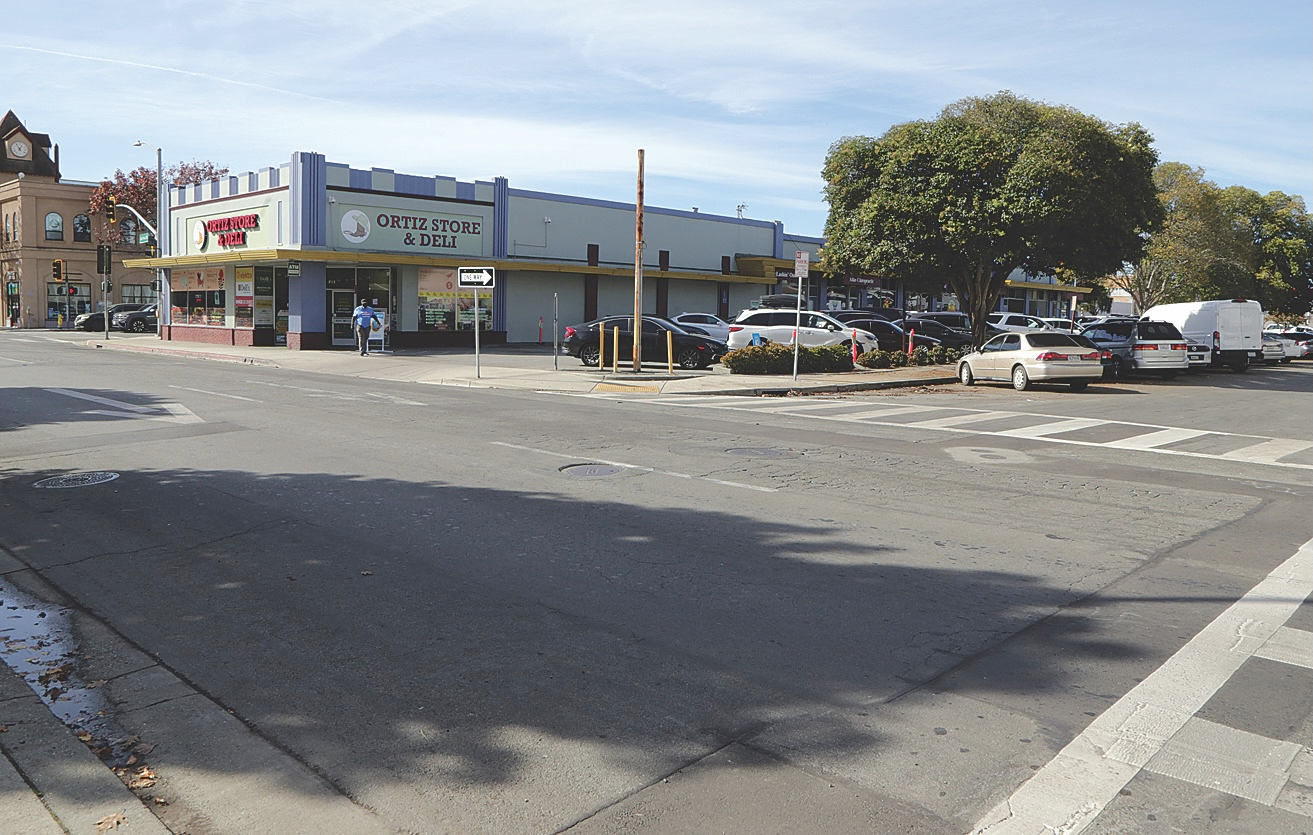
During a community meeting Nov. 6 in the community room of the Watsonville Civic Plaza, METRO Chief Planning and Innovation Officer John Urgo outlined the two alternatives under consideration: Union Street between East Beach Street and East Lake Avenue, and Rodriguez Street between First and Second streets.
Both would accommodate 15 buses per hour and seven bus bays.
The temporary station would operate for approximately two years while METRO and MidPen Housing build a new transit center and 79 affordable apartments at the existing Rodriguez Street location.
Construction is scheduled to begin March 1 and take approximately 22 months.
Urgo said METRO has considered 10 locations, narrowing the choices to the two presented Friday.
The Union Street location is the agency’s preferred alternative because it would keep bus service close to downtown businesses and allow passengers to transfer between routes within a single block.
But Clark Codiga, whose company Oaktree Property Company manages East Beach Plaza, said the location is already overwhelmed by traffic from Watsonville High School, Cabrillo College, downtown businesses and the weekly farmers market.
“It’s a tough economy right now and local businesses,” he said. “Parking is already very difficult there.”
Codiga said he has collected 125 signatures on a petition opposing the Union Street location and calling for METRO to consider alternatives.
“Nobody’s against the project,” he said. “It has to happen. We want that. It’s wonderful. But it’s just the wrong location.”
The petition also raises concerns about pedestrian safety, emergency vehicle access and the age of the parking data METRO is using to evaluate the proposal.
Codiga said the agency is relying on a 2016 parking study that does not accurately reflect current downtown conditions.
According to Urgo, that study identified 3,174 parking spaces downtown, with approximately 53% occupied during peak midday hours.
But business owners said those numbers do not reflect the difficulty customers face finding parking near individual businesses.
Elsa Nuñez, who owns Del Sol Insurance in Plaza Vigil, said employees already avoid parking near their businesses to leave spaces available for customers.
“We’re gonna lose customers, because there is no parking,” she said.
Nuñez said the Rodriguez Street alternative makes more sense because it is still close to downtown without creating the same disruptions along Union Street.
Cynthia Ortiz, of Ortiz Store and Deli in East Beach Plaza, said parking is especially difficult on Fridays, when the nearby farmers market draws additional vehicles downtown.
She said customers have told her they decided not to visit because they could not find parking.
“We have private parking,” she said. “…we still struggle with that.”
Urgo acknowledged those concerns and said METRO has already modified the Union Street proposal to reduce the number of parking spaces that would be eliminated from 14 to 10.
The revised plan removes a proposed bus stop on Alexander Street, preserving four spaces.
He also said the agency has tested bus turns in the area, including during the farmers market, and found that buses could navigate the streets.
Urgo estimated that the plan would add 10 buses per hour to streets currently carrying approximately 450 vehicles per hour, an increase he characterized as relatively small.
He emphasized that no travel lanes would be eliminated.
Still, several people questioned whether the additional bus traffic could be safely accommodated.
Leticia Ruvacalba, who owns La Misma Taqueria in Plaza Vigil, said she worries about children crossing streets already crowded with vehicles.
She described a recent incident in which her children were nearly struck by a vehicle.
“I’m trying to think about the safety because there’s gonna be more traffic,” she said.
Watsonville City Councilwoman Ari Parker also questioned the Union Street location, saying the neighborhood already experiences substantial traffic and parking problems.
Parker said the Rodriguez Street alternative deserves serious consideration and questioned METRO’s characterization of that location as less desirable for transit riders.
She also asked how many individual passengers use the Watsonville station, rather than the number of trips recorded.
Urgo said the station handles approximately 1,500 passenger trips daily, although METRO does not have an exact count of individual riders.
The Rodriguez Street alternative would also require removing 14 parking spaces and would block existing bicycle lanes for the duration of construction.
It could also delay a planned city bicycle improvement project along Rodriguez Street, potentially affecting grant funding.
Urgo said the location has fewer businesses directly fronting the street, but METRO has not yet conducted the same level of outreach with nearby businesses.
He also noted that the Union Street location would offer passengers a more active commercial area, while Rodriguez Street would require more complicated bus routing.
METRO has committed to providing security officers at the temporary station from 6am to midnight, along with daily cleaning and maintenance.
The new transit center is part of METRO’s broader effort to increase ridership, expand affordable housing and transition to zero-emission buses.
Urgo said METRO ridership has increased 74% over the past three years, reaching 5.7 million annual trips. Ridership on Watsonville local routes has more than doubled during that period.
The completed Watsonville project will include new bus bays, passenger shelters, real-time transit information, customer service facilities and an operator break room.
METRO plans to present the temporary station alternatives to its board of directors Nov. 20 and continue gathering public feedback through December.
Officials hope to finalize a location by January, ahead of the scheduled March construction start.
“We have to advocate for our customers, just like you are advocating for your customers,” Urgo told the business owners.