

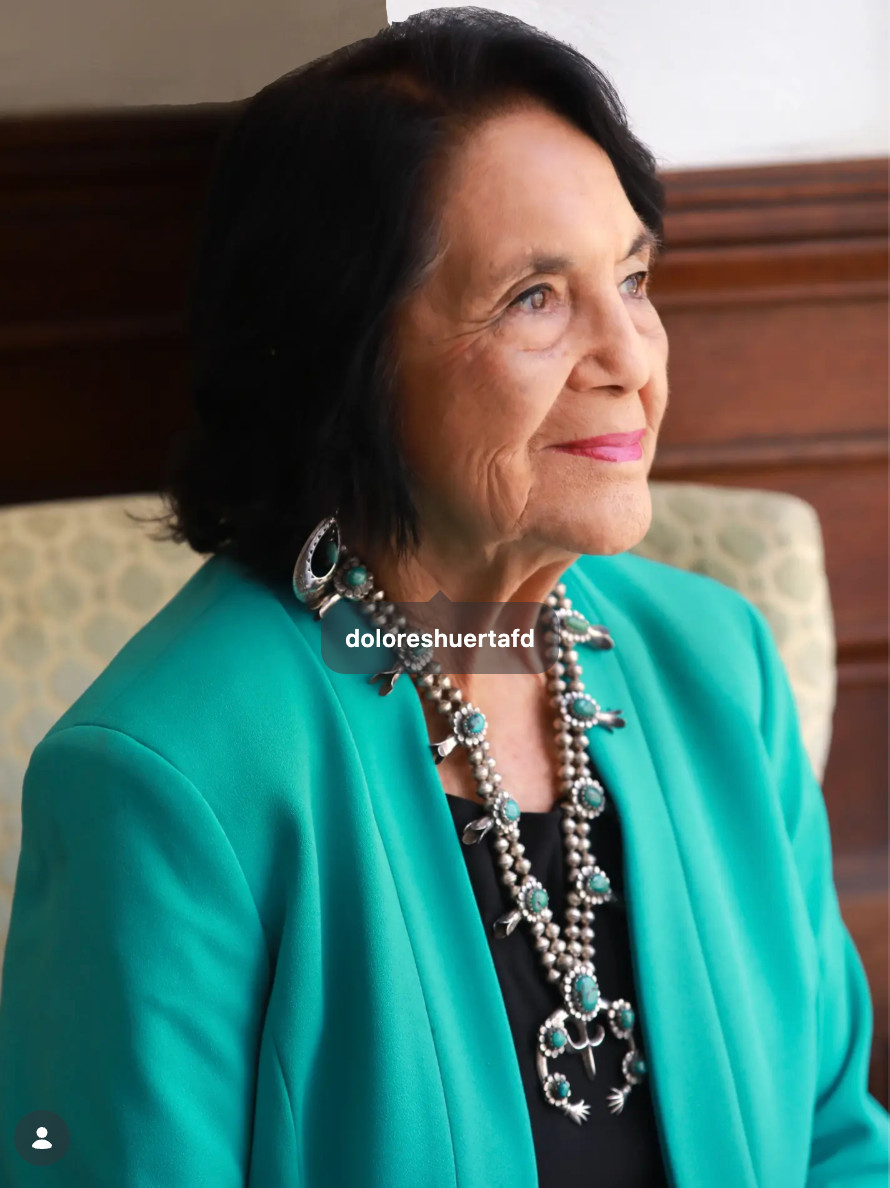
Dolores Huerta, whose name and face became synonymous with agricultures workers’ nationwide struggles for fair treatment, who co-founded United Farmworkers (UFW) union with Cesar Chavez and who kept tirelessly advocating for laborers well into her ninth decade, died Thursday at her home in Bakersfield. She was 96.
Huerta’s family announced her death via Instagram, although they did not list a cause of death.
Born in 1930 in Dawson, New Mexico, Huerta helped build California’s farmworker movement and co-founded the National Farm Workers Association, which later became the United Farm Workers.
Throughout her life, she fought for better wages and working conditions for agricultural workers, protections from dangerous pesticides and access to unemployment insurance and health care benefits.
She also coined the union’s rallying cry, “Sí, se puede,” which became a slogan for labor and civil rights movements across the country.
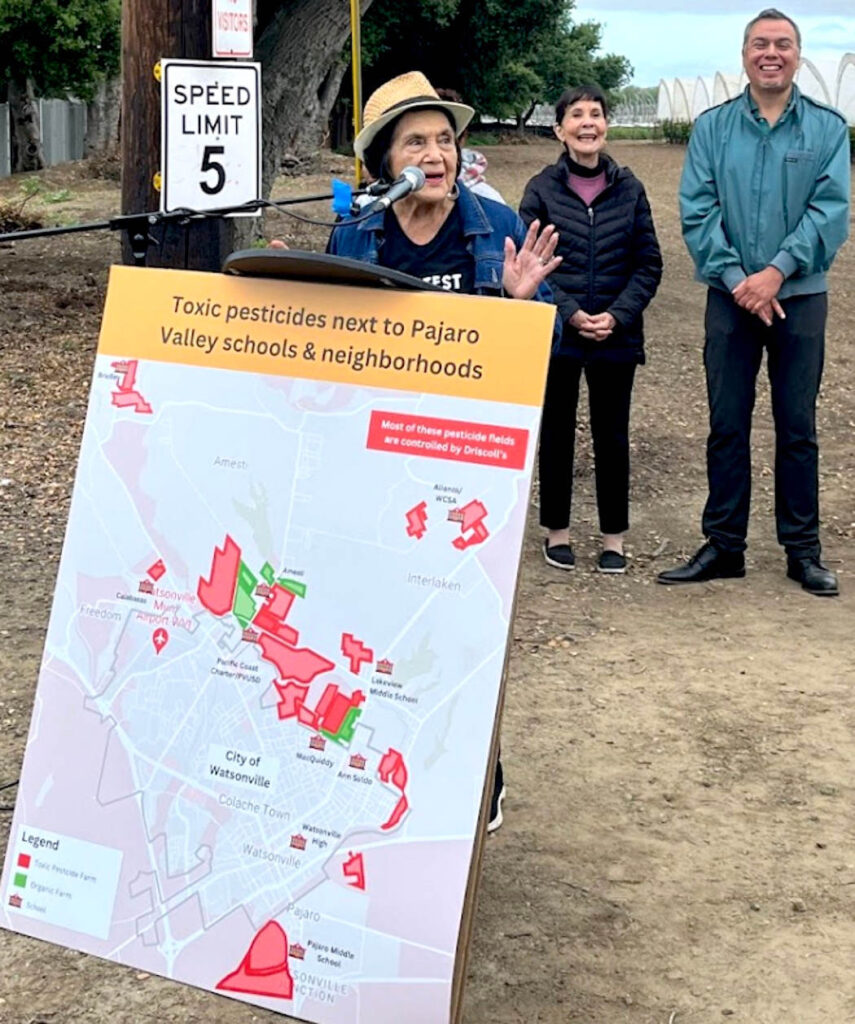
United Farm Workers President Teresa Romero called Huerta a tireless advocate for farmworkers, women, immigrants, the LGBTQ+ community and others who faced discrimination.
“Her life’s work was to empower her community to face and overcome injustices, and she has left farm workers and the entire Latino community stronger and more organized than she found it,” Romero said.
Huerta also helped bring an end to the Bracero program in the early 1960s and helped negotiate the Immigration Reform and Control Act of 1986, which provided a path to legal status for millions of undocumented immigrants.
But perhaps her most enduring accomplishment was helping establish a union that gave agricultural workers a voice in negotiating their wages and working conditions.
Working alongside Chavez and thousands of farmworkers and supporters, Huerta helped secure some of the first successful union contracts for agricultural workers.
Today, the UFW represents thousands of farmworkers in California, Oregon, Washington and New York.
“The greatest possible tribute to her life is for her work of organizing to continue,” Romero said. “Our greatest monument to her memory is for the union she helped found to continue to grow.”
Huerta’s death drew tributes from elected officials across California, including several who represent the agricultural communities of the Pajaro and Salinas valleys, where her work helped shape generations of farmworkers.
Monterey County Supervisor Luis Alejo said Huerta’s influence extended throughout the region.
“Dolores Huerta led a remarkable life dedicated to fighting for the dignity and rights of farmworkers and uplifting our communities, including those in the Salinas and Pajaro Valleys,” Alejo said. “Her courage and tireless advocacy inspired generations.”
Congressman Jimmy Panetta said Huerta’s work helped agricultural workers secure better wages, safer workplaces and a greater say in their working conditions.
“Dolores inspired the fight for many farmworkers to achieve the American Dream and give their children a better life,” Panetta said. “Her legacy is felt well beyond our local agricultural communities on the central coast of California and throughout our country.”
Congresswoman Zoe Lofgren described Huerta as a friend and a legend of the farmworker movement whose influence reached far beyond California.
“Her work and her vision transformed our country, especially here in her home state of California,” Lofgren said. “She embodied the spirit of the movement with her phrase that will live on for generations: Sí Se Puede.”
California Assembly Speaker Robert Rivas called Huerta one of the greatest civil rights leaders in history.
“California mourns a giant,” Rivas said. “Dolores Huerta gave voice to the voiceless, dignity to the fields and hope to generations.”
Assemblymember Dawn Addis said Huerta’s commitment to social justice helped improve the lives of millions.
“She was kind, compassionate, strong, and most importantly – honest about what needed to be done and dedicated her life to doing it,” Addis said. “She will be forever missed.”
Romero said Huerta remained committed to farmworkers until the end of her life, and that the union she helped establish would continue her work.
“Dolores fought for farm workers to the very end of her life,” she said. “The union she helped found will always continue that work.”