
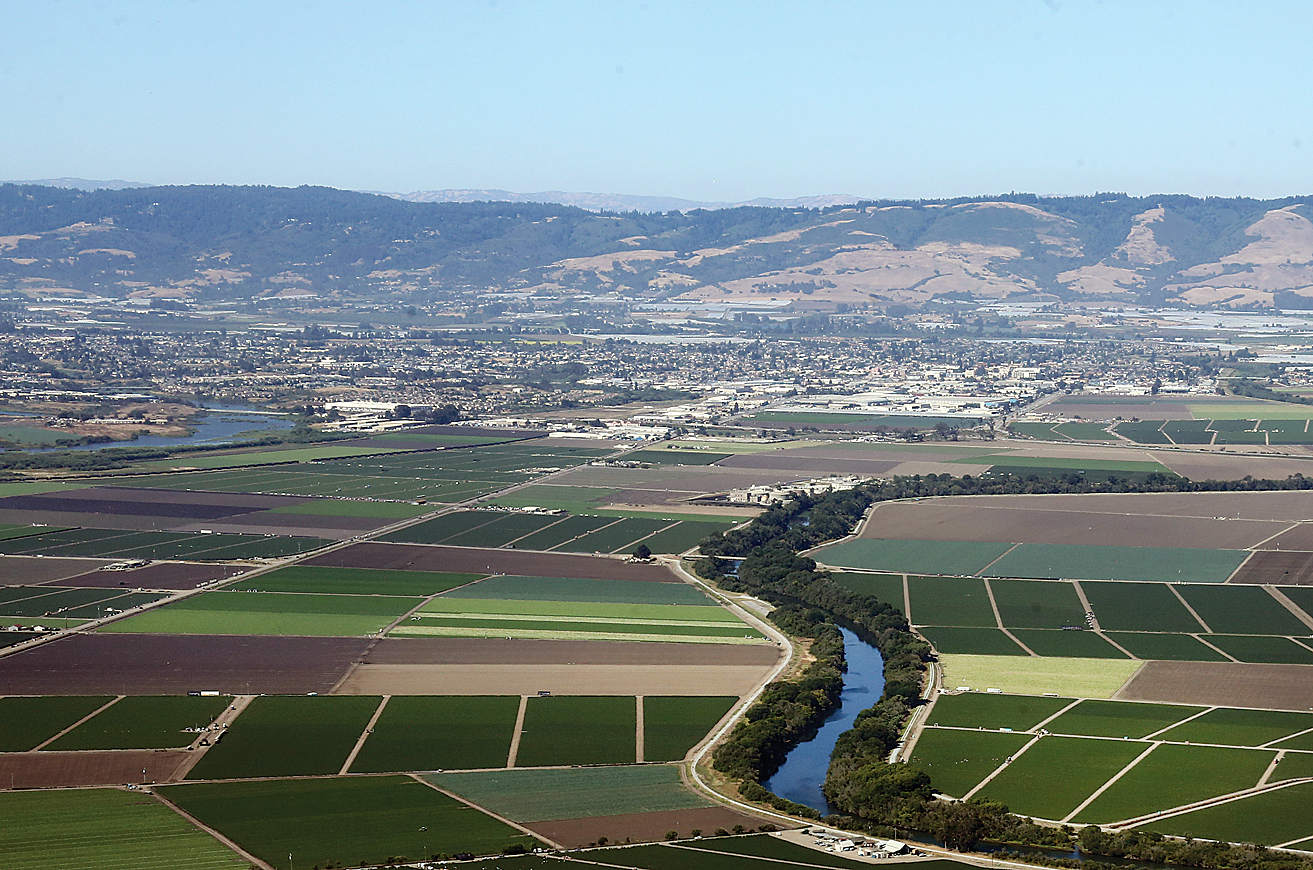
Agricultural emissions, industry in Watsonville, heavy machinery and semi-trucks that transport produce from across the country: there are countless pollutants in the Pajaro Valley that can affect air quality. But for many years, residents of the Pajaro Valley have lacked access to timely, accurate data on air quality.
Javier Gonzaléz-Rocha, a Watsonville native and applied mathematics professor at UC Santa Cruz, is looking to change that.
González-Rocha is developing a network of drones and small sensors that can be attached to homes. He uses data collected from these monitors to try and paint a clearer picture of the air quality in the Pajaro Valley, as data that appears on common weather apps is often inaccurate. His team has deployed 35 monitors across the region, mostly on the outside of homes in Watsonville, Corralitos and Castroville.
“People who live and work in the Pajaro Valley spend extensive amounts of time outdoors. We’re surrounded by fields that are harvested by humans, they’re out there all day,” said González-Rocha. “This is very much impacting their quality of life. It all has implications for their health.”
The Pajaro Valley often sees air pollution in the form of particles like PM2.5. Measuring only 2.5 micrometers—about 30 times less than a human hair—PM2.5 particles can easily enter the lungs and are known to worsen conditions such as asthma, bronchitis and heart disease.
Pursuing the project has led González-Rocha and his team to uncover unexpected sources of pollution.
While flying a drone to collect measurements, his team noticed that air quality began to worsen as the sun set over the Pajaro Valley. Investigating why this was, they found that the change may have been caused by people burning their trash in the evening.
“The idea would not be to reprimand someone for doing that, but to try to understand the root cause—why they’re burning trash, and how do we create education and programs that support community members so they don’t have to do it,” Gonzalez-Rocha said.
González-Rocha developed the data alongside graduate students at UCSC and is working with the community organization Regeneración to get information out to people in the Pajaro Valley.
Eloy Ortiz, a special projects manager at Regeneración has been working with González-Rocha for the past two years on ensuring that those living in the Pajaro Valley are making good use of the air quality data. The organization hosts listening sessions to present data and understand the concerns that the larger community has.
“For me, it’s about educating people about health issues and what they might be exposed to and potentially building resources to help people,” said Ortiz. “For residents, for people who are working outside, for people who are working in agriculture, for people who are working in gardens, for people who are labouring outside.”
The goal of the project is to ensure that people of the Pajaro Valley can make informed decisions about air quality. Those involved believe that decisions about whether or not to go for a run, to allow children to play outside, to wear a mask while working should be strongly and accurately informed.
“What’s really exciting about this is that it opens the conversation.” González-Rocha said. “It creates a great opportunity for thinking about the systems in place to protect our community and make decisions. This gives us an entry point to really think about how all stakeholders can work together to make meaningful progress towards climate resilience.”
Anyone interested in getting involved can visit regenerationpajarovalley.org or contact Eloy Ortiz at El**@**********************ey.org.