

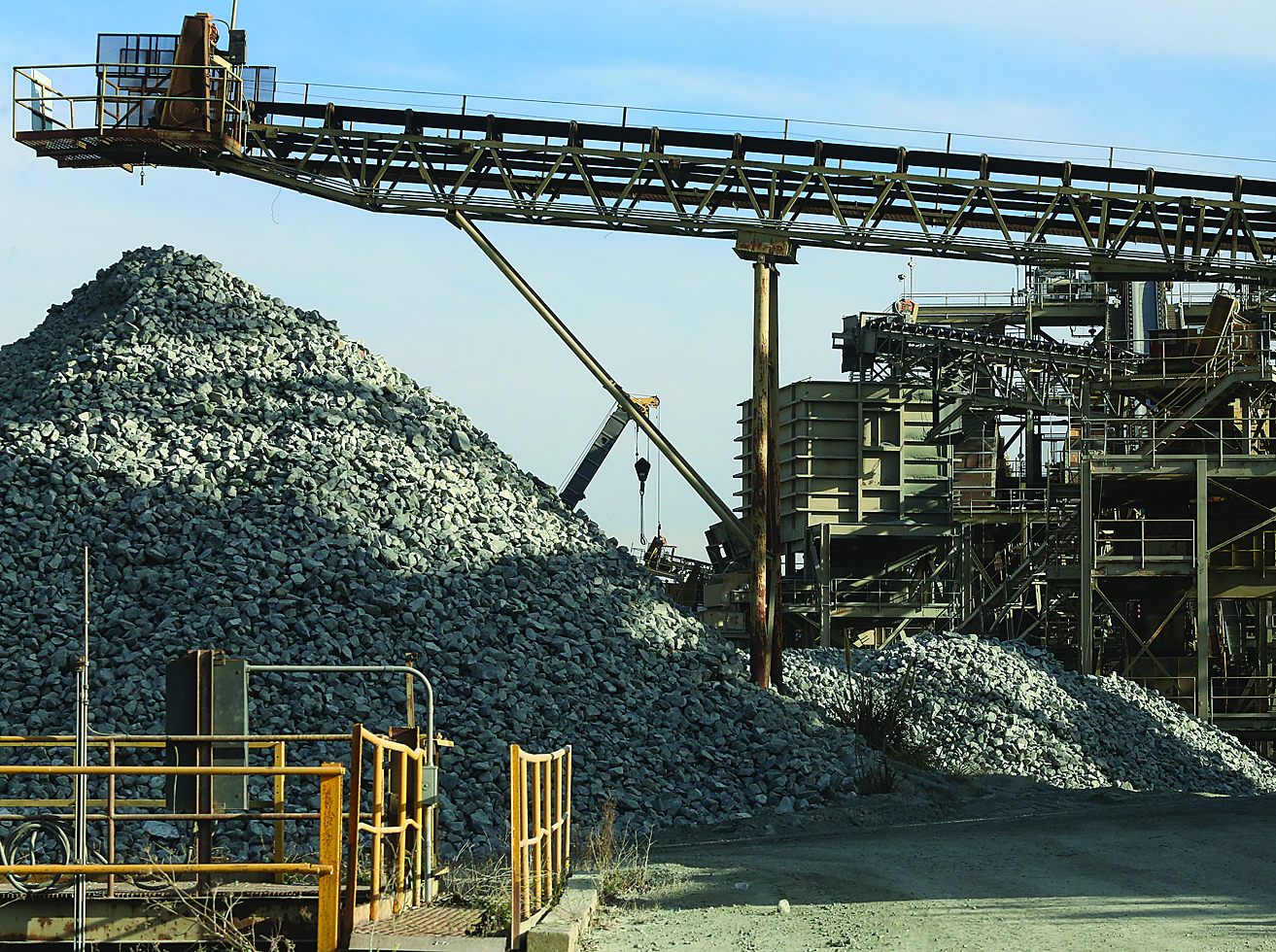
Two environmental groups filed a federal lawsuit Wednesday accusing Graniterock of violating the Clean Water Act for more than 1,000 days at its A.R. Wilson Quarry in Aromas.
Environment California and the California Sportfishing Protection Alliance allege the Watsonville-based company has for years discharged excessive levels of pollutants—including dissolved solids, aluminum, iron and molybdenum—into the Pajaro River. The groups say the violations continued even after the state imposed mandatory minimum penalties for earlier infractions.
“Graniterock habitually violates its Clean Water Act permit, pays a trivial penalty and then continues polluting the Pajaro River as usual,” Environment California state director Laura Deehan said in a statement.
According to the complaint, the quarry collects stormwater and wastewater from about 438 acres, roughly 11 miles inland from Monterey Bay. During winter storms, runoff and wastewater can exceed the capacity of an onsite holding pond, the suit alleges, sending overflow into the river.
The groups say the quarry exceeds permit limits each winter and spring for dissolved solids such as sodium and sulfate, as well as metals including aluminum, iron and molybdenum. The discharges add to existing contamination in the Pajaro River and threaten habitat for species including South-Central California Coast steelhead and the California red-legged frog, according to the lawsuit.
“Congress allowed for citizen enforcement of the Clean Water Act so that the public could play a vital role in the protection of water quality,” CSPA Executive Director Chris Shutes said in a statement. “When violations become habitual, citizens can demand legal accountability, and that’s what we aim to do here.”
The complaint also alleges the company failed to conduct required monitoring of wastewater discharges, leaving gaps in data during key periods. Without that monitoring, regulators and the public cannot determine what pollutants are being discharged or in what amounts, the groups said.
Under the Clean Water Act, private parties may file suit after providing 60 days’ notice to the alleged violator and to state and federal agencies. The groups said they sent notice Feb. 3.
The lawsuit seeks civil penalties and a court order requiring Graniterock to comply with its permit and address alleged harm from the discharges. Graniterrrock’s discharge permit is up for renewal before the Central Coast Regional Water Quality Control Board, and the groups said any renewal should be at least as protective as the current permit.
“No one should be able to renew a discharge permit without having a clear plan for coming into compliance,” Deehan said.
In a prepared statement, Graniterock spokeswoman Shanna Crigger said the company disputes the allegations.
“We strongly disagree with the allegations and will respond appropriately through the legal process,” Crigger said. “Graniterock is committed to good stewardship of our lands and honoring our environmental responsibilities. For decades, we have demonstrated that we care deeply about the health of the communities and ecosystems in which we live and work.”
Crigger also pushed back on claims that the company failed to adequately monitor discharges.
“Our testing protocols are fully compliant with those permits, and we have a long history of being rigorously responsive to the requests and mandates of the Central Coast Regional Water Quality Control Board,” she said. “Nothing about this lawsuit changes our commitment to permit compliance and working constructively with the regional board.”
Graniterock, which is marking its 125th anniversary this year, traces its history to 1899, when engineer A.R. Wilson purchased the quarry site with a group of investors. The company later developed some of California’s early ready-mix concrete and asphalt plants and has promoted recycling and renewable energy efforts at the Aromas quarry, including reusing demolished materials, maintaining a 22-acre reclamation area and operating a solar array that supplies 65% of the site’s power.









When the government ignores maintenance of the Pajaro river for years and it breaches it’s banks, floods the town of Pajaro, there not worried about the Red legged frog or Steelhead then, frauds.