

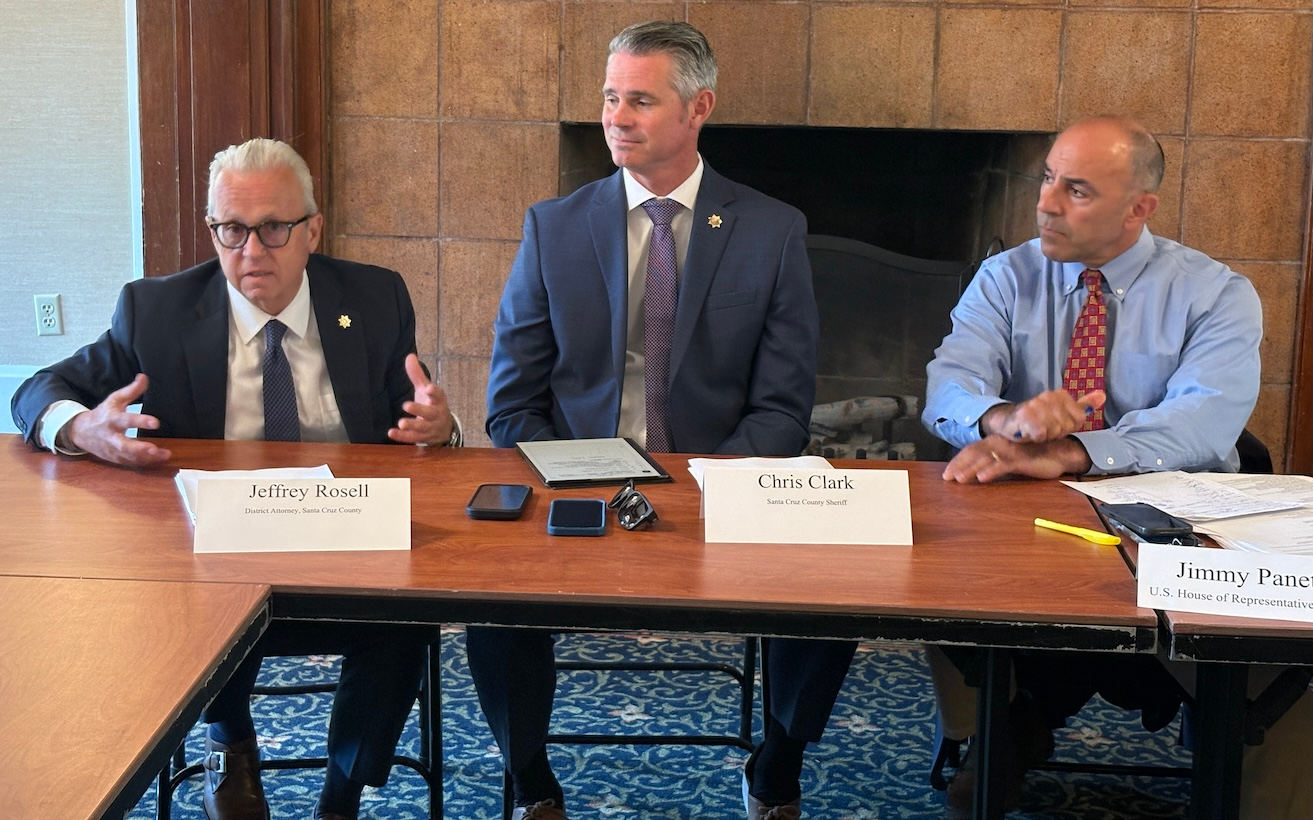
Local law enforcement, education and human services officials joined U.S. Rep. Jimmy Panetta on Tuesday to reassure immigrant families that local agencies will not participate in federal immigration enforcement, as officials described growing fear among residents seeking health care, education, housing and other services.
Panetta convened leaders from Santa Cruz and Monterey counties following a closed-door roundtable in Cabrillo College’s Sesnon House focused on the effects of the Trump administration’s immigration enforcement policies.
The message from local officials was consistent: Regardless of immigration status, residents should continue going to school, seeking medical care, accessing food and housing assistance and reporting crimes to local law enforcement.
Santa Cruz County District Attorney Jeff Rosell said fear of immigration enforcement is making it more difficult to prosecute crimes because some victims and witnesses are reluctant to participate in the criminal justice system.
“Law enforcement does not cooperate with ICE,” Rosell said. “We’re not interested in deporting people. We are interested in holding people accountable. We are interested in people who are victims of crimes reporting those crimes and people who witness crimes coming forward and staying involved in the court process.”
Rosell said his office has encountered cases in which witnesses with immigration concerns are afraid to travel to Santa Cruz County, forcing investigators to take additional steps to ensure their participation. The problem has affected serious cases, including homicide prosecutions.
Monterey County Sheriff Tina Nieto offered a similar assurance.
“We do not conduct immigration sweeps. We do not do enforcement,” Nieto said. “Our responsibility is to public safety in the state of California.”
Nieto urged people to contact local law enforcement if they are victims of domestic violence, have a missing child or otherwise need help, regardless of their immigration status.
Santa Cruz County Sheriff Chris Clark echoed that message, telling residents to call 911 even if they are uncertain who is at their door.
“Our deputies have a duty to intervene,” Clark said, including when deputies witness conduct that may amount to a crime regardless of who is involved.”
Panetta said fear surrounding federal immigration enforcement has spread beyond interactions with police and is affecting institutions throughout the Central Coast.
“The underlying theme here that we’ve been hearing from all of these local leaders — and that’s fear,” Panetta said.
He said the administration’s policies are affecting health care, housing, food assistance, families, essential workers and the criminal justice system, while undermining trust in public institutions.
Education officials said they are seeing those effects firsthand.
Cabrillo College President Jenn Capps said the college has experienced a 23% decline in students applying for the California Dream Act, which provides state financial aid to eligible students regardless of immigration status.
“Fear shouldn’t block access to education,” Capps said, adding that Cabrillo would continue supporting its students.
Santa Cruz County Superintendent of Schools Faris Sabbah said the same uncertainty is affecting younger students and their families.
“Every child has a right to a public education, regardless of immigration status,” Sabbah said. “And our schools continue to be places of safety, belonging and support.”
Sabbah said students have missed school or struggled academically because of anxiety surrounding detention or the possibility of family separation. The fear extends beyond undocumented families to people with visas and temporary protected status, as well as permanent residents and U.S. citizens who fear being profiled or detained, he said.
Local schools, along with Cabrillo College, have adopted measures prohibiting their properties and resources from being used to stage immigration enforcement operations. Schools also do not collect information about the immigration status of students or their families, Sabbah said.
Other officials described similar effects on food, housing and health care.
Second Harvest Food Bank CEO Erica Padilla Chavez said fear has affected immigrants as well as U.S. citizens seeking assistance.
“Your food bank is committed to ensuring that anyone in our community in need of nourishment has access to it,” she said, noting that assistance can include home delivery.
Phil Kramer, CEO of Housing Matters, said some people experiencing homelessness have become reluctant to seek services because they fear immigration enforcement or believe accepting government assistance could jeopardize their immigration status.
Kramer also warned about a proposed federal housing rule affecting mixed-status households receiving federal assistance. He said more than 1,000 people in 270 Santa Cruz County households could be affected, with some families facing housing instability or homelessness if the proposal takes effect.
Health care providers are encountering similar pressures.
Dr. Donaldo Hernandez of the California Medical Association said providers remain committed to treating patients regardless of immigration status, but financial and political pressures are making that increasingly difficult. He also said some foreign-born doctors training in residency programs face immigration uncertainty.
Panetta framed the gathering as a demonstration that local officials intend to resist federal policies they believe are harming Central Coast communities.
“What we have here is a demonstration of leaders at all levels of government who are willing to stand up to the federal government,” Panetta said, “who are willing to stand up in order to push back and then protect the vulnerable communities that contribute so much to the Central Coast.”








How many American citizens have to be killed before the democrats are satisfied and do something about the illegals?
” fear among residents seeking health care, education, housing and other services.”
Because non-citizens here illegally are gobbling up those resources meant for U.S. citizens….
Who are our leaders looking out for??