
Gisselle Padilla spent much of her childhood translating for her parents, who worked in the strawberry fields after immigrating from Mexico.
Years later, she found herself advocating for her own son during Individualized Education Program meetings, frustrated that she often felt unheard and unable to fully participate in discussions about his education.
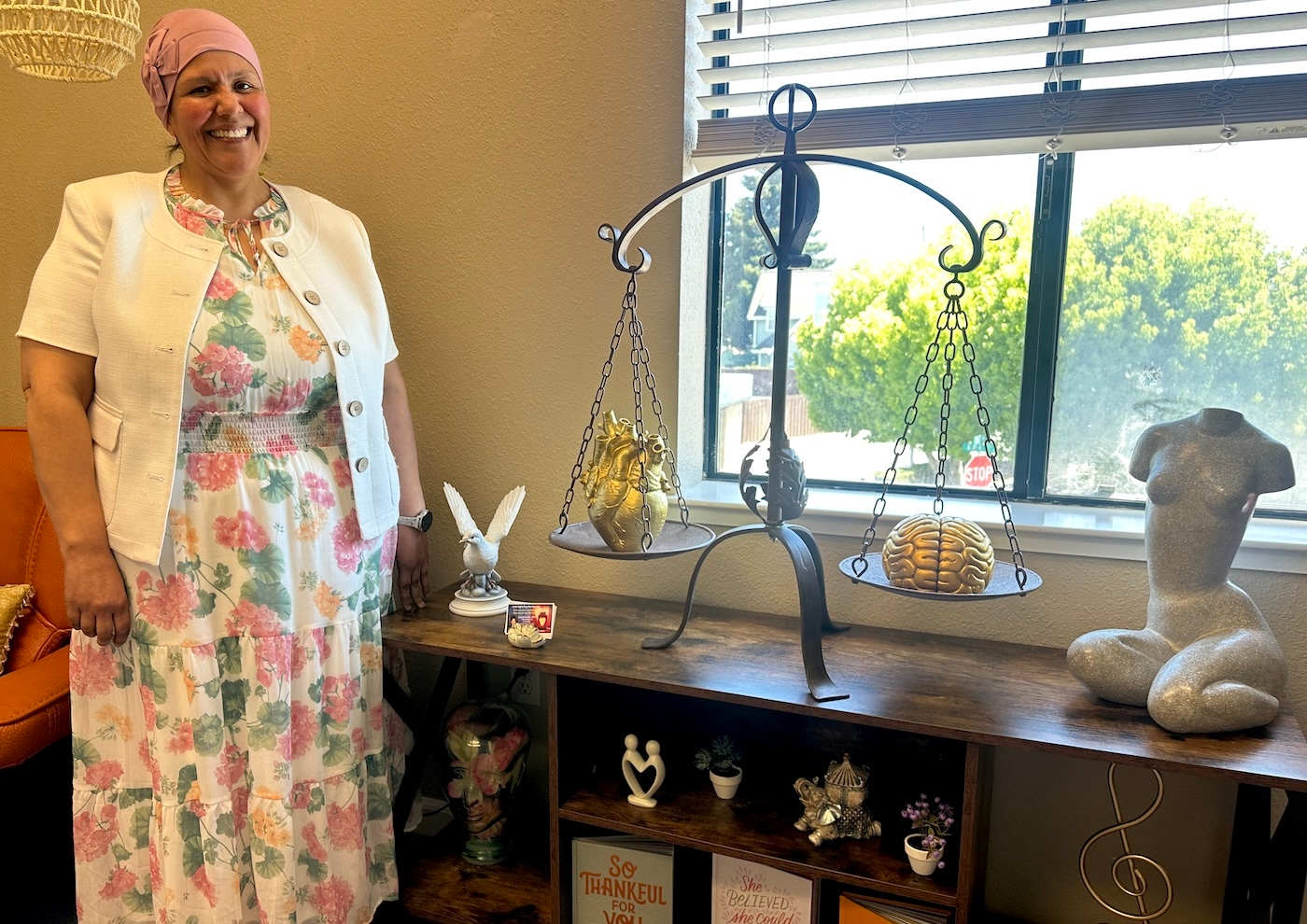
Those experiences shaped her career as a therapist. Now, the Watsonville native has taken the next step by opening Innerlight Psychotherapy, a bilingual, bicultural mental health center designed to provide services that she says are deeply rooted in the community it serves.
The clinic, which opened in June, offers individual and group therapy, with a focus on children with special needs, agricultural workers and others seeking trauma-informed care.
Padilla recently expanded from a single-office private practice by hiring two bilingual, bicultural clinicians who also grew up in Watsonville.
“I don’t think there’s a center quite like this,” she said. “When I see people who look like me, who come from families like mine, they don’t have to explain over and over where they’re coming from. They know that I understand.”
Padilla said cultural understanding can remove barriers that often prevent people from seeking mental health care.
“I’ve had individuals tell me, ‘When I see you, I can see myself,’” she said. “My parents were immigrants who worked in the strawberries for more than 40 years. That connection matters.”
Her own path to becoming a licensed marriage and family therapist was anything but traditional.
After graduating from Watsonville High School in 1992, Padilla earned an associate degree in business from Heald College before putting her education on hold to help support her family. She later married, spent 12 years as a stay-at-home mother and eventually returned to school, earning a bachelor’s degree from Argosy University before completing a master’s degree in counseling psychology at John F. Kennedy University.
She said the turning point came while raising her son, who has ADHD.
Repeatedly attending IEP meetings left her feeling intimidated and unable to advocate effectively for him.
“I said, ‘No, I need to advocate not only for my son, but for other families,’” she said.
Today, she often attends IEP meetings alongside parents as their therapist, helping educators understand the mental health challenges students face and ensuring families have a stronger voice in the process.
The new center reflects another goal: giving Watsonville families access to care close to home.
Instead of traveling to Santa Cruz or elsewhere for services, Padilla said residents now have more options locally through a team that understands the area’s culture and languages.
“We’ll be able to give more support to the families here in Watsonville,” she said.
The opening also represents a personal milestone.
Padilla had planned to open a similar center last year before being diagnosed with cancer shortly after returning from a vacation in Mexico. She abandoned those plans while undergoing treatment.
Earlier this year, however, the Watsonville space became available. Encouraged by her father, she decided to move forward despite continuing treatment at Stanford Health Care.
“He told me, ‘This is what you’ve always wanted. We never know how we’re going to leave the world, so you might as well take it,’” she said.
Padilla said that experience reinforced the philosophy that guides both her life and her practice.
“Hope is such a huge piece,” she said. “No matter what we’re going through, there is always hope. We might not be able to fix everything, but hope keeps us moving forward.”
For information, visit innerlightherapy.com.