

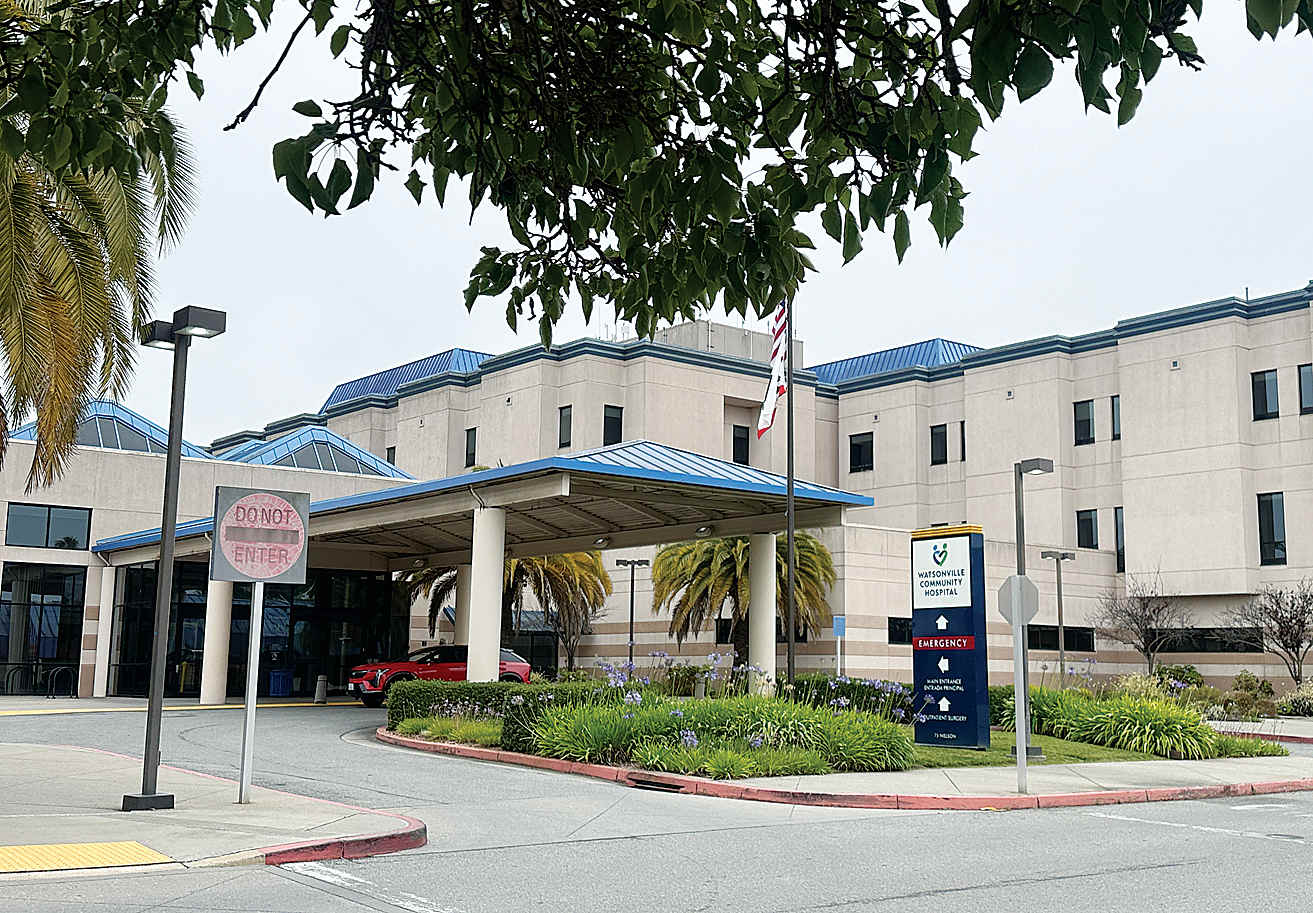
The Pajaro Valley Health Care District Board of Directors on Wednesday voted to send a 120-day notice to the California Department of Public Health, warning the agency that Watsonville Community Hospital’s labor & delivery and neonatal intensive care units will close unless its financial picture improves.
The board did not vote to close these services.
California Senate Bill 1300, signed into law in 2024, requires hospitals to give the public 120 days’ notice before closing inpatient psychiatric or maternity units, up from the previous 90-day requirement.
The board passed the recommendation to begin the formal closure process after dozens of people spoke during a four-hour meeting on Wednesday night. The labor and delivery unit will remain open in the meantime.
No closures can occur before the required 120-day notice period, which is to be given on Oct. 29, hospital officials said.
The vote passed 3-2, with board members Tony Nuñez, Alexandra Friel and Emily Balli voting in approval and Joe Gallagher and Marcus Pimentel voting against it.
CEO Tim Moran recommended the closure on behalf of the hospital.
“We’re facing a rather dire situation if we continue without any changes in how we operate,” Moran said. “If we assume that we’re going to get all these grant dollars, we’re taking a great risk of the entire hospital.”
Passing the resolution to provide the 120-day closure notice does not mean the units will close at the end of the notice. The hospital has the ability to reverse its decision should sustainable funding become available, Moran said.
The board amended the recommendation to ask management to return before any closure and recommend reconsideration if a feasible alternative becomes available.
The decision comes after the hospital announced its potential closure within six to 12 months if no significant action is taken, according to the district.
Labor and delivery and neonatal intensive care units at the publicly-owned hospital account for a “significant loss” at a combined $27,000 of the hospital’s daily $85,000 cash shortfall, said CFO Julie Peterson.
Maternity and NICU services are projected to lose $9.6 million in 2026.
The board also authorized an application for up to $26 million through California’s Distressed Hospital Grant Program, which could help stabilize maternity and NICU services, Moran said.
Over 120 people attended the board meeting, with overflow listening in from the hallway when the Kathleen King Community Room hit capacity.
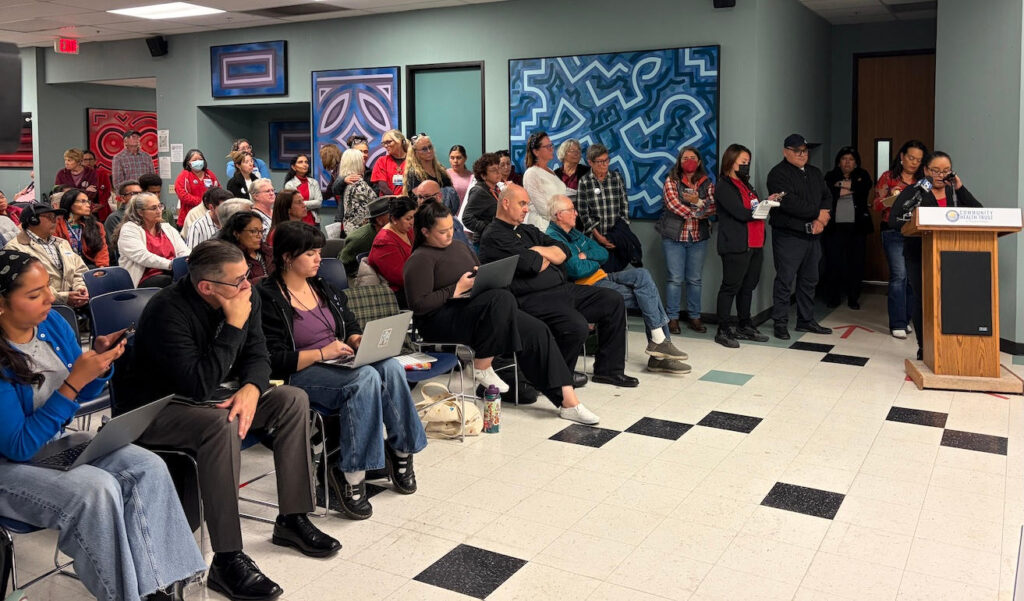
Community members urged the board to delay the vote. Measure E and Proposition 40 were referenced as factors that could provide some of the necessary funding if passed during the Nov. 3 election.
“Why make a decision today when important economic developments are around the corner?” asked Watsonville resident Martha Vega.
Board member and retired physician Joe Gallagher urged the board to delay the vote until December.
Peterson said that if the board delayed the outcome until December, it wouldn’t have enough money to get through the 120 days.
“Nothing is going to happen on November 4th that is going to change where we are in March or April,” Peterson said. “It just isn’t going to happen.”
Nurses and concerned community members, some of whom came from as far away as Soledad, expressed concerns over risks such as increased maternal and infant mortality, travel times to already strained regional hospitals and the loss of specialized care teams.
“When seconds matter, access to local maternity care can mean the difference between life and death,” said Annabelle Covington, a labor and delivery charge nurse at WCH.
Maryal Concepcion joined the meeting from Arnold, where she works as one of two physicians providing prenatal care in Calaveras County.
The rural county has no maternity units, meaning pregnant people have to drive at least 45 minutes to the closest hospital—that may not accept their insurance. Concepcion said their nurses have to keep their skills sharp with no backup behind them, and that families have to spend money on gas and time off work to get care in neighboring counties.
“Every phone call that starts with ‘I can’t feel the baby moving’ turns into a question of distance,” Concepcion said. “…None of that shows up on the profit and loss statement, but it shows up in my exam room every week.”
Concepcion urged the board to build a regional plan with the regional hospitals and counties involved before the closure is announced.
•••
Syd Fluker is a California Local News Fellow. Visit fellowships.journalism.berkeley.edu/cafellows.









I would request that Watsonville Community Hospital remove the word community from its title if they persist on their plans to close the OB department. Anyone that walks through the streets of town knows that it is a city centered around young families. Mom’s babies and small children are everywhere. Having worked at the hospital starting in 1976 I have seen many CEOs come and go. They often have seemed to wish the town was other than it is. Let Watsonville be the lovely hard working community it is and let the hospital reflect the people who live here.