

When Angela Farley founded Teen Kitchen Project more than a decade ago, the idea was born from one of the most difficult chapters of her life.
As her 5-year-old son underwent chemotherapy, Farley found herself facing an everyday challenge familiar to countless caregivers: after spending long days at the hospital, she still had to figure out how to put dinner on the table.
That experience inspired an organization that today prepares medically tailored meals for some of Santa Cruz County’s most vulnerable residents while teaching teenagers culinary and life skills that organizers say will stay with them long after they leave the kitchen.
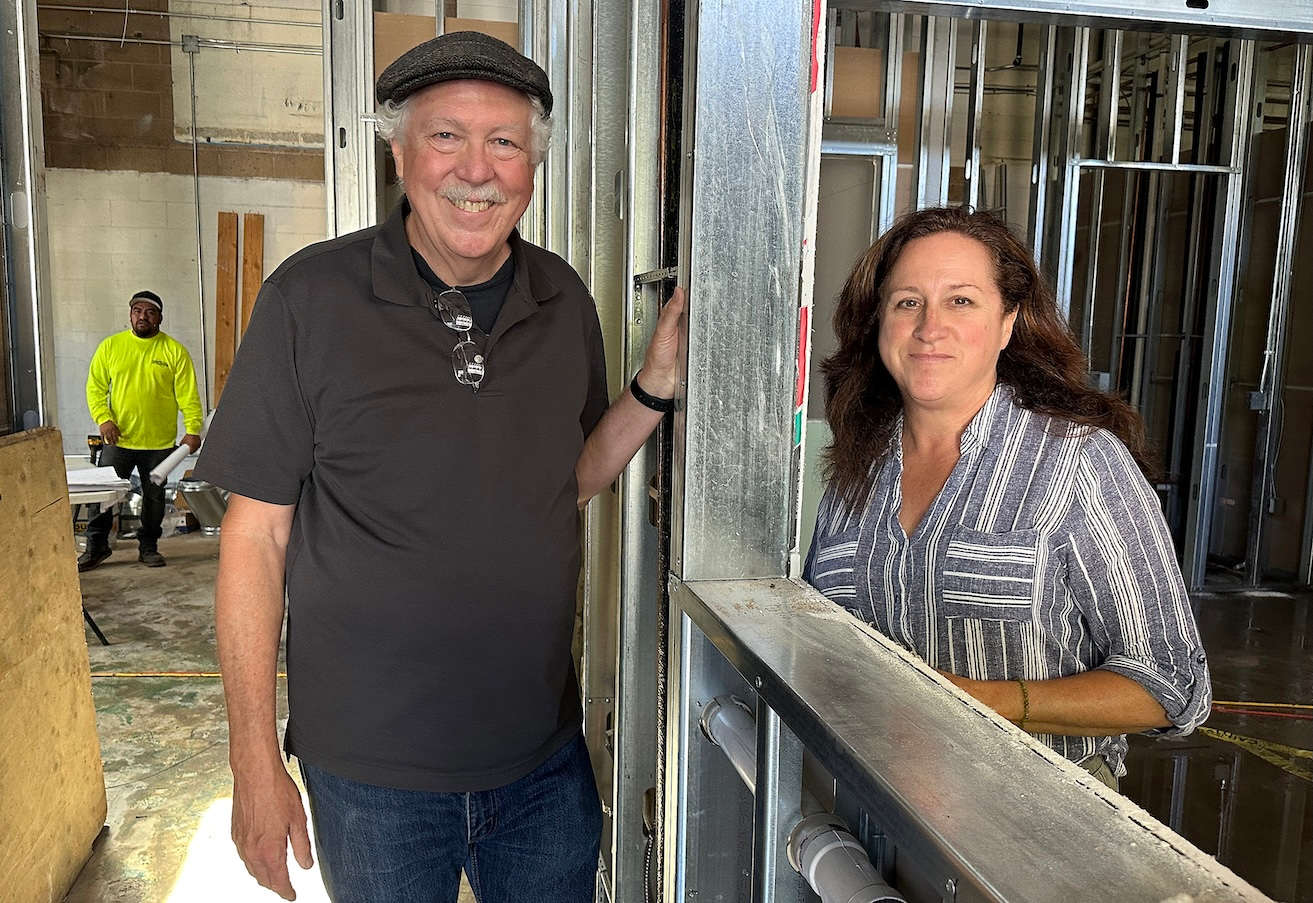
Now, nearly 14 years after launching, Teen Kitchen Project is embarking on its biggest undertaking yet: a $2.6 million campaign to transform a former commercial building in Soquel into a permanent headquarters that will allow the nonprofit to dramatically expand both sides of its mission.
With construction moving quickly, organizers say they have about $360,000 left to raise to complete the project.
“It’s an exciting, pivotal moment for Teen Kitchen Project,” Capital Campaign Manager Willy Elliott-McCrea said. “We’re almost complete with our capital campaign…We’re looking for gifts, pledges, people to spread the word.”
The campaign also includes a $100,000 challenge grant from an anonymous donor, meaning every dollar donated by the community will be matched until the goal is reached.
The new headquarters will consolidate the organization’s offices, commercial kitchen and volunteer operations under one roof. Today, Teen Kitchen Project operates out of three separate locations, with offices in Aptos and a commercial kitchen rented by the hour near Dominican Hospital.
That arrangement limits the nonprofit to just 32 hours of kitchen time each week.
“Right now, the biggest challenge is our capacity,” Farley said. “We really can’t expand or explore new revenue streams because we’re limited by the amount of time we have in the kitchen.”
The new facility is expected to triple meal production, allowing Teen Kitchen Project to increase annual meal deliveries from about 100,000 to 300,000 and expand the number of clients served from roughly 1,000 to 3,400 by 2027. Organizers also plan to more than double the number of teen chefs participating in the program.
For Farley, however, the building is about more than numbers.
“What’s exciting about the kitchen is it’s going to allow us to bring in twice as many kids,” she said. “There are so many kids that are lost trying to find something meaningful, useful—a group to belong in. We’re excited about being able to serve more clients, but also really be able to help more teens find their purpose in life.”
Since opening in 2012, Teen Kitchen Project has worked with more than 1,300 young people ages 14 to 18. About 50 teens currently participate during the summer, with roughly 40% serving in paid leadership positions while the remainder volunteer.
Those teenagers prepare medically tailored meals from scratch using mostly organic ingredients, much of the produce donated or sold at reduced cost by Watsonville’s Lakeside Organic Gardens.
The meals are designed for people referred by physicians, many of whom are managing diabetes, cancer, heart disease and other chronic illnesses that can be improved through nutrition. About 60% of clients are senior citizens.
The nonprofit is the only nonprofit in Santa Cruz County providing medically tailored meals paired with nutrition counseling from a registered dietitian. Volunteers known as “Delivery Angels” deliver the meals while also providing a friendly check-in for clients who may otherwise have little social interaction.
Farley says that combination of healthy food and human connection is what sets the organization apart.
“We just want to keep ourselves sustainable so that we can keep saying yes to new clients and not have a wait list,” she said. “With the expansion of our senior population in Santa Cruz County, we’re going to be seeing more people with the type of diagnoses that respond well to a medically tailored meal. We’re hoping to be able to serve everyone who needs the support.”
The new facility is also expected to strengthen the nonprofit’s financial future.
By eliminating rented kitchen space, Teen Kitchen Project expects to reduce occupancy costs by about $250,000 annually. It also plans to expand its catering program, in which teen chefs prepare and serve meals for weddings, business lunches and community events, creating an additional revenue stream as nonprofits nationwide grapple with uncertainty surrounding government funding.
“It’s the key to surviving the next few years,” Elliott-McCrea said.
The building itself reflects the same community spirit that has sustained the organization from the beginning. Its volunteer Delivery Angels recently raised more than $150,000 for a dedicated volunteer lobby, and local donors have stepped forward to fund features including a commercial solar installation.
For Farley, the campaign is ultimately about investing in two groups of people who rarely cross paths but whose lives become intertwined through the program.
“We’re hoping to offset those future diabetes, heart disease and certain cancers by educating those teens on how to eat,” she said. “Teen Kitchen is about engaging young people and becoming a connected, compassionate member of the community.”
To learn more or donate to the capital campaign, visit teenkitchenproject.org/donate.










Thank you teen kitchen I really love your brownies Bomb. I think that the food is definitely fresh yummy and if it wasn’t for you at times I wouldnt have any thing to keep me healthy. Thank you all for making it happen.