
Invasive breast cancer rates in Asian Americans have been increasing at alarming rates over the last two decades, according to a University of California, San Francisco study released earlier this year.
The study found that rates are rising among nearly all Asian American ethnic groups faster than among any other U.S. ethnic group, particularly among people under 50 and for advanced stage or aggressive subtypes of breast cancer.
The study examines general trends in the National Cancer Institute’s program of cancer registries, which collects information on people diagnosed with cancer as far back as 1973. The research included nine Asian American, Native Hawaiian and Pacific Islander (AANHPI) populations from 14 states that have about two-thirds of the U.S. AANHPI population.
Scarlett Lin Gomez, a professor in UCSF’s department of epidemiology and biostatistics who also serves as director of the Greater Bay Area registry, said it’s important to continually review the data to understand patterns and pinpoint emerging trends by different demographic characteristics.
According to Gomez, breast cancer rates are increasing overall across the United States, but Asian American ethnic groups are seeing the largest increases of more than 2.5% per year.
Native Hawaiian and Pacific Islander communities are seeing smaller increases but already have among the highest rates of breast cancer in the nation.
Though breast cancer is more common in women over 50, the study pointed to rapid increases in early-onset breast cancer diagnoses, which occur in people under 50. For some Asian American ethnic groups, the increase is almost 4% per year.
When they looked by stage, the authors saw the largest increase in distant stage disease—when the cancer has metastasized to other parts of the body.
They also saw rapid increases in triple-negative breast cancer, which is considered the most aggressive subtype. From 2017-2022, TNBC increased more than 6% each year among Chinese American women.
“I hate to be alarmist, but I do think that they are pretty striking trends,” Gomez said. “We don’t usually see increases at this magnitude for cancer, so I do think this is something we need to be paying attention to.”
Current guidelines for average-risk women recommend starting annual screening with mammograms at age 40, according to the National Comprehensive Cancer Network.
NCCN said in some cases, patients with dense breast tissue may be recommended for additional screenings, as dense breast tissue can make it difficult to see small masses on a mammogram. Preeti Farmah, a breast surgical oncologist at El Camino Health, said Asian women tend to have dense breast tissue and may benefit from these screenings.
Farmah has noticed an increase in younger AANHPI people being diagnosed with breast cancer in her own practice.
“This is something that we have noted in the past several years, so to fully understand that will take some time,” Farmah said.
Bay Area Cancer Connections (BACC) has also noticed this increase. BACC helps individuals navigate the challenges—emotional, practical and financial—that come with breast and ovarian cancer diagnoses through counseling, support groups, financial assistance and more.
Lydia Kokolskyj, chief development and engagement officer, said the organization has seen an increase in the number of AANHPI clients over the last three years.
BACC does not require demographic information upon registering for services, but among the new clients who disclosed their race and age in the fiscal year 2025-2026, 40% identified as AANHPI. The most common age range for AANHPI clients was 41-50, followed by 51-60—in line with the UCSF study.
Gomez, the main author of the study, and her team have been interested in tracking patterns of cancer across Asian American, Native Hawaiian and Pacific Islander groups across the United States. These patterns underscore why it’s important to treat Asian American, Native Hawaiian and Pacific Islanders as more than a single population, she said.
The study, which was published by the Journal of the American Medical Association Network Open at the end of June, is “hypothesis-generating” and gives researchers a clue of where they should focus future investigations but does not determine a cause, according to Gomez.
Though the study did not identify particular causes, Farmah said changing reproductive patterns, diet and other lifestyle factors may play a role in the increase.
Discussing breast cancer risk early—age 30 at the latest—with a primary care doctor or OBGYN is important for mitigating risk factors, Farmah said.
Gomez, who identifies as Taiwanese American, said she’s noticed cancer remains a stigmatized topic among Asian Americans through conversations with patients and her own personal experience. This stigma can make it harder to know one’s cancer family history, which is one of the strongest risk factors for cancer.
Reviewing family history and having these conversations can help identify hereditary cancer risk and determine whether a patient would benefit from early screening or genetic counseling.
“Having that conversation early makes such a profound impact in the future,” Farmah said.
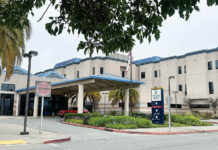
On Oct. 29, Good Samaritan Hospital is hosting the 12th annual Breast Symposium, a free community event for residents to connect with breast cancer experts and hear about cancer risks and prevention and recent developments in screening and treatment. The event is free with limited spots; registration available online.
Syd Fluker is a California Local News Fellow. Visit fellowships.journalism.berkeley.edu/cafellows.