
About one in three people who rely on Santa Cruz County Alliance Medi-Cal—25,000 people—will lose benefits by the end of 2028, said Central California Alliance for Health CEO Michael Schrader.
The Central California Alliance for Health is expecting to retain 44,700 of its 78,500 Medi-Cal members (57%) by the time the federal spending cuts reach full effect.
H.R. 1, commonly known as One Big Beautiful Bill, is a federal law that changes federal spending for healthcare and welfare. The provisions take effect in waves, but will cut approximately $1-1.15 trillion from federal healthcare and $200 billion from federal SNAP spending over a 10-year period.
“There’s just no filling in that hole that is dug by the federal changes,” Schrader said. “There’s just no filling in that hole for any of us.”
Central California Alliance for Health is a state-funded health plan that provides Medi-Cal coverage to Mariposa, Merced, Monterey, San Benito and Santa Cruz Counties. It is the main Medi-Cal provider in the county and manages care for 27% of residents.
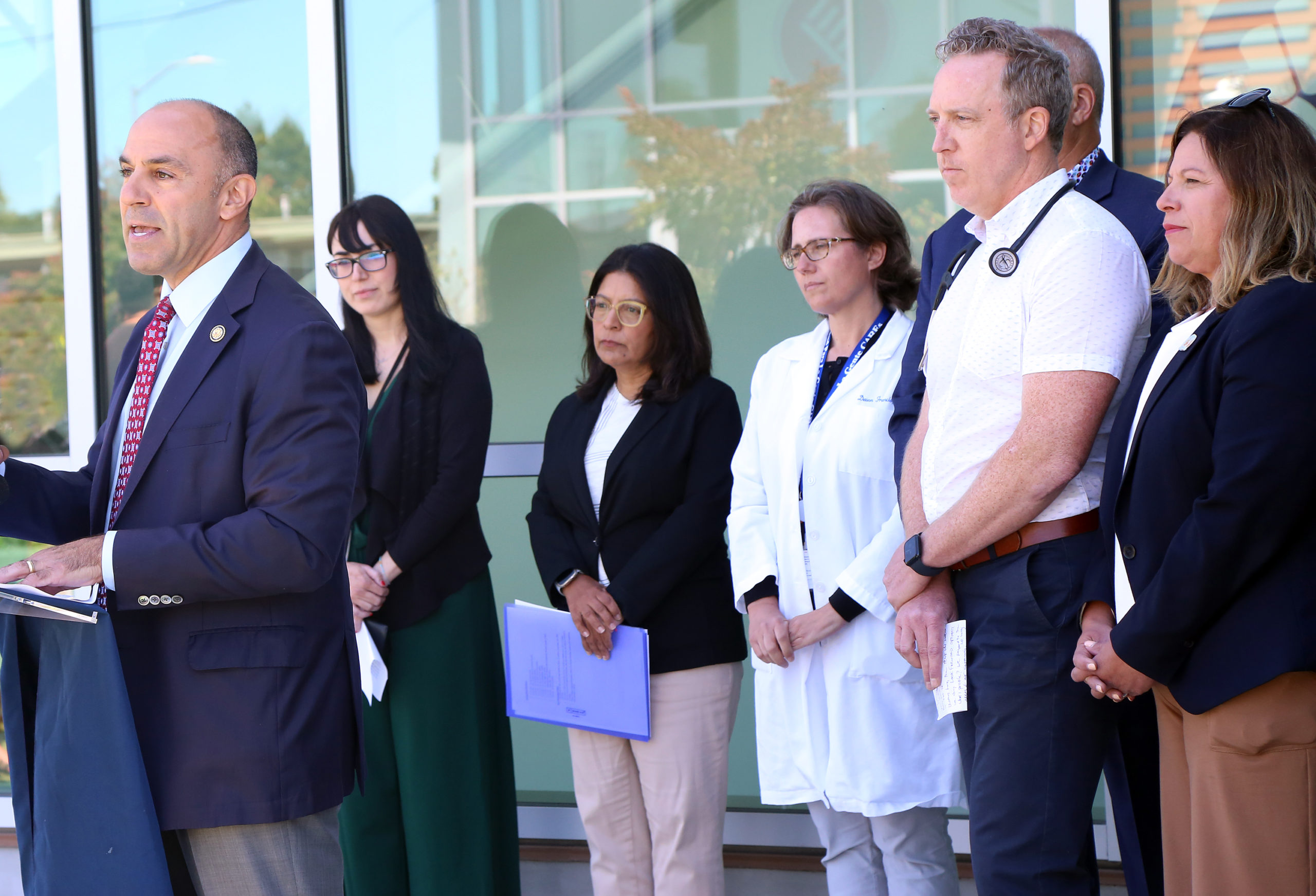
Schrader presented the Alliance’s predictions for Santa Cruz County at the Pajaro Valley Health Care District board meeting on Sept. 30.
According to Schrader, around 9,500 Alliance members have already lost coverage from the federal changes that have taken effect. Fewer members than predicted lost coverage in August and September, which Schrader said he hopes resulted from the Alliance’s Medi-Cal renewal outreach efforts.
There are 12 total federal and state changes that will cause people to lose coverage, four of which are active now, including eliminating automatic Medi-Cal renewal.
“The small wave that we’re seeing today is really only the leading edge, and that will ultimately develop into a much larger wave in 2027,” Schrader said.
Alliance will experience an overnight 8,800-member loss on Jan. 1, 2027, as Medi-Cal members with unsatisfactory immigration status will be transferred to the State Medi-Cal Fee-for-Service system.
“With that substantial reduction in payment to providers, that will almost certainly impact [healthcare] access for these individuals,” Schrader said.
The switch to FFS is a change in delivery system, not a loss of Medi-Cal coverage, that comes at the expense of local providers. When caring for Medi-Cal members with UIS, providers will bill the state FFS system, which pays substantially less than Alliance, Schrader said.
“On top of the growing uninsured, the transition of the UIS population to the State Fee-for-Service program will apply even more strain on the safety net,” Schrader said.
Hospitals and federally qualified health centers (FQHC), like Salud Para La Gente and Dientes Community Dental, will likely become the primary providers of care for uninsured and underinsured individuals, Schrader said.
“It’s going to be a real challenge for the FQHCs to find specialty care for their patients,” Schrader said.
He added that this challenge may lead some people to the emergency room with hopes of gaining access to a specialist through the emergency department.
Alliance expects hospitals will be the most impacted of the entire safety net delivery system, in part because hospital emergency departments must provide medical screening and stabilizing treatment regardless of insurance status or ability to pay. As federal spending is cut, this means hospitals will experience higher levels of uncompensated care for the uninsured and reductions in state-directed payments, Schrader said.
Furthermore, all hospitals in Santa Cruz County receive supplemental funding that increases the total Medi-Cal reimbursement to above the Medicare equivalent.
H.R. 1 lowers the ceiling for total payments to the Medicare equivalent, of which Santa Cruz County hospitals are over by about 30%, according to InsightHealth. This is because Medicare reimbursement for medical providers does not cover the cost to live or work in high-cost areas like Santa Cruz.
H.R. 1 allows for a phased approach for getting down to the Medicare rate at a reduction of 10% per year on the amount a hospital is above that rate.
FQHCs and most hospitals receive the majority of their funding from the state, with Alliance paying a smaller portion, Schrader said.
Starting July 1, 2027, the state budget will eliminate the prospective payment system rates, where Medi-Cal and other payers pay providers a predetermined, fixed amount for a specific service or patient visit, rather than paying for individual services or actual costs. This is the payment method used by community health clinics, whose patients often cannot afford to pay.
According to Schrader, one local FQHC used to receive $400.75 per patient visit, with Alliance paying the basic Medi-Cal portion (about $82) and the state Department of Health Care Services making a wraparound payment that makes up the difference.
After July 1, 2027, that same visit will give the clinic $82 for someone with unsatisfactory immigration status that kept their coverage and $0 for those who lost their coverage.
Santa Cruz County warns that residents could notice busier emergency rooms and greater pressure on hospitals and community clinics as a result of these cuts.
•••
Syd Fluker is a California Local News Fellow. Visit fellowships.journalism.berkeley.edu/cafellows.