
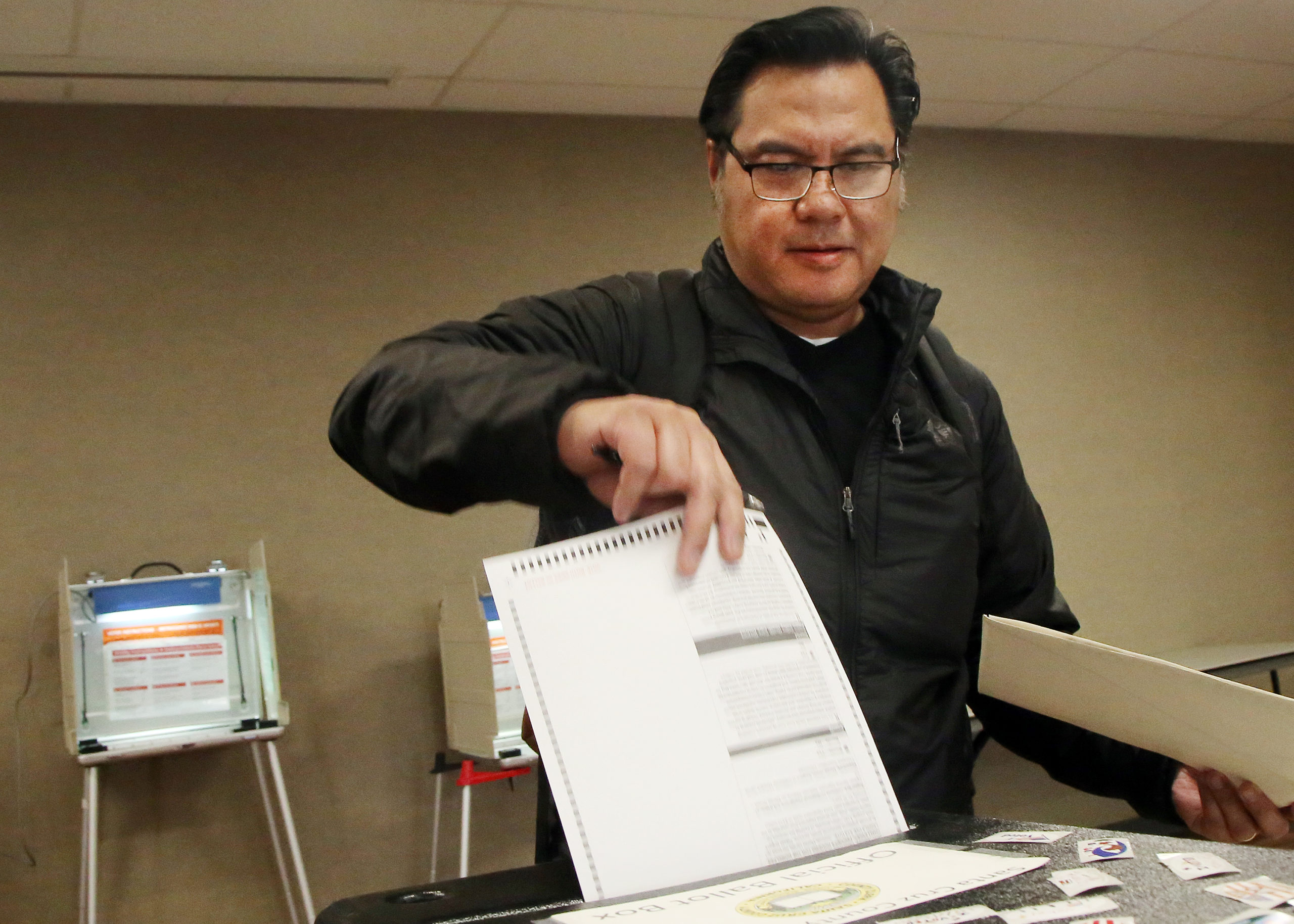
Santa Cruz County voters will decide on a temporary sales tax to fund county services affected by federal budget cuts in next month’s election.
Measure E is a countywide half-cent sales tax on non-essential goods, meaning it excludes groceries, prescriptions and other essential items.
The tax is expected to raise $6.75 million in the 2026-27 fiscal year and $27 million annually thereafter, according to an impartial analysis of Measure E by County Counsel Jason Heath.
If passed, the measure would take effect April 1, 2027, and last until April 1, 2032. It is expected to raise $135 million for county services over the course of the tax.
According to Cabrillo College Trustee Adam Spickler, Measure E is a direct response to the impacts H.R. 1 will have in our county.
H.R. 1, commonly known as One Big Beautiful Bill, is expected to create a $200 million annual loss in funding for community services such as CalFresh and community health clinics in the county.
Generated revenue will be deposited into the county’s General Fund. The County Board of Supervisors said it will prioritize Measure E funds for protecting emergency medical services and community health clinics, food assistance, mental health and substance use treatment and access to reproductive healthcare.
The measure’s text said that “the County is experiencing a state of fiscal distress” and that the tax is a “necessary and appropriate action” to address the challenges created by federal funding reductions, budget imbalance, increasing service demands and operation costs.
Spickler, who uses they/them pronouns, sees the effects starting to take place among those most in need of support to keep their CalFresh food assistance.
“The need for administrative assistance, just for the work rules portion, just for CalFRESH, is already starting to have an outsized impact,” Spickler said.
The county is currently using $21 million in one-time reserves to maintain essential health and human services, said County Executive Officer Nicole Coburn at the Pajaro Valley Health Care District board meeting on Sept. 30.
Coburn spoke in support of Measure E, which is also supported by Santa Cruz Community Health, Watsonville Community Hospital Foundation, Community Action Board, Community Bridges and more. PVHCD passed a resolution endorsing Measure E later during that meeting.
“The county of Santa Cruz just does not have the resources to pick up a lot of the changes that are occurring,” Coburn said. “We just don’t have a robust enough tax base to absorb all of the impacts from what is happening and will happen.”
The expected $27 million annual revenue from the half-cent sales tax is intended to help mitigate the damage of the federal budget cutbacks, Spickler said.
“It’s not going to do everything we need it to do, but it will help in our efforts to preserve [local health systems],” they said. “It doesn’t matter how wealthy you are. We are all going to, in this community, be hit in a really negative way by the impacts of this One Big Beautiful Bill that Measure E will help mitigate.”
Opponents of Measure E are wary of the lack of guardrails for the tax, which distributes money into the General Fund instead of a dedicated account.
“There are no guarantees that the revenue will be spent exclusively on emergency medical care or other services highlighted by supporters,” wrote Michael Lelieur in a letter to The Pajaronian.
They also point to sales taxes over 10% in Watsonville, Santa Cruz and Scotts Valley, while unincorporated county tax will rise to 10%.
In a letter to the Santa Cruz Sentinel, Lelieur said the proposed solution deserves much more scrutiny and that the tax would make the county’s already high sales tax burden higher.
“… This is not simply a question of whether the county has needs,” Lelieur wrote to the Sentinel. “It is a question of whether another $135 million in broad General Fund revenue will actually address those needs or simply make it easier to postpone difficult decisions.”
Spickler said they hope those with concerns will still vote yes on Measure E and follow up with their elected officials to ensure the revenue gets spent as intended.
•••
Syd Fluker is a California Local News Fellow. Visit fellowships.journalism.berkeley.edu/cafellows.