
When I retired in 2010 from my job as Director of Foothill College’s Writing Center, I started volunteering with the AVID program at my alma mater, Los Altos High School, to help motivated, low-income students with their personal statements for their college and financial aid applications.
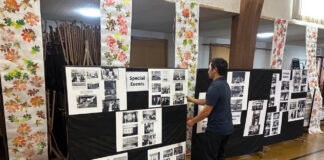
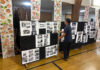
Last spring as my 60th high school reunion approached, I became fixated on thinking about how much the school, the students and the times have changed since I graduated in 1965.
In August as I gathered with old friends, we all agreed that in many ways, the world is better now. In 1965, females were still expected to wear torturous clothing like girdles and garter belts. And no matter how cold it was outside, female students and teachers were not allowed to wear pants to school.
And it certainly is a better world for young people who know they are gay. No longer must they remain in the closet terrified that someone will guess. Teachers who are gay can now be open about their sexual orientation and no longer worry that they will be fired if anyone finds out.
Most of our parents smoked and no one wore seat belts or bicycle helmets. And, we were far more segregated racially and ethnically. The 1965 yearbook shows that virtually all the students were white. While racial discrimination still endures, I think it’s safe to say that today no Black family would be hounded out of Los Altos as an African American doctor and his family were in the mid-1960s when they bought a house near the Los Altos Country Club.
However, most of us agreed that a high marginal tax rate that kept the pay of the top earners from skyrocketing was one of the best parts of the ’50s and ’60s. A relatively narrow wage gap made housing in Los Altos affordable to school teachers, policemen and airline pilots as well as doctors, attorneys and engineers.
Our most interesting conversations centered around comparing what the world was like for us as we were leaving high school to what today’s high school and college students face.
As seniors, we had much less to be terrified of than do today’s high school students. Granted, growing up in the ’50s and ’60s we were taught to duck and cover in case of a nuclear attack. And by the time we graduated, most of my friends had started questioning America’s involvement in the Vietnam War, and, inspired by Martin Luther King Jr. and the 1963 March on Washington, we were also marching locally to support the Civil Rights Movement.
However, we were basically optimistic. Oblivious of the toll that our reliance on coal and gas was beginning to have on our planet, we assumed that our only challenge was to hold our politicians accountable for the rights of others both domestically and internationally. We were convinced that our activism would improve the world, and few of us worried about the future of our planet or even democracy itself.
When we went to our very affordable colleges with no worries about paying off college loans, we had the luxury of majoring in whatever interested us most – whether it be history, philosophy or anthropology – assuming that with a college degree we could get a gratifying job that would allow us to buy a comfortable house or rent a roomy apartment wherever our jobs took us.
Now, 60 years later, students face a far scarier world. They learn how to respond to the very real threat of an active shooter on campus. The impact of climate change is undeniable.
They can no longer assume that democracy, the laws of the land and constitutional rights will prevail. They see no evidence that the separation of powers will protect us from corrupt, autocratic politicians. Many of them live in fear that members of their families – whether documented or not – will be detained and deported by ICE because of the color of their skin.
Yet, I take heart when I read some of the essays the students bring to me. They learn in their classes to envision ways in which they can use their education to reduce pollution, to stem the tide of climate change, or to discover new cures for our worst diseases. A few aspire to go into law or politics so they will be able to fight for the rights of their parents and peers. Some, inspired by the supportive teachers they have been blessed with, are determined to become teachers themselves so that they can, in turn, inspire the next generation of students from low-income families.
They still believe that achieving their parents’ dream of having them be the first in their family to graduate from college will lead to good-paying jobs so they can make life more comfortable for their hard-working parents.
I hope that in 2085, if Em, Ozzy and Alejandro and other members of the class of 2025 meet for their 60th high school reunion, they can look back and see that their optimism has proven to be well-founded and that despite the frightening times of 2025, their generation has found ways to save the country and the world from the threats that my own optimistic generation could never have imagined.