
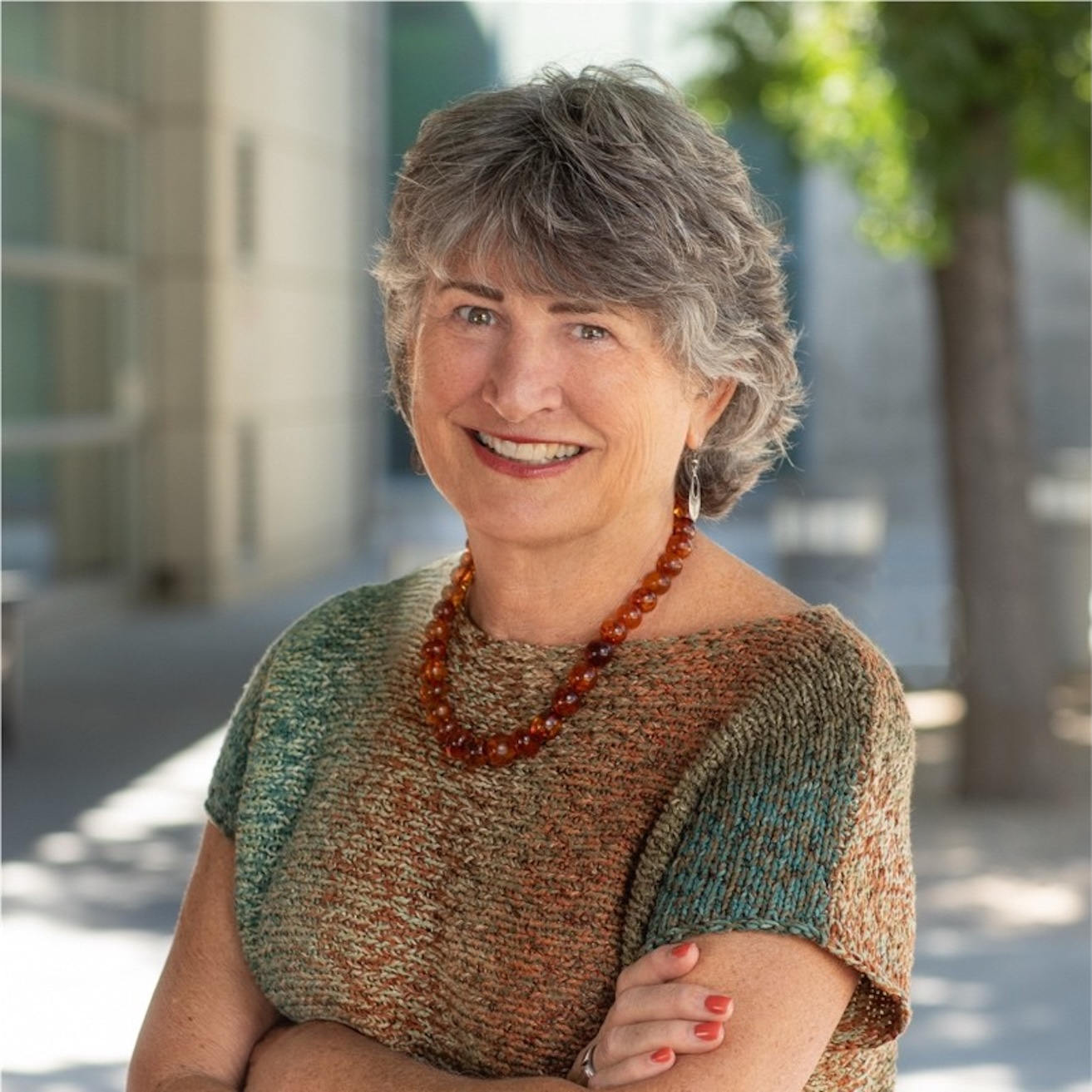
For years, Rose Ann Woolpert heard stories from her mother-in-law about a remarkable woman in the family’s history.
The woman was Mary Catherine “Molly” McIntyre Pacheco, a playwright and novelist who married Romualdo Pacheco, the only Latino to serve as governor of California.
But while Romualdo Pacheco’s place in history was well documented, his wife’s story had largely faded from view.
That changed this year with the release of Mrs. R. Pacheco, Woolpert’s first novel, a work of historical fiction that blends extensive research with imagination to recreate the life of a woman whose accomplishments were largely forgotten.
“I’ve always loved history,” Woolpert said. “One of the things that I’m finding at this point in my life is I’m really interested in learning about not only California history, but the people whose stories really haven’t been properly told—especially women.”
The novel follows McIntyre Pacheco as she arrives in California in 1859, marries the rising California politician and discovers her own creative voice amid the state’s rapidly changing social and political landscape.
Woolpert describes the book as family-friendly historical fiction based on real people and real events.
“It’s written for families,” she said. “It’s not written specifically as a children’s book, but it’s suitable for young people.”
The story began decades ago, when Woolpert married into her husband’s family and became intrigued by stories about his ancestors.
“My mother-in-law would talk about her great-grandmother, who came to California after she was widowed in 1859,” Woolpert said. “She had three teenage daughters, and the eldest, Mary McIntyre, married Romualdo Pacheco, who at the time was a very romantic California politician and eventually became governor of California. I just wanted to know, ‘How did this all come about?’”
That curiosity launched years of research.
Woolpert dug through books, historical articles and museum archives, including resources in San Luis Obispo and Santa Barbara, where the Pacheco family lived for a time. While there was ample material about Romualdo Pacheco, information about his wife was much harder to find.
“There was a fair amount of information about him,” she said. “But Mrs. R. Pacheco was a playwright. Her story was never really told, but there were articles written about her back in the 1800s because she was very well known at the time.”
McIntyre Pacheco wrote plays and books, and one of her works was adapted into the popular musical Three Twins.
Still, much of her life remained undocumented.
“When people’s stories aren’t fully told, you need to fill in the blanks,” Woolpert said. “That’s where fiction comes in.”
The research also uncovered lesser-known pieces of California history.
One detail that surprised Woolpert was the journey McIntyre’s family took west. Rather than crossing the continent by wagon train, they traveled by ship to Panama, crossed the isthmus by train and then boarded another ship for California—a route many travelers and the U.S. mail used before the transcontinental railroad.
“It wasn’t without danger,” she said. “But it was the way a lot of people traveled, and it was fun to learn about the adventures that could have happened that I was able to add to my story.”
The project also answered questions Woolpert had carried since childhood.
“I grew up in Southern California, and I never heard about those years between the Gold Rush and Hollywood,” she said. “I was always wondering what went on in those times. I was able to answer my own questions through this research.”
Mrs. R. Pacheco is Woolpert’s first novel, but not her first book. She has also written three children’s books: Engine Number 10, Big Bill and His Little Mixer Truck and Cauliflower Boulevard.
She said the historical novel is the first of several planned books centered on overlooked women in California’s past.
“I’ve got three more books—one getting close to finished, another in the works and a third that I’m still figuring out,” she said. “They’re all untold stories about fascinating California women.”
For Woolpert, those forgotten lives are where history becomes most compelling.
“Women were doing fascinating things, too,” she said. “They just weren’t getting their stories told. That’s what I’m really interested in right now.”
Mrs. R. Pacheco is available through major book retailers.
Booksellers, libraries, and event coordinators may order directly at bit.ly/4vHNsA5